TL;DR
Lab test PDFs verify the dissolved hydrogen concentration (measured in PPM) that hydrogen water bottles actually produce. You can find these documents on brand product pages, independent testing hubs like H2HUBB, and lab support portals. The most trustworthy reports come from ISO/IEC 17025 accredited labs using gas chromatography headspace analysis. This guide walks you through where to find lab test PDFs for hydrogen bottles, how to read PPM results, what the official test report should contain, how to calculate your actual H2 ingested dose, and what red flags to watch for.
What Is a Hydrogen Bottle Lab Test PDF?
A lab test PDF for a hydrogen bottle is a formal document produced by an independent or accredited laboratory. It measures and reports the dissolved hydrogen concentration a device generates, expressed in PPM (parts per million) or the equivalent mg/L (milligrams per liter). These are not marketing materials. They are structured scientific reports.
A typical lab test PDF contains:
- Dissolved hydrogen concentration at specific cycle times (3 minutes, 5 minutes, 10 minutes)
- Testing methodology used to measure the hydrogen (gas chromatography, electrochemical sensor, or colorimetric titration)
- Water purity results covering contaminants like ozone, chlorine residuals, and heavy metals
- Testing conditions including water source, temperature, and altitude
- Lab accreditation details such as ISO/IEC 17025 compliance
- Date of testing and device identification (model, serial number)
The reason these documents matter is straightforward: PPM claims on product pages are marketing. Lab test PDFs are evidence. If you want to understand the science behind molecular hydrogen and whether a bottle actually delivers what it promises, the lab report is where you start.
Key Terms You Need to Know
Before hunting for lab reports, a quick glossary of terms you will encounter.
PPM (Parts Per Million)
In hydrogen water, 1 PPM equals 1 milligram of dissolved molecular hydrogen (H₂) per liter of water. The terms PPM and mg/L are interchangeable for practical purposes. When someone says a bottle produces "3.0 PPM hydrogen water," they mean 3.0 milligrams of H₂ are dissolved in every liter. For a deeper breakdown of how PPM testing works and what concentrations mean in practice, see this PPM explained guide.
Dissolved Hydrogen Saturation
At standard temperature and pressure (room temperature, sea level, 1 atmosphere), water can hold roughly 1.6 PPM of dissolved hydrogen. This is the thermodynamic solubility limit governed by Henry's Law. Claims above 1.6 PPM are possible through pressurized generation or supersaturation, but those concentrations are unstable and drop rapidly once you open the cap.
SATP Adjusted Result
This term appears in professional lab reports and trips up a lot of readers. SATP stands for Standard Ambient Temperature and Pressure (25°C, 100 kPa). Because dissolved gas concentrations change with temperature and atmospheric pressure, labs normalize their raw measurements to SATP conditions so results can be compared across different testing environments. If a lab tested a bottle in a high altitude facility or at a slightly different temperature, the SATP adjusted result corrects for those variables. When you see both a raw result and a SATP adjusted result in a report, the adjusted figure is the one to use for comparison shopping. Without this normalization, a bottle tested in Denver would look different from one tested in Miami purely because of altitude, not performance.
GC Headspace Analysis
Gas chromatography (GC) headspace analysis is the gold standard for measuring dissolved hydrogen. A sealed water sample is heated, the released gas enters a chromatograph, and the instrument quantifies the H₂ with high precision. This is a lab only method and the one you want to see referenced in any credible report.
ISO/IEC 17025
This is the international standard for testing and calibration laboratory competence. A lab with ISO/IEC 17025 accreditation has been independently audited for technical capability, quality management, and impartiality. When a hydrogen bottle lab test PDF comes from an ISO/IEC 17025 lab, the results carry significantly more weight.
SPE/PEM Electrolysis
Solid Polymer Electrolyte / Proton Exchange Membrane electrolysis is the technology most quality hydrogen bottles use to split water molecules and dissolve H₂ into the water. Devices using SPE/PEM technology with platinum coated titanium plates are designed to produce hydrogen without generating ozone or chlorine byproducts, which is something lab reports often verify in a safety panel.
ORP (Oxidation Reduction Potential)
Measured in millivolts (mV), ORP indicates the water's ability to act as an oxidizing or reducing agent. Hydrogen rich water typically shows a negative ORP value. Some lab reports include ORP readings alongside PPM measurements.
H2Blue Reagent
A colorimetric titration kit for at home PPM estimation. You add drops to a water sample until the blue color disappears, then count the drops to calculate an approximate dissolved hydrogen level. It is useful but far less precise than laboratory GC analysis.
Where to Find Lab Test PDFs for Hydrogen Bottle PPM
This is the core question. You have already searched, probably come up short, and landed here. Here are the actual places where hydrogen bottle lab test PDFs exist, organized by reliability.
1. Brand Product and Support Pages
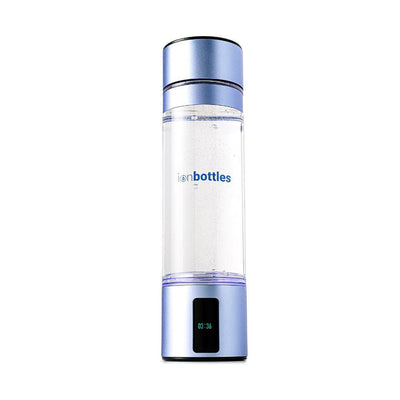
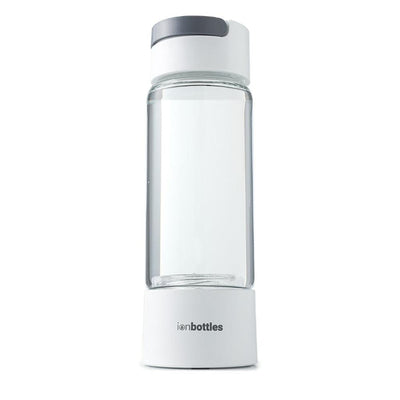
The most direct source. Reputable brands host their lab reports on product pages or dedicated support sections. Echo Water, for example, publishes H2 Analytics and SGS Water reports on support subdomains for specific products like the Echo Go and Echo Go+. IonBottles publishes a lab test PDF from the Swiss Water Research Institute for the ATOM hydrogen water bottle, documenting 2.5 PPM at the 5 minute cycle and 5.0 PPM at the 10 minute cycle alongside a full water purity panel.
If a brand does not have a downloadable lab PDF anywhere on its site, that tells you something.
2. H2HUBB (Molecular Hydrogen Institute Testing Hub)
H2HUBB is the most recognized independent evaluation program for hydrogen devices. Manufacturers submit their products, H2HUBB tests them under controlled conditions, and the resulting reports are published as downloadable PDFs on their domain. Two of the top five Google results for hydrogen bottle lab test PDFs come from H2HUBB, including recent evaluations published as recently as May 2025. If you want to compare brands against a neutral benchmark, this is where to look first.
3. Testing Labs Directly
Some labs like H2 Analytics, SGS, and the Swiss Water Research Institute make results available upon request. This is less common for consumer queries, but if you see a lab name referenced on a product page, you can contact them to verify the report's authenticity.
4. Brand FAQ Sections
A few brands embed lab report links within FAQ answers rather than on product pages. Check the FAQ or help center if you cannot find a report on the main product listing. IonBottles, for example, addresses testing related questions in their FAQ section.
5. Third Party Review Sites and YouTube
Hydrogen water reviewers on YouTube frequently conduct live H2Blue drop tests on camera. These are not lab grade PDFs, but they offer real world visual confirmation. Professional reviews occasionally link to the brand's lab PDF or reference H2HUBB reports. These can be useful stepping stones to finding the actual document.
Where You Won't Find Them
Amazon product listings almost never include lab test PDFs. Social media ads rarely link to them. And if a brand only offers a screenshot of a report (rather than the full downloadable document), treat that with skepticism.
Anatomy of an Official Test Report
Not all lab documents are created equal. An official test report follows a specific structure, and knowing what sections to expect helps you spot incomplete or fabricated documents quickly.
Approval and Report Date
Every legitimate lab report carries two dates that matter: the date the testing was performed and the date the report was formally approved and issued. These are sometimes the same, sometimes weeks apart. The approval date indicates that a qualified reviewer (typically a lab director or authorized signatory) examined the data, confirmed the methodology was followed correctly, and signed off. If a report has no approval signature or no clear issuance date, it has not gone through the quality assurance process that ISO/IEC 17025 requires.
Pay attention to the gap between testing and approval. A report tested in January 2024 but approved in March 2024 is normal; review cycles take time. A report with no approval date at all is a document that may never have been formally validated.
Materials and Methods Section
The materials and methods section is the backbone of any credible lab report. It should specify:
- The measurement instrument (brand, model, calibration date of the gas chromatograph or sensor)
- Sample preparation (how the water was collected from the device, container type, headspace volume)
- Environmental conditions (ambient temperature, barometric pressure, humidity)
- Water source and pretreatment (distilled, deionized, tap, reverse osmosis)
- Number of replicates and how results were averaged
- Timing protocol (when exactly the sample was drawn relative to the electrolysis cycle ending)
Practitioners on Reddit's r/chemistry have pointed out that many so called lab reports skip the materials and methods entirely, jumping straight to a PPM number. Without knowing how the measurement was taken, the number is uninterpretable. Think of it this way: a PPM reading without a methods section is like a blood pressure reading with no mention of whether the patient was sitting or running. Context determines meaning.
A strong materials and methods section also lets you replicate conditions at home (roughly) with an H2Blue test or portable meter, giving you a reality check against the official figure.
Report Structure Checklist
When you open a PDF, scan for these elements in order:
- Cover page with lab name, logo, accreditation number, and report ID
- Client and sample identification (device model, serial number, who submitted it)
- Materials and methods (detailed as described above)
- Results table with raw values, SATP adjusted values, and units clearly labeled
- Safety and purity panel (ozone, chlorine, heavy metals)
- Uncertainty statement (measurement uncertainty range, required by ISO/IEC 17025)
- Approval signature and date
- Appendices (calibration certificates, chain of custody if applicable)
If more than two of these elements are missing, you are not looking at an official test report. You are looking at a marketing summary dressed up to look like one.
How to Read a Hydrogen Bottle Lab Test PDF
Finding the PDF is step one. Understanding what it says is step two. Here is an eight point checklist you can apply to any hydrogen bottle lab report.
1. Check Lab Accreditation
Look for ISO/IEC 17025 certification or equivalent. An accredited lab has been independently verified for competence and impartiality. If no accreditation is listed, the report is less reliable.
2. Verify the Testing Date and Approval Date
Hydrogen bottle technology evolves. A lab test from 2020 may not reflect the current hardware revision. Reports older than two years deserve extra scrutiny, especially if the manufacturer has released updated versions. Confirm both the testing date and the formal approval date are present. A missing approval date means the report may not have completed the lab's quality review process.
3. Confirm Device Identification
The report should specify the exact model name, serial number, and ideally how the device was obtained. A report that tests "a hydrogen water bottle" without identifying the specific product is practically useless.
4. Look at Water Source and Baseline
Did they test with distilled water, tap water, or reverse osmosis water? Was the baseline dissolved hydrogen level recorded before the device ran? These details affect the final PPM number. A device tested with pre filtered water may produce different results than one tested with hard tap water.
5. Note the Cycle Time and Mode
PPM varies by how long the electrolysis runs. A good report breaks results down by operational mode (for example, 5 minute cycle vs. 10 minute cycle). If only one cycle time is reported, you are seeing an incomplete picture.
6. Check Measurement Timing and SATP Adjustment
This is the most commonly overlooked detail. Was PPM measured at the electrode immediately after generation, or after opening the cap? Dissolved hydrogen begins escaping the moment air contacts the water. A measurement taken at the electrode with the cap sealed will be significantly higher than one taken 30 seconds after opening. Trustworthy reports specify this.
Also look for whether the result has been SATP adjusted. Raw measurements taken at non standard conditions (a warm lab, a high altitude facility) will differ from normalized values. The SATP adjusted result is the apples to apples number for comparing devices.
7. Review the Safety and Purity Panel
Beyond PPM, a thorough lab report tests for unwanted byproducts: ozone, chlorine, heavy metals, and other contaminants. Devices without dual chamber or vent designs may produce ozone alongside hydrogen. The purity panel confirms whether the bottle generates clean H₂ only. For a more comprehensive buyer checklist that covers safety and performance verification, this consumer checklist is worth reviewing.
8. Count the Trials
A single measurement is an anecdote. Averaged results across multiple runs are data. Look for reports that state the number of trials conducted and show consistency across them.
What PPM Numbers Should You Actually Look For?
PPM claims in this market range from modest to extraordinary. Here is how to think about them.
Most published clinical hydrogen water studies use concentrations between 0.5 and 1.6 PPM. That 1.6 figure represents the natural saturation point at standard conditions. Anything above it requires the device to generate hydrogen faster than it escapes, creating a temporary supersaturated state.
Claims of 3.0, 5.0, or even higher PPM represent peak readings at the moment of generation, typically measured with the cap sealed. These numbers are real in a technical sense, but the concentration drops within minutes of opening the bottle. This is physics, not a flaw.
Practitioners on Reddit's r/chemistry and r/skeptic communities regularly challenge PPM claims above 1.6, citing Henry's Law. Brands that acknowledge the saturation limit and explain supersaturation mechanics honestly tend to earn more trust in these discussions than those that simply print a large number on the product page.
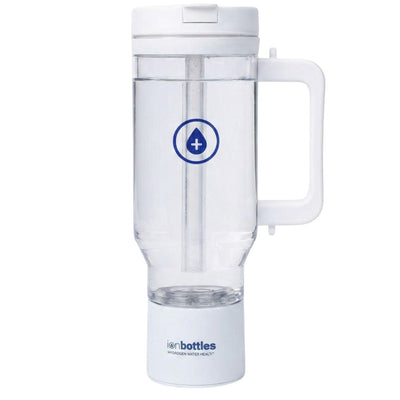
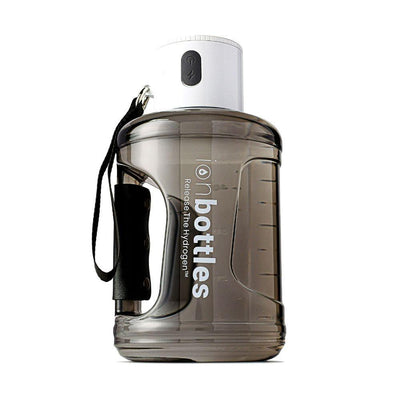
When comparing bottles, consider both PPM and capacity. The IonBottles Tritan Sport Jug produces up to 2.0 PPM across 50 ounces, while the IonBottles Tumbler reaches up to 3.0 PPM in 32 ounces. Smaller bottles often hit higher peak PPM because there is less water to saturate. The right choice depends on whether you prioritize concentration or volume for your day.
H2 Ingested Dose: The Number That Actually Matters
PPM gets all the attention, but the number that clinical researchers care about is the H2 ingested dose, meaning how many milligrams of molecular hydrogen you actually consume in a sitting. This is what determines whether you reach the therapeutic thresholds studied in published trials.
How to Calculate Your H2 Dose
The formula is simple:
H2 dose (mg) = PPM (mg/L) × Volume consumed (L)
A 10 oz bottle (roughly 0.3 L) producing 3.0 PPM delivers about 0.9 mg of H2 per serving. A 50 oz jug (roughly 1.5 L) at 1.5 PPM delivers about 2.25 mg. The jug actually delivers a higher total dose despite the lower concentration, because you are drinking far more water.
Why This Changes the Comparison Game
Most clinical studies on molecular hydrogen use doses ranging from 0.5 mg to 1.6 mg per serving, sometimes consumed multiple times per day. When you read a lab test PDF, calculate the actual dose you would ingest from the bottle's capacity at the tested PPM. A bottle claiming 5.0 PPM is impressive, but if it only holds 10 oz and you drink it 30 seconds after opening (when supersaturation has already begun dropping), your real ingested dose may be lower than you think.
Practitioners on Reddit's r/Biohackers have noted that focusing on PPM alone leads to misleading comparisons. One user put it plainly: "A big jug at 1.5 PPM gives you more hydrogen per session than a tiny bottle at 4 PPM." The math checks out, and it is exactly the kind of context that lab test PDFs rarely spell out for you.
Dose Across the IonBottles Lineup
| Device | Capacity | Peak PPM | Estimated Max H2 Dose |
|---|---|---|---|
| ATOM | 10 oz (0.3 L) | 5.0 PPM | ~1.5 mg |
| Pro | 14 oz (0.4 L) | 3.0 PPM | ~1.2 mg |
| Tumbler | 32 oz (0.95 L) | 3.0 PPM | ~2.85 mg |
| Tritan Sport Jug | 50 oz (1.5 L) | 2.0 PPM | ~3.0 mg |
These are theoretical maximums based on peak lab readings. Real world doses will be somewhat lower depending on how quickly you drink and how much H2 off gasses before consumption. But the table illustrates why volume and concentration together determine your dose.
At Home PPM Testing Methods
You do not need a laboratory to get a rough sense of your bottle's performance.
H2Blue Reagent Drops
The most accessible option. You add drops to a small water sample until the blue color disappears, then multiply the drop count to estimate PPM (each drop represents approximately 0.1 PPM). It is affordable, visual, and good enough for ballpark verification. YouTube reviewers film these tests frequently because they are easy to demonstrate on camera, and the high view counts confirm that consumers want this kind of visual proof.
Portable Dissolved Hydrogen Meters
Electrochemical sensor devices (like the Trustlex ENH 1000 or similar meters) give real time digital PPM readings. They cost more than H2Blue drops and require periodic calibration, but they are faster and more repeatable for ongoing testing.
Why At Home Testing Complements but Cannot Replace Lab GC
Neither H2Blue nor portable meters match the precision of gas chromatography headspace analysis. H2Blue has a resolution of roughly ±0.1 PPM and requires consistent technique. Portable meters drift over time without recalibration. For definitive verification of a hydrogen bottle's PPM output, the lab test PDF remains the standard.
That said, at home testing is excellent for confirming your specific bottle works properly with your specific water source. If your H2Blue reading is in the same ballpark as the lab report's claimed PPM for that cycle time, you have reasonable confidence. If you are just getting started with a new device, this first use setup guide covers activation and initial testing steps.
Red Flags: When Lab Claims Do Not Add Up
Not every lab test PDF is created equal, and some PPM claims deserve outright suspicion. Watch for these warning signs.
- No named laboratory. If the report does not identify which lab performed the testing, it could have been generated internally or fabricated entirely.
- No downloadable PDF. A screenshot or summary without the actual document available means you cannot verify the details.
- No materials and methods section. A PPM number without documentation of how it was measured is scientifically meaningless. The methods section is non negotiable in a real lab report.
- No testing conditions stated. PPM without context (water source, temperature, altitude, measurement timing) is a meaningless number.
- No SATP adjustment. If the raw result is reported without normalization to standard conditions, comparisons with other devices are unreliable.
- Single run data only. One measurement is not a pattern. Credible reports average across multiple trials.
- Report is years old. Hardware changes. A 2021 lab test for a device now in its third revision tells you nothing about the current product.
- Peak PPM with no timing context. A 5.0 PPM claim with no mention of when the measurement was taken (at electrode, 30 seconds after opening, 2 minutes after opening) is designed to impress, not inform.
- No safety panel. Dissolved hydrogen without a purity check for ozone, chlorine, and heavy metals is an incomplete test.
- Missing approval date or signature. An unsigned, undated document has not been formally reviewed by the lab's quality system.
Multiple threads across Reddit's r/Biohackers show frustration with brands making high PPM claims while providing zero downloadable lab documentation. The most common refrain from skeptics: "If hydrogen water works, show me the third party lab test." Brands that actually publish their reports have a significant credibility advantage.
The Trust Hierarchy for Hydrogen Water Verification
Based on community discussions across forums and review platforms, here is how consumers rank different types of evidence, from most to least trustworthy:
- Independent GC lab report from an ISO/IEC 17025 accredited lab with full materials and methods, SATP adjusted results, approval date, and safety panel (highest trust)
- H2HUBB published evaluation (high trust, standardized methodology)
- Third party video showing H2Blue testing (moderate trust, visual but imprecise)
- Brand hosted lab PDF with a named lab (moderate trust, potential bias but verifiable)
- PPM claims on a product page with no supporting documentation (lowest trust)
If you are trying to find a lab test PDF for a hydrogen bottle's PPM and a brand falls into category five, keep looking or keep your wallet closed. For a structured approach to evaluating hydrogen bottles before purchasing, this buying checklist covers what to verify step by step.
Finding a Hydrogen Bottle You Can Verify
The whole point of searching for lab test PDFs is to separate real performance from marketing noise. The brands worth considering are the ones that make verification easy, not the ones that make you dig through support tickets to find a report that may not exist.
IonBottles publishes a lab test PDF from the Swiss Water Research Institute for the ATOM hydrogen water bottle, an ISO/IEC 17025 accredited facility. The report documents dissolved hydrogen concentration across cycle times and includes a water purity panel covering ozone, chlorine, and heavy metals. The report contains a clear materials and methods section, SATP adjusted results, and an approval date with authorized signatory. The ATOM uses SPE/PEM electrolysis with platinum coated titanium plates and a dual chamber vent design, producing up to 5.0 PPM in the 10 minute mode.
If you want to browse the full lineup across different capacities and price points (from a 10 oz portable bottle to a 50 oz jug), the product comparison page breaks down specifications side by side. IonBottles is a family operated company shipping from U.S. warehouses with a 60 day return policy and 1 year warranty.
Frequently Asked Questions
What does PPM mean on a hydrogen water bottle?
PPM stands for parts per million. In hydrogen water, it measures how much dissolved molecular hydrogen (H₂) is present in the water. 1 PPM equals 1 milligram of dissolved hydrogen per liter. Higher PPM means more hydrogen per sip, though concentrations above 1.6 PPM represent supersaturated states that decrease after opening the bottle.
Where can I find a lab test PDF for my hydrogen bottle?
Start with the brand's product page or support center. Then check H2HUBB.com, which publishes independent evaluations of hydrogen devices. You can also contact the testing lab named in any report to verify authenticity. If a brand offers no downloadable lab test PDF anywhere, that is a significant red flag.
How do I know if a hydrogen bottle lab test is legitimate?
Look for ISO/IEC 17025 accreditation, a clearly named laboratory, a complete materials and methods section, SATP adjusted results, specific testing conditions (water source, temperature, cycle time), measurement timing details, multiple trial runs, an approval date with signature, and a safety panel covering contaminants like ozone and heavy metals. Reports missing these elements should be treated with caution.
What is a SATP adjusted result in a lab report?
SATP stands for Standard Ambient Temperature and Pressure (25°C, 100 kPa). Labs normalize their dissolved hydrogen measurements to these conditions so results can be fairly compared across different testing environments. The adjusted result accounts for differences in temperature and atmospheric pressure that would otherwise skew the raw reading.
How do I calculate my H2 ingested dose?
Multiply the PPM (mg/L) by the volume of water you drink in liters. For example, drinking 14 oz (about 0.4 L) of 3.0 PPM hydrogen water gives you roughly 1.2 mg of molecular hydrogen. Most clinical studies use doses between 0.5 mg and 1.6 mg per serving.
Can I test hydrogen water PPM at home?
Yes. H2Blue reagent drops provide an approximate PPM reading through colorimetric titration, and portable dissolved hydrogen meters give real time digital readings. Neither method matches the precision of laboratory gas chromatography, but both are useful for confirming your bottle is working as expected with your water source.
Why do some hydrogen bottles claim 3 to 5 PPM when the saturation limit is 1.6?
The 1.6 PPM figure is the equilibrium solubility at standard temperature and pressure in an open system. Hydrogen bottles can achieve higher concentrations through pressurized electrolysis in a sealed chamber, creating a supersaturated state. These peak readings are real at the moment of measurement, but the dissolved hydrogen begins escaping as soon as the cap is removed. Reputable brands and lab reports specify exactly when the measurement was taken.
What should the materials and methods section include?
It should specify the measurement instrument (model, calibration date), sample preparation details, environmental conditions during testing, water source and pretreatment, number of replicates, and the exact timing protocol for when samples were drawn relative to the electrolysis cycle. Without this section, the PPM result cannot be properly interpreted or reproduced.
Are hydrogen water bottles a scam?
This is a common question on Reddit's r/skeptic and r/Biohackers communities. The devices themselves do produce measurable dissolved hydrogen, which lab tests confirm. Whether the health claims associated with hydrogen water apply to you depends on the concentration consumed and emerging clinical research. The strongest position is to rely on independently verified PPM data rather than marketing promises, and to consult published clinical studies for context on potential benefits.
How long does dissolved hydrogen last after opening a bottle?
Dissolved hydrogen begins escaping immediately upon exposure to air. Most of the excess concentration (anything above the 1.6 PPM saturation point) dissipates within a few minutes. Even at saturation, hydrogen levels drop noticeably over 15 to 30 minutes. The practical advice: drink your hydrogen water promptly after a cycle completes.