TL;DR
Most hydrogen water bottle marketing overstates ppm. What actually matters is total dose (ppm multiplied by volume), SPE/PEM electrolysis with proper venting, and independent test data. The IonBottles ATOM offers the strongest price-to-ppm ratio in a portable format at $149.95, while their 32 oz Tumbler and 50 oz Jug win on daily dose through volume. This product comparison breaks down nine bottles across price, verified concentration, capacity, materials, and real user feedback so you can stop guessing and start buying smart.
At-a-Glance Product Comparison Table
| Bottle | Price (as of April 2026) | Claimed ppm | Capacity | Cycle Time | Material | Inhalation Port | Warranty |
|---|---|---|---|---|---|---|---|
| IonBottles ATOM | $149.95 | Up to 5.0 | 10 oz | 5 or 10 min | BPA-free Tritan | Yes | 1 year + 60-day returns |
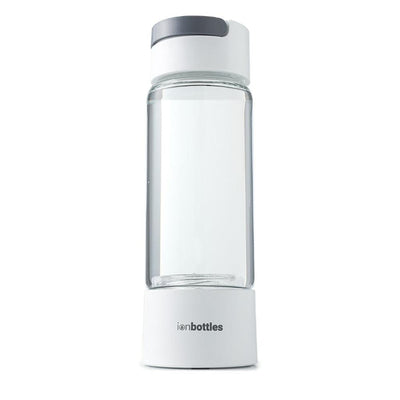
| IonBottles Pro | $99.95 | ~3.0 | 14 oz | 3–5 min | Borosilicate glass | Yes | 1 year + 60-day returns |
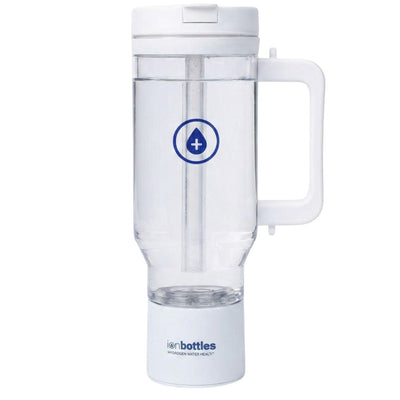
| IonBottles Tumbler | $129.95 | ~1.5–3.0 | 32 oz | 10–20 min | BPA-free Tritan | No | 1 year + 60-day returns |
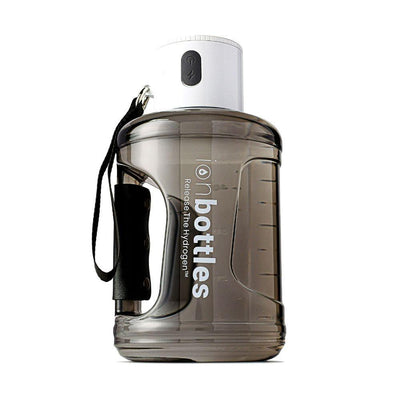
| IonBottles Jug | $89.95 | ~1.0–2.0 | 50 oz | 5 min | BPA-free Tritan | No | 1 year + 60-day returns |
| Echo Flask | ~$299–$349 | Up to 8.0 | ~12 oz | 20 min | Varies | No | 5-year limited |
| Piurify Hydrogenator | ~$190–$250 | ~2.8–3.85 (tested) | 280 mL (~9.5 oz) | 5–10 min | Varies | No | Varies |
| H2CAP Plus | ~$149 (module) | Varies by bottle | Depends on pairing | Varies | Module + your bottle | No | Varies |
| LevelUpWay | ~$59 | Not independently verified | 12 oz | Varies | Varies | No | Marketplace |
| GOSOIT | ~$30–$50 | Not independently verified | Varies | Varies | Varies | No | Marketplace |
This table covers the core comparison dimensions. The sections below unpack each contender and explain why some numbers deserve skepticism.
How to Choose a Hydrogen Water Bottle in 5 Minutes
Before scrolling through any product comparison list, apply these six filters. They eliminate most bad purchases fast.
1. Demand SPE/PEM electrolysis with vented oxygen and chlorine. Basic electrolysis units produce mixed gases, and many community members on Reddit and Trustpilot report ozone smells from cheap bottles. SPE (Solid Polymer Electrolyte) with PEM (Proton Exchange Membrane) technology separates hydrogen from byproducts. If a listing doesn’t specify this, move on. You can learn more about how SPE/PEM electrolysis works in IonBottles’ technology breakdown.
2. Insist on independent or lab test data. Marketing claims of “up to 8 ppm” are common and almost always describe ideal conditions, not what you’ll drink at your kitchen table. The independent testing organization H2Hubb, for example, measured the Piurify Hydrogenator at approximately 2.8 ppm after 5 minutes and 3.85 ppm after 10 minutes in 280 mL, well below its headline claims (H2Hubb test report). That gap is normal across the category.
3. Set realistic expectations: 1.0–1.6 ppm is the saturation baseline. Dissolved hydrogen maxes out around 1.6 ppm at standard atmospheric pressure and room temperature (Molecular Hydrogen Institute). Anything above that is either supersaturation (which is real but temporary), achieved under pressure, or measured in a tiny volume. Once you open the bottle, concentration drops.
4. Buy for your lifestyle volume, not peak ppm. A 10 oz bottle at 3 ppm delivers about 0.9 mg of H2 per cycle. A 32 oz bottle at 1.5 ppm delivers about 1.4 mg. The bigger bottle wins on dose despite the lower concentration. The formula is simple: mg H2 = ppm × volume in liters. More on this below.
5. Check the return and warranty policy before buying. Brand policies vary dramatically. Some offer 60-day return windows, others make you fight for replacements. Practitioners on Reddit report that warranty and support quality matter as much as ppm when you’re spending $100 or more (r/Biohackers discussion).
6. Drink immediately after a cycle. Hydrogen escapes quickly. Research on container materials shows that both glass and plastic lose substantial dissolved H2 within hours of generation (PMC study on hydrogen retention). There’s no point chasing high ppm if you let the water sit for an hour.
The Contenders: 9 Hydrogen Water Bottles Compared
1. IonBottles ATOM
Best for: Athletes and biohackers who want the highest concentration per dollar in a truly portable format.
Price: $149.95
Key features:
- Up to 5.0 ppm with SPE/PEM electrolysis using platinum-coated titanium plates
- 10 oz BPA-free Tritan body
- 5-minute and 10-minute cycle modes
- Dual-vent system purges oxygen, ozone, and chlorine for pure H2 infusion
- Includes H2 inhalation cannula for nasal delivery
- USB-C charging
- CE, RoHS certified, H2 Verified lab testing
Tradeoffs:
- Ultra-compact 10 oz capacity means frequent refills for all-day hydration
- Real-world ppm varies with water source, temperature, and altitude, as with every bottle in this category
- H2 degasses quickly after opening, so you need to drink right after a cycle
User sentiment: Communities that discuss hydrogen water bottles consistently favor devices with proper PEM venting that avoid the ozone smell common in cheaper units. The ATOM’s dual-vent design addresses this directly.
At $149.95, the ATOM sits at roughly half the price of the Echo Flask while claiming competitive or higher ppm output in its 10-minute mode. For a closer look at the cycle specifics and maintenance, the ATOM user manual covers everything from cleaning to optimal cycle stacking.
2. IonBottles Pro
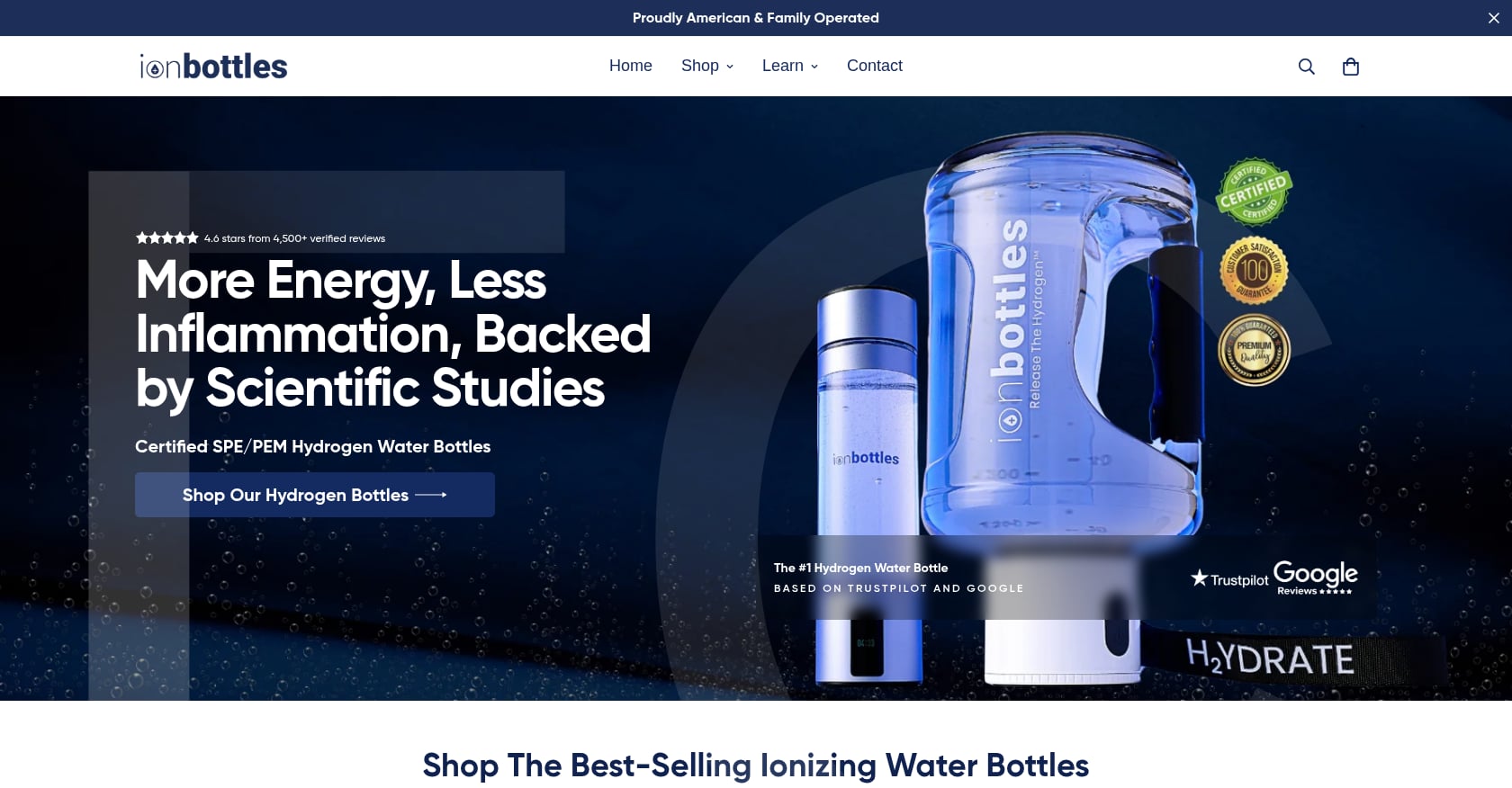
Best for: Glass-first buyers who want a clean daily routine with an included inhalation cannula.
Price: $99.95
Key features:
- Approximately 3.0 ppm target concentration
- 14 oz borosilicate glass body
- 3 to 5 minute cycle times
- SPE/PEM electrolysis with dual venting
- Includes H2 inhalation cannula
- 1-year warranty, 60-day returns
Tradeoffs:
- Glass is heavier and more fragile than Tritan, not ideal for gym bags
- Lower ppm ceiling than the ATOM
- Still requires drinking promptly after each cycle
User sentiment: On r/HydroHomies, at least one user noted receiving and using the cannula attachment for hydrogen inhalation, appreciating the dual-purpose design without needing a separate device.
The IonBottles Pro is the most affordable glass hydrogen bottle with an included inhalation port. That’s a combination no other device at this price point offers.
3. IonBottles Tumbler
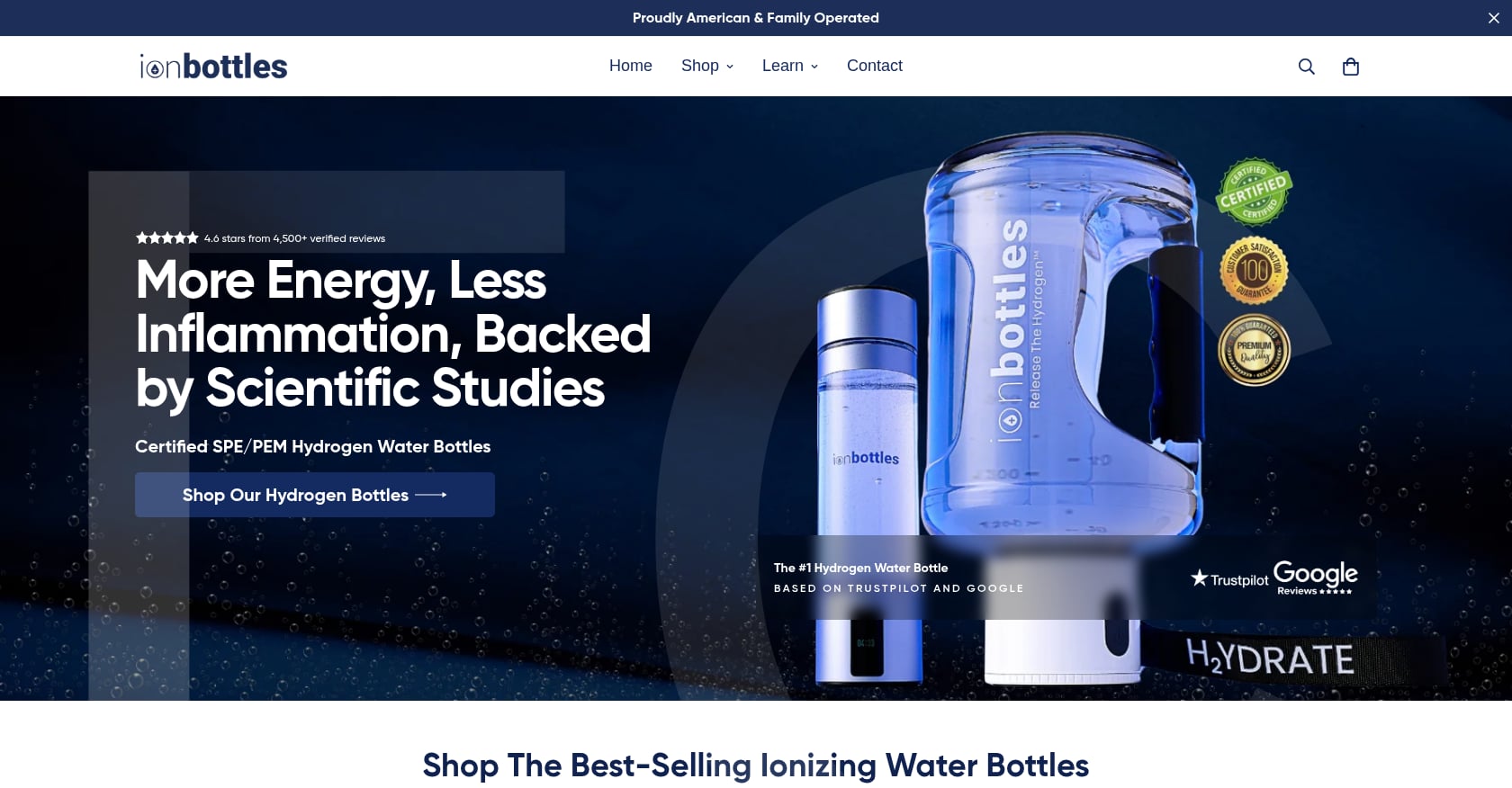
Best for: All-day hydration at the gym, office, or anywhere you need volume over peak concentration.
Price: $129.95
Key features:
- Approximately 1.5–3.0 ppm range
- 32 oz BPA-free Tritan construction
- 10 to 20 minute cycle times
- Designed for extended use sessions
- 1-year warranty, 60-day returns
Tradeoffs:
- Lower peak ppm compared to the ATOM or Pro, which is inherent to the larger volume
- Longer cycle times (10–20 minutes vs. 5 minutes)
- Bulkier for travel
Dose math advantage: This is where volume-based product comparison gets interesting. At 1.5 ppm, the 32 oz Tumbler delivers approximately 1.4 mg of H2 per cycle. The ATOM at 5.0 ppm in 10 oz delivers about 1.5 mg. Nearly identical total dose, but the Tumbler gives you a full day’s water in one fill.
4. IonBottles Tritan Sport Jug
Best for: Families, teams, or anyone prioritizing maximum volume on a budget.
Price: $89.95
Key features:
- Approximately 1.0–2.0 ppm
- 50 oz rugged BPA-free Tritan body
- 5-minute cycle time
- Lowest price in the IonBottles lineup
- 1-year warranty, 60-day returns
Tradeoffs:
- Lowest ppm in the lineup by design
- Large form factor won’t fit most cup holders
- Best for stationary use (kitchen counter, picnic table, office)
User sentiment: Budget-conscious families who want hydrogen water without buying multiple small bottles find the jug format appealing. At $89.95, the Tritan Sport Jug costs less than most single-serve competitors.
Even at 1.0 ppm, the 50 oz Jug pushes about 1.5 mg per cycle, which matches or beats many 10–14 oz bottles running at 3–5 ppm.
5. Echo Flask
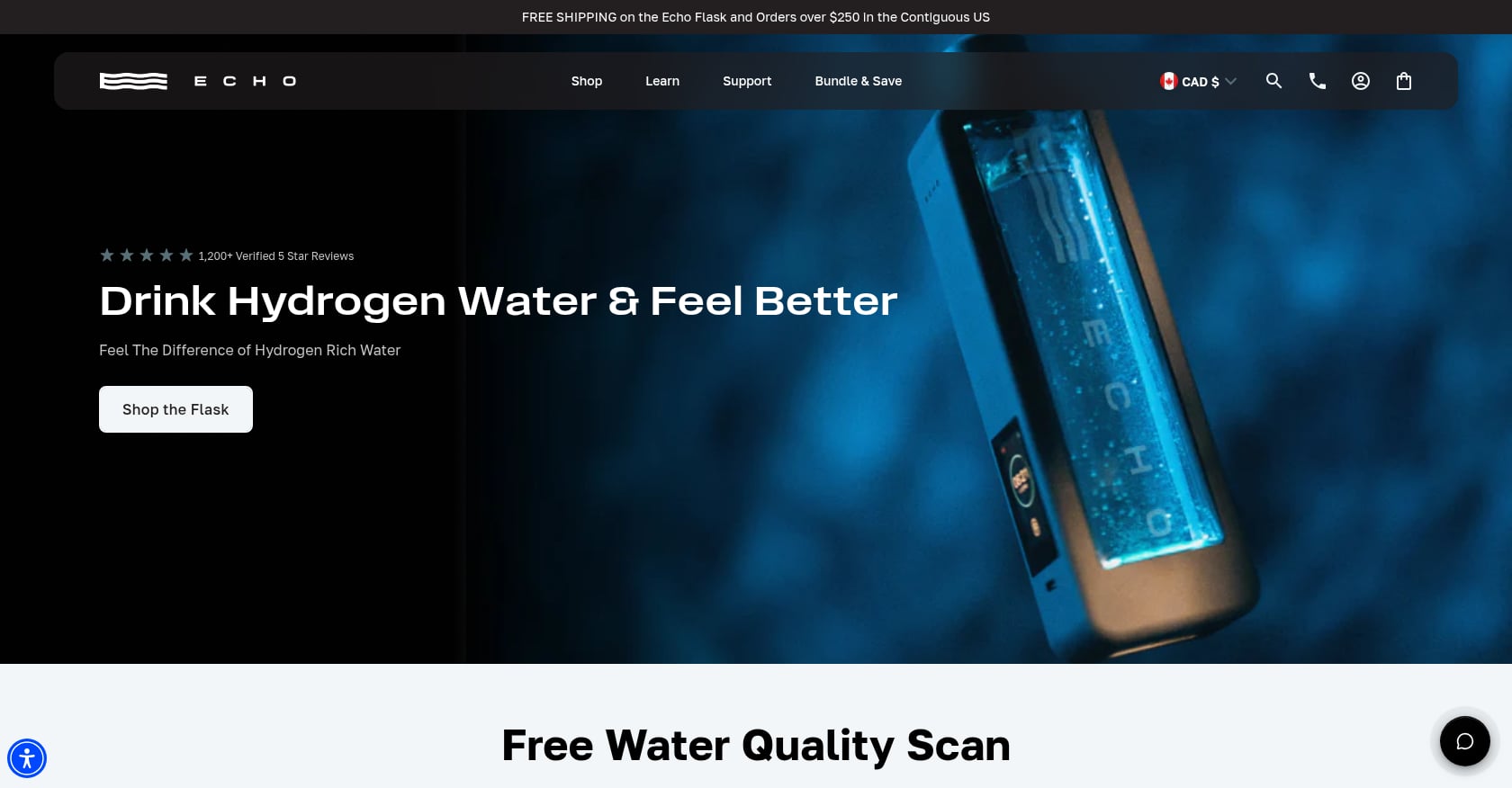
Best for: Feature-seekers who want app tracking, long warranty, and premium positioning.
Typical price range: ~$299–$349 based on third-party reviews (SyncTherapy review)
Key features:
- Claims up to 8 ppm in 20-minute cycles
- App-connected with usage tracking
- ~12 oz capacity
- 5-year limited warranty per Echo’s support documentation (Echo warranty guide)
Tradeoffs:
- Premium pricing, roughly double the ATOM for a similar capacity category
- “Up to” ppm claims should be evaluated alongside independent testing data; real-world single-cycle results across all brands trend lower than marketing headlines (WaterTechReview)
- 20-minute cycle time for max ppm is significantly longer than competitors
- App features add complexity some users won’t need
User sentiment: Mixed reviews on Trustpilot, with some users praising build quality and others raising warranty claim and customer support frustrations. One Reddit thread in r/Biohackers highlighted that premium price tags don’t always correlate with premium support experiences.
6. Piurify Hydrogenator
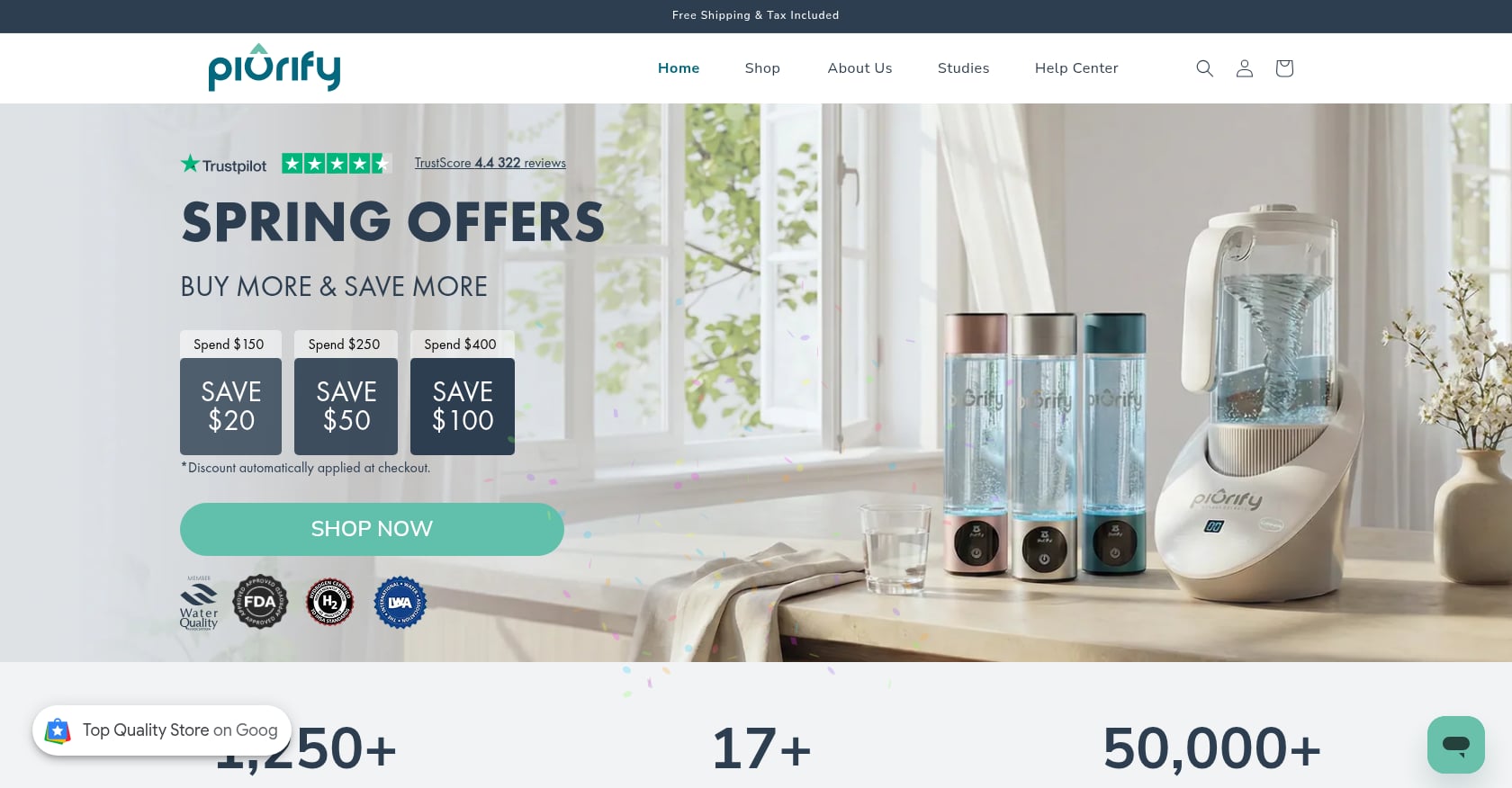
Best for: Shoppers who want a mid-to-high ppm device with published third-party test results.
Typical price: ~$190–$250 per roundup sites (WaterBottleAdvisor)
Key features:
- H2Hubb independent testing measured approximately 2.8 ppm at 5 minutes and 3.85 ppm at 10 minutes in 280 mL (H2Hubb report)
- Built-in ppb display on device
- Compact 280 mL (~9.5 oz) capacity
Tradeoffs:
- H2Hubb specifically cautions against relying on built-in PPB readouts as accurate measurements
- Premium pricing relative to devices with similar tested output
- Small capacity means frequent refills
- Real-world ppm still subject to water source, temperature, and handling variables
User sentiment: Trustpilot reviews show a split. Positive reviewers highlight the compact design. Critical reviewers raise questions about consistency and whether the on-screen ppb display tracks reality. This is a product comparison point that applies to any device with a built-in meter: the display is not a lab instrument.
7. H2CAP Plus

Best for: Frequent travelers who want a pocketable module to pair with their own bottles.
Typical price: ~$149 for the module (Aquacentrum listing)
Key features:
- USB-C rechargeable module that attaches to standard bottle necks
- Extremely portable, no need to carry a dedicated hydrogen bottle
- Use with glass, stainless steel, or plastic bottles you already own
Tradeoffs:
- Output depends entirely on the bottle you pair it with and how well the seal holds
- Fewer independent ppm verifications available compared to leading standalone bottles
- Limited form factor compatibility (check neck diameter before buying)
User sentiment: Sparse community discussion, but users who do review it praise the portability concept. The main concern is whether your specific bottle creates a tight enough seal for effective hydrogen generation.
8. LevelUpWay
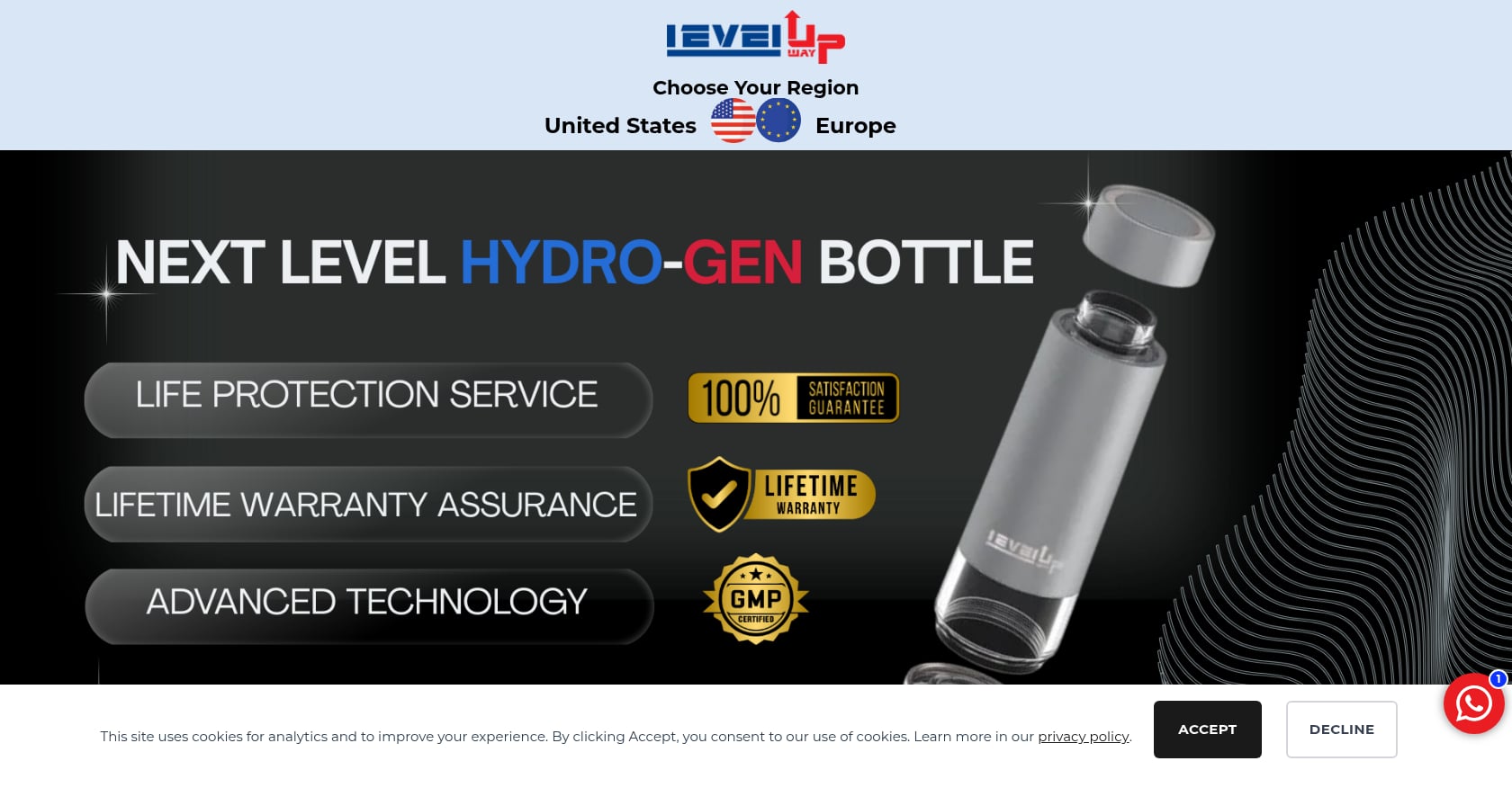
Best for: Curious first-timers testing the hydrogen water category on a budget.
Typical price: ~$59 per third-party roundups (H2 Echelon)
Key features:
- 12 oz capacity
- Entry-level price point
- Widely available form factor
Tradeoffs:
- No independent ppm verification found
- Build quality and durability questioned in reviews (WaterBottleInfo review)
- Likely lacks SPE/PEM venting found in premium units
- Hit-or-miss quality control, a common budget category theme
User sentiment: Value gets praised, but performance and longevity are the recurring concerns. Multiple reviewers describe it as a “starter bottle” before upgrading.
9. GOSOIT
Best for: Absolute lowest cost of entry into hydrogen water.
Typical price: ~$30–$50 per roundup content (PurePebrix)
Key features:
- Amazon-available bargain option
- Basic electrolysis functionality
Tradeoffs:
- Low ppm consistency expected at this price point
- Warranty and returns depend on marketplace policies, not the brand directly
- Limited transparency on electrolysis type or testing
- Several community members report eventually upgrading after starting with budget devices (Hone Health roundup)
User sentiment: This falls squarely in the “try before you invest” category. If hydrogen water interests you but spending $100+ feels risky, a sub-$50 bottle proves the concept. Just don’t expect the ppm or durability of a purpose-built SPE/PEM device.
ppm vs. Dose: Why Chasing the Highest Number Can Mislead You
This is the most overlooked dimension in any hydrogen water bottle product comparison, and few competing guides bother to explain it.
The formula is simple:
mg H2 = ppm × volume in liters
That’s it. Concentration (ppm) multiplied by volume (liters) gives you the actual hydrogen dose in milligrams. The Molecular Hydrogen Institute frames practical daily intake at roughly 1–3 mg based on drinking 1–2 liters at 1–1.5 ppm.
Here’s what this looks like in practice:
| Scenario | ppm | Volume | mg H2 per cycle |
|---|---|---|---|
| ATOM, 10-min cycle | 5.0 | 10 oz (0.30 L) | ~1.5 mg |
| Pro, 5-min cycle | 3.0 | 14 oz (0.41 L) | ~1.2 mg |
| Tumbler, single cycle | 1.5 | 32 oz (0.95 L) | ~1.4 mg |
| Jug, single cycle | 1.0 | 50 oz (1.48 L) | ~1.5 mg |
| Echo Flask, 20-min cycle | 8.0 (claimed) | 12 oz (0.35 L) | ~2.8 mg (if claim holds) |
Notice the Jug at 1.0 ppm delivers essentially the same dose as the ATOM at 5.0 ppm. Volume compensates for concentration. A two-cycle-per-day routine with the Tumbler puts you at approximately 2.8 mg, which is squarely in the research-supported range.
The larger-format bottles also mean you’re less likely to forget to refill and re-cycle throughout the day.
What Labs Test (and How You Can Too)
Understanding how to evaluate ppm claims turns a vague product comparison into a grounded one.
The right tools:
- H2Blue reagent drops are the standard field test. Each drop that decolorizes in your sample represents approximately 0.1 ppm of dissolved hydrogen. It’s affordable, quick, and widely available (H2Blue technical information).
- Gas chromatography (GC) is the gold standard used in lab reports. If a brand references testing, check whether they used GC or just ORP meters.
The ORP myth:
ORP (Oxidation-Reduction Potential) readings are not a proxy for dissolved hydrogen concentration. A study published in Frontiers in Food Science and Technology confirmed that ORP is influenced by multiple factors beyond H2 and should not be used to quantify dissolved hydrogen (Frontiers review). If a brand’s primary evidence is a negative ORP reading, that’s a red flag.
Practitioners on Reddit’s r/skeptic frequently call this out: “ORP isn’t the right metric. Get a bottle that can prove ppm” (r/skeptic thread).
Testing pitfalls at home:
- Sealed vs. open sampling matters enormously. Testing water while the bottle is still sealed (or immediately upon opening) gives a higher reading than testing after the water has sat in a cup for 30 seconds.
- Cycle stacking (running multiple cycles back-to-back) temporarily inflates readings above what a single-cycle user would experience.
- Water temperature and total dissolved solids affect results. Cold water holds more H2 than warm.
- Altitude drops dissolved H2 by roughly 10% per 1,000 meters of elevation (H2 Sciences testing guidance).
For a deeper look at the research behind molecular hydrogen, IonBottles maintains a curated science and clinical studies page worth bookmarking.
Tablets vs. Generators vs. Cans vs. Inhalation
A thorough product comparison should cover the alternatives to electrolytic bottles.
Hydrogen tablets use a magnesium-water reaction (Mg + 2H₂O → H₂ + Mg(OH)₂) to produce dissolved hydrogen. They can spike ppm impressively in small volumes, but gas escapes almost immediately, the taste changes, and you’re left with magnesium hydroxide byproduct. A 2019 study noted significant variability in output depending on method and volume (PMC study on hydrogen tablets). Tablets make sense for travel when carrying a bottle isn’t practical, but they’re not a daily-driver solution for most people.
Pre-made hydrogen cans offer convenience but zero control over freshness, and you’re paying a premium per serving. The aluminum packaging helps retain H2 better than an open glass, but the cost adds up fast compared to a reusable generator.
Inhalation through a dedicated machine is a separate category entirely, used in clinical settings with controlled flow rates. The cannula attachment included with the IonBottles ATOM and Pro offers a secondary inhalation route, but it’s not a substitute for medical-grade inhalation equipment. It’s a convenient add-on for users who want both drinking and light nasal delivery from one device.
Care, Maintenance, and the Warranty Question
How long a hydrogen bottle lasts depends heavily on maintenance. Mineral buildup on the electrolysis plates is the most common performance killer. Clean the chamber regularly (most brands recommend weekly citric acid soaks), and avoid using mineral-heavy or sparkling water.
Warranty and return policies deserve scrutiny in any product comparison because they vary wildly:
- IonBottles offers a 1-year warranty covering manufacturing defects, a 60-day return policy, and an optional $30 Lifetime Protection Plan that covers one replacement.
- Echo Water offers a 5-year limited warranty on the Flask, per their support documentation, though Reddit threads flag mixed experiences with the claims process.
- Budget options like LevelUpWay and GOSOIT rely on Amazon’s marketplace return system, which offers less product-specific support.
One commenter on r/Biohackers put it bluntly: “Premium brands are expensive. Support and warranty quality matters as much as ppm.” That’s a fair summary of the real-world buying experience.
FAQ
Is hydrogen water a scam?
No, but the claims are often inflated. The mechanism is real: molecular hydrogen acts as a selective antioxidant, and over 1,000 studies have explored its effects. The scam-adjacent part is marketing. Brands that claim “up to 8 ppm” in headlines without independent verification are selling optimism, not tested performance. Buy from brands with published test data, expect 1–2 ppm in single-cycle real-world use from most devices, and drink immediately after generation. The Molecular Hydrogen Institute’s FAQ is the best neutral starting point.
How long does hydrogen stay in the water after a cycle?
Not long. Dissolved hydrogen begins escaping the moment you open the bottle, and research shows significant losses within hours depending on container material (PMC retention study). Glass and plastic containers both lose H2 over time. The practical rule: drink within minutes of completing a cycle, not hours.
Does a bigger bottle mean less hydrogen?
Per unit volume, yes. Larger bottles typically register lower ppm because the same electrolysis system is infusing a bigger water mass. But total hydrogen dose (mg) can be equal or higher because of the volume advantage. A 50 oz bottle at 1.0 ppm delivers about 1.5 mg, the same as a 10 oz bottle at 5.0 ppm.
What’s the difference between SPE/PEM and basic electrolysis?
SPE/PEM electrolysis uses a proton exchange membrane to separate hydrogen from oxygen and byproducts (ozone, chlorine). Basic electrolysis produces all gases into the same water. The practical difference: SPE/PEM devices produce cleaner hydrogen without the chemical smell that budget electrolysis units are notorious for. This is one of the first things to verify in any product comparison.
Can I use tap water in a hydrogen water bottle?
Most brands recommend filtered or purified water. High mineral content, chlorine, and fluoride can affect electrolysis efficiency and accelerate plate degradation. Distilled water can also cause issues because the electrolysis process needs some mineral content to conduct. Filtered tap water hits the sweet spot.
Does altitude affect hydrogen water concentration?
Yes. Dissolved hydrogen concentration drops by roughly 10% per 1,000 meters of elevation gain (H2 Sciences). If you live in Denver or Mexico City, expect lower readings than the manufacturer’s specs, which are measured near sea level.
Why does my hydrogen water bottle smell like ozone?
This typically indicates a lack of proper gas separation. Bottles without SPE/PEM technology or without a dedicated venting system mix ozone and chlorine into the water alongside hydrogen. Upgrading to a device with dual-chamber venting eliminates this. It’s one of the most common complaints about budget bottles on Reddit and review platforms.
Which hydrogen water bottle should I buy?
For most buyers, one of three options covers 90% of use cases. The IonBottles ATOM at $149.95 is the top pick for portable, high-concentration use with an included inhalation cannula. The IonBottles Pro at $99.95 is the best glass daily bottle under $150. And the IonBottles Tumbler at $129.95 wins for all-day hydration where total dose matters more than peak ppm. You can browse the full IonBottles lineup here to compare sizes and features side by side.