Best Hydrogen Water Bottle for Biohackers to Buy in 2026
TL;DR
The best hydrogen bottle for biohackers to buy is the IonBottles ATOM, a compact 10 oz SPE/PEM bottle that reaches up to 5.0 PPM for $149.95 and includes a hydrogen inhalation cannula. If you prefer glass, the IonBottles Pro delivers up to 3.0 PPM at $99.95. For all-day hydration, the 32 oz Tumbler or 50 oz Jug trade peak concentration for volume and adherence. Skip anything without SPE/PEM technology, a lab report, or a real warranty.
Hydrogen water bottles are everywhere in biohacking circles right now. Podcasts mention them. TikTok is flooded with them. Gary Brecka made them a talking point. And if you search for the best hydrogen bottle for biohackers to buy, you’ll find dozens of listicles where every brand ranks itself first.
The problem is that most of those guides rank bottles by a single number: peak PPM. That number, stripped of context, tells you almost nothing about the hydrogen dose you’ll actually consume, whether the device produces pure H₂ or chlorine-laced byproducts, or whether the bottle will still work in six months.
This guide takes a different approach. It ranks bottles by usable hydrogen dose, SPE/PEM purity technology, verified output, capacity, materials, routine fit, and warranty. It also addresses the skepticism head-on, because this category deserves it.
Quick picks:
- Best overall for biohackers: IonBottles ATOM
- Best glass bottle under $100: IonBottles Pro
- Best large-capacity tumbler: IonBottles 32 oz Tumbler
- Best high-volume jug: IonBottles 50 oz Tritan Sport Jug
- Best premium mainstream brand: Echo Go+
- Best warranty-focused alternative: Piurify Hydrogenator
- Best compact premium alternative: EVOLV H2Go
- Best design-first option: LevelUpWay
- Best cheap experiment: GOSOIT / budget Amazon bottles
At-a-Glance Comparison Table
| Rank | Bottle | Best For | Price | Capacity | Max H₂ Claim | Key Differentiator | Main Tradeoff |
|---|---|---|---|---|---|---|---|
| 1 | IonBottles ATOM | Max concentration under $150 | $149.95 | 10 oz | Up to 5.0 PPM | SPE/PEM, included inhalation cannula | Small capacity, drink soon after cycle |
| 2 | IonBottles Pro | Glass daily wellness | $99.95 | 14 oz | Up to 3.0 PPM | Glass body, SPE/PEM, inhalation cannula | Less drop-resistant than Tritan |
| 3 | IonBottles 32 oz Tumbler | Desk, gym, longer sessions | $129.95 | 32 oz | ~1.5–3.0 PPM | Large capacity for all-day use | Lower concentration range |
| 4 | IonBottles 50 oz Jug | High-volume hydration | $89.95 | 50 oz | ~1.0–2.0 PPM | Largest capacity, lowest price | Lowest concentration, not pocketable |
| 5 | Echo Go+ | Premium mainstream brand | Varies by retailer | ~10–12 oz | Reported 4,500+ PPB | Strong biohacker brand recognition | Premium pricing, small capacity |
| 6 | Piurify Hydrogenator | Warranty-focused buyers | Varies | ~10 oz | Varies by source | Lifetime warranty positioning | Plastic build, slow charging |
| 7 | EVOLV H2Go | Compact premium alternative | ~$149–$170 | ~8 oz | ~5,400 PPB reported | Premium aluminum build | Very small, mixed battery feedback |
| 8 | LevelUpWay | Design-first entry | ~$59–$110 | 8–12 oz | Moderate | Attractive design | Leak/pressure complaints |
| 9 | GOSOIT / budget Amazon | Casual experimentation only | ~$39 | ~16 oz | Low measured output | Cheapest entry point | Low output, durability concerns |
Note: Competitor pricing and specs vary widely across retailers and product generations. IonBottles pricing is from the manufacturer.
How We Ranked These Bottles
Most hydrogen water bottle guides sort by a single metric: who claims the highest PPM. That is a bad way to choose a device.
A 5,000 PPB claim tested under ideal lab conditions, in a sealed chamber, immediately after electrolysis, tells you little about what ends up in your body when you unscrew the cap five minutes later at your desk. The Molecular Hydrogen Institute notes that hydrogen is colorless, odorless, tasteless, and diffuses rapidly from water, making measurement timing critical because even short delays can underestimate concentration source.
Here is what actually matters when picking the best hydrogen water bottle for biohackers:
- Usable hydrogen dose. Concentration multiplied by volume, consumed quickly enough to matter.
- Verification quality. Gas chromatography beats a third-party lab report, which beats H2Blue reagent drops, which beats an ORP meter, which beats a marketing claim.
- SPE/PEM purity technology. Dual-chamber systems with a proton exchange membrane separate hydrogen from oxygen and potential byproducts like ozone and chlorine.
- Routine fit. A bottle you use daily beats a bottle that sits in a drawer. Size, cycle time, and portability all factor in.
- Materials and cleaning. Glass, BPA-free Tritan, food-grade materials, replaceable seals, and clear descaling instructions.
- Risk reversal. Warranty, return window, domestic support, and replacement parts. This category is full of low-quality imports with no recourse.
We weighted these six dimensions to produce the rankings below. You can learn more about the SPE/PEM electrolysis technology behind the top-ranked bottles.
The Usable Dose Framework Most Guides Miss
Here is something almost no competing article explains: a small, high-PPM bottle and a large, lower-PPM bottle can deliver similar total hydrogen per fill.
Approximate theoretical H₂ per full bottle:
| Bottle | Max Concentration | Volume | Approx. H₂ per Fill |
|---|---|---|---|
| IonBottles ATOM | Up to 5.0 PPM | 10 oz (~0.296 L) | ~1.48 mg |
| IonBottles Pro | Up to 3.0 PPM | 14 oz (~0.414 L) | ~1.24 mg |
| IonBottles 32 oz Tumbler | ~1.5–3.0 PPM | 32 oz (~0.946 L) | ~1.42–2.84 mg |
| IonBottles 50 oz Jug | ~1.0–2.0 PPM | 50 oz (~1.48 L) | ~1.48–2.96 mg |
Calculation: PPM ≈ mg/L × liters. Real-world H₂ varies with water type, temperature, altitude, cycle time, measurement method, and how long the water sits. This is a comparison framework, not a clinical-dose guarantee.
The MHI notes that many hydrogen water studies use concentrations near 0.5 to 1.6+ mg/L, with 1.6 mg/L considered saturation at standard atmospheric pressure source. Claims above that level may involve supersaturation, nano-bubbles, or readings taken immediately post-generation that drop quickly once you open the bottle.
The takeaway: a 5 PPM claim does not mean the water stays at 5 PPM after you open it, pour it, carry it around, or sip it slowly. It means the device may reach that concentration under specific test conditions.
9 Best Hydrogen Water Bottles for Biohackers
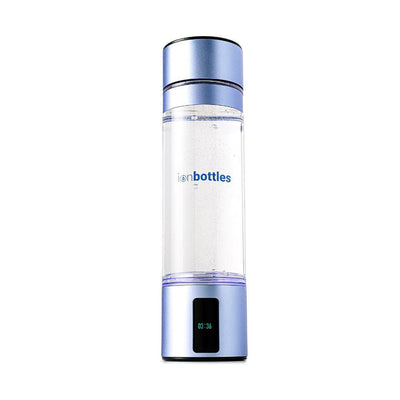
1. IonBottles ATOM
Best for: Biohackers who want maximum concentration in a compact, affordable format.
- Price: $149.95
- Capacity: 10 oz
- Max H₂: Up to 5.0 PPM (10-minute cycle), up to 2.5 PPM (5-minute cycle)
- Technology: SPE/PEM electrolysis with platinum-coated titanium plates
- Material: BPA-free Tritan
- Cycle time: 5 or 10 minutes
- Extras: Built-in H₂ inhalation cannula attachment, USB-C charging
- Warranty: 1-year warranty, 60-day satisfaction guarantee
- Lab testing: ATOM lab PDF shows results from an ISO/IEC 17025 laboratory
The ATOM is the best hydrogen bottle for biohackers to buy if concentration and portability are the priorities. At up to 5.0 PPM in a 10-minute cycle, it produces the highest claimed concentration in the IonBottles lineup. The included inhalation cannula is unusual at this price point; most competitors either charge extra for one or don’t offer it at all.
For biohackers, the 10 oz size works well as a pre-workout serving, a morning protocol dose, or a travel companion. You are not carrying an all-day water supply. You are producing a concentrated hydrogen serving, drinking it quickly, and moving on.
What to watch out for:
- 10 oz means frequent refills if you want multiple servings.
- Hydrogen dissipates, so drink within a few minutes of generating.
- PPM can vary by water source, temperature, and altitude.
Real user perspective: Practitioners on Reddit are split on IonBottles. One r/Biohackers user praised the Pro model and specifically emphasized SPE/PEM technology as the reason they chose it, noting that cheaper bottles can create ozone or chlorine when used with tap water source. A separate r/Biohackers thread criticized the brand and the category broadly, raising concerns about product origin and customer service source. This kind of mixed sentiment is exactly why warranty terms, lab testing transparency, and a real return policy matter.
Verdict: The strongest price-to-PPM value for a verified SPE/PEM bottle. The best pick for biohackers who want a high-concentration serving device with an inhalation option. Shop the IonBottles ATOM.
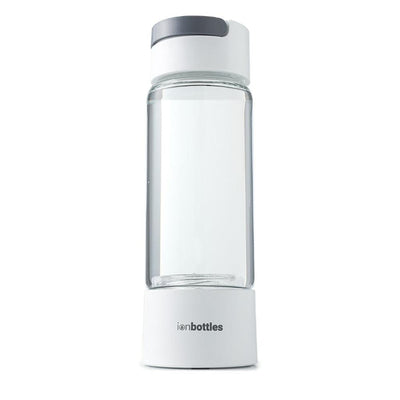
2. IonBottles Pro
Best for: Biohackers who prefer glass and want daily hydrogen water under $100.
- Price: $99.95
- Capacity: 14 oz
- Max H₂: Up to 3.0 PPM
- Technology: SPE/PEM electrolysis
- Material: Glass
- Cycle time: 3–5 minutes
- Extras: H₂ inhalation cannula attachment
- Warranty: 1-year warranty, 60-day satisfaction guarantee
The Pro is the glass option in the IonBottles lineup. For biohackers concerned about plastic leaching (even BPA-free Tritan), glass removes that variable entirely. At $99.95, it’s the most affordable SPE/PEM bottle in this list that includes an inhalation cannula.
The 14 oz capacity gives slightly more volume than the ATOM while staying compact enough for daily carry in a bag or backpack. The 3–5 minute cycle is fast, making it practical for morning routines or office use.
What to watch out for:
- Glass is breakable. Consider the protective bottle sleeve for travel.
- Lower max concentration than the ATOM.
- Still not a large-capacity all-day bottle.
Verdict: The right pick if you want glass, a fast cycle, and an inhalation option without spending $150+. See the IonBottles Pro.
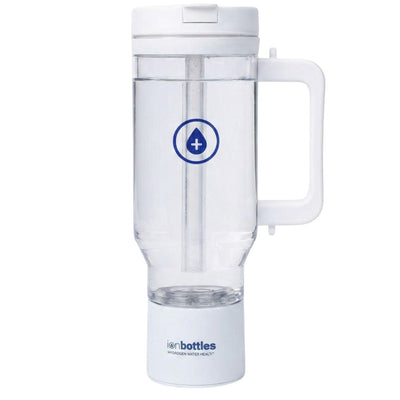
3. IonBottles 32 oz Tumbler
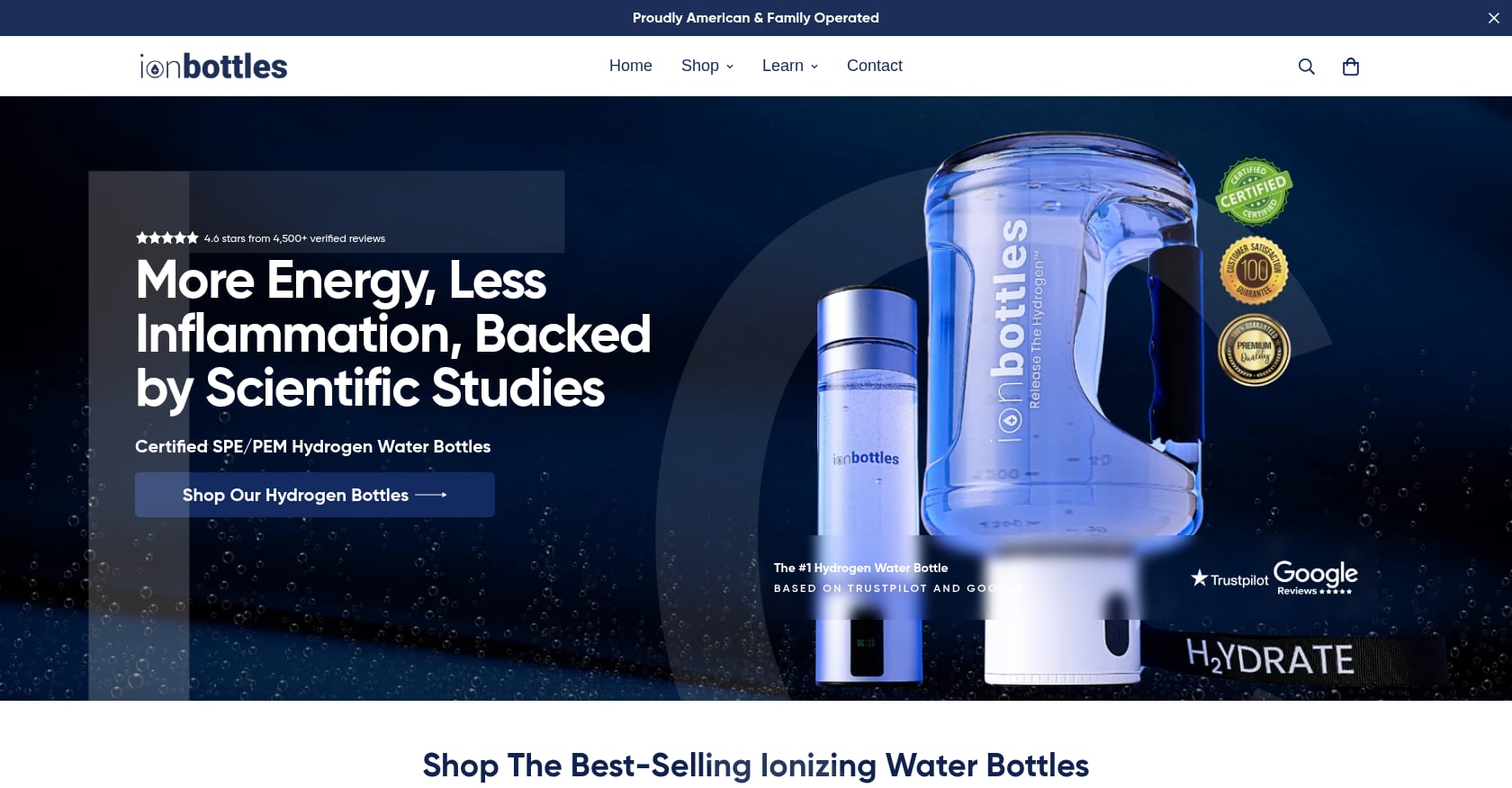
Best for: Desk workers, gym-goers, and anyone who needs hydrogen water to last a full session.
- Price: $129.95
- Capacity: 32 oz
- Max H₂: ~1.5–3.0 PPM
- Material: BPA-free Tritan
- Cycle time: 10–20 minutes
This solves the most common complaint about hydrogen water bottles: they are too small. Most bottles on the market are 8–12 oz. That works for a single concentrated serving, but biohackers who want hydrogen water integrated into a lifting session, a workday, or a long sauna block need more volume.
The 32 oz Tumbler hits a practical sweet spot. Its theoretical total H₂ per fill (roughly 1.42–2.84 mg at the claimed concentration range) can match or exceed what a smaller high-PPM bottle delivers, if consumed within a reasonable window.
What to watch out for:
- Lower peak concentration than the ATOM.
- Longer cycle times require planning.
- Larger format is less pocket-friendly.
Verdict: The best hydrogen water bottle for biohackers who care more about adherence and volume than peak PPM numbers. Check out the 32 oz Tumbler.
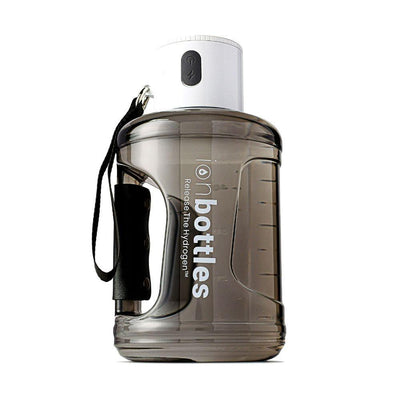
4. IonBottles 50 oz Tritan Sport Jug
Best for: Athletes and high-volume drinkers who want maximum capacity at the lowest price.
- Price: $89.95
- Capacity: 50 oz
- Max H₂: ~1.0–2.0 PPM
- Material: BPA-free Tritan
- Cycle time: 5 minutes
At $89.95, this is the best price-per-ounce hydrogen bottle in the IonBottles lineup and one of the cheapest large-format options from any reputable brand. The 50 oz capacity delivers an estimated 1.48–2.96 mg of theoretical H₂ per fill, which, ironically, can exceed what you get from a 10 oz bottle claiming 5 PPM.
This is the adherence play. People drink more water when they have a big bottle on their desk. If your goal is hydrogen-enriched hydration across an entire day, this jug is more practical than refilling a 10 oz bottle five times. You can read the Tritan Sport user manual for cycle details and care instructions.
What to watch out for:
- Lower concentration range than compact bottles.
- Not discreet or portable.
- Hydrogen retention still matters: drink in a reasonable window, don’t let it sit uncapped for hours.
Verdict: Best value-per-ounce hydrogen bottle. Good for gym bags and desks, not for pockets.
5. Echo Go+
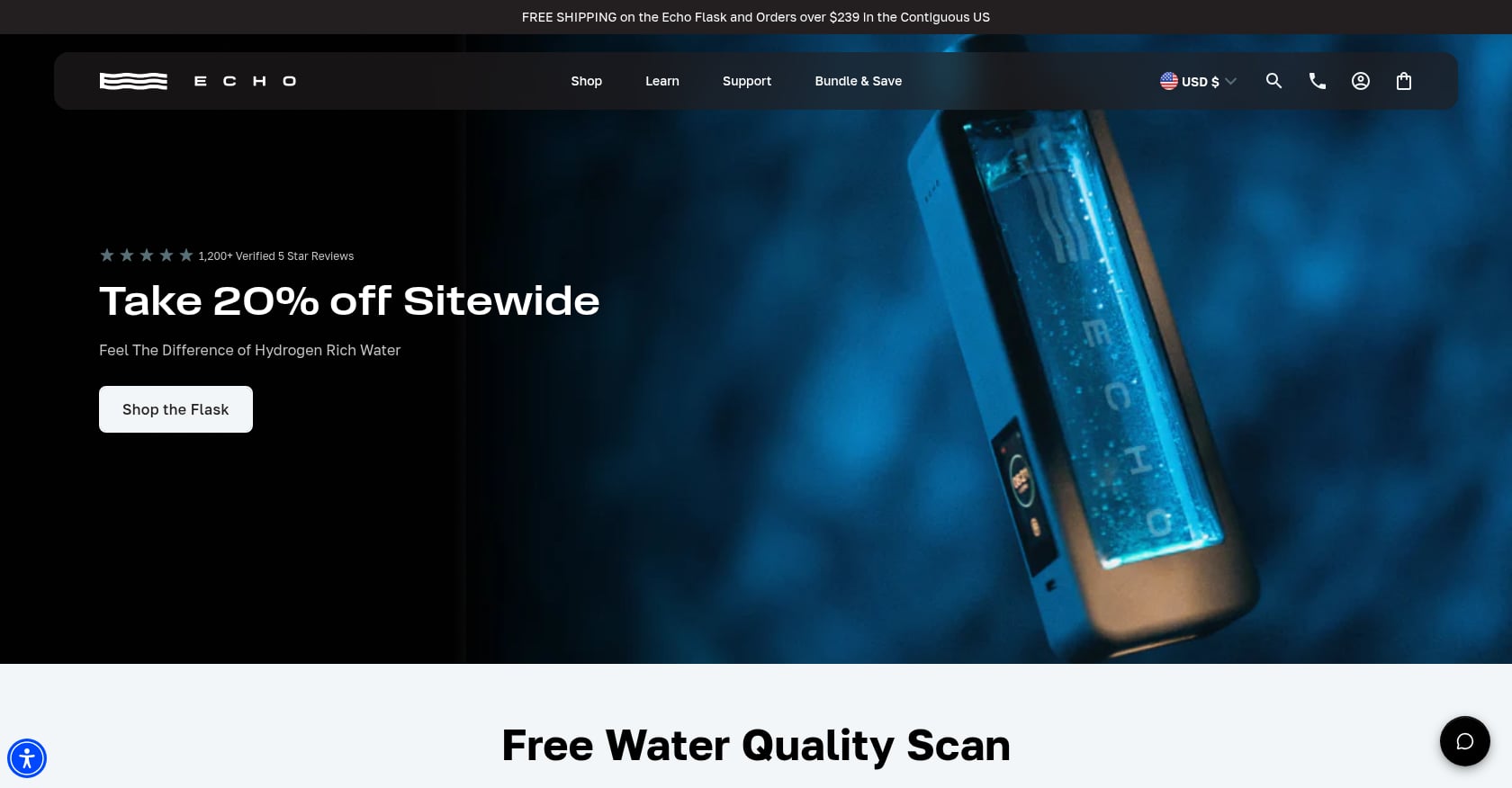
Best for: Buyers who want the most recognized brand name in biohacker-adjacent hydrogen water.
- Price: Varies widely by retailer and model generation (third-party sources range from ~$90 to $229+)
- Capacity: ~10–12 oz
- Max H₂: Sources report 4,500+ PPB depending on model
- Technology: SPE/PEM
Echo is the name most people encounter first when researching hydrogen water. Gary Brecka’s public endorsement drove significant awareness in biohacking communities, and comparison articles consistently include Echo products source.
Brand recognition is real. So is the price premium. Depending on the retailer and model generation, you may pay significantly more than you would for an IonBottles ATOM while getting similar or smaller capacity.
What to watch out for:
- Pricing and specs vary dramatically across retailers and generations. Confirm what you’re getting before buying.
- Capacity is still small (10–12 oz).
- One r/Biohackers thread titled “Echo Go+ Buyers Beware” described warranty and support frustrations source. This does not prove a systemic problem, but it reinforces the importance of reading warranty terms carefully for any premium hydrogen bottle.
Verdict: A legitimate brand with strong visibility. Whether the premium over comparable SPE/PEM bottles is worth it depends on how much brand recognition matters to you.
6. Piurify Hydrogenator
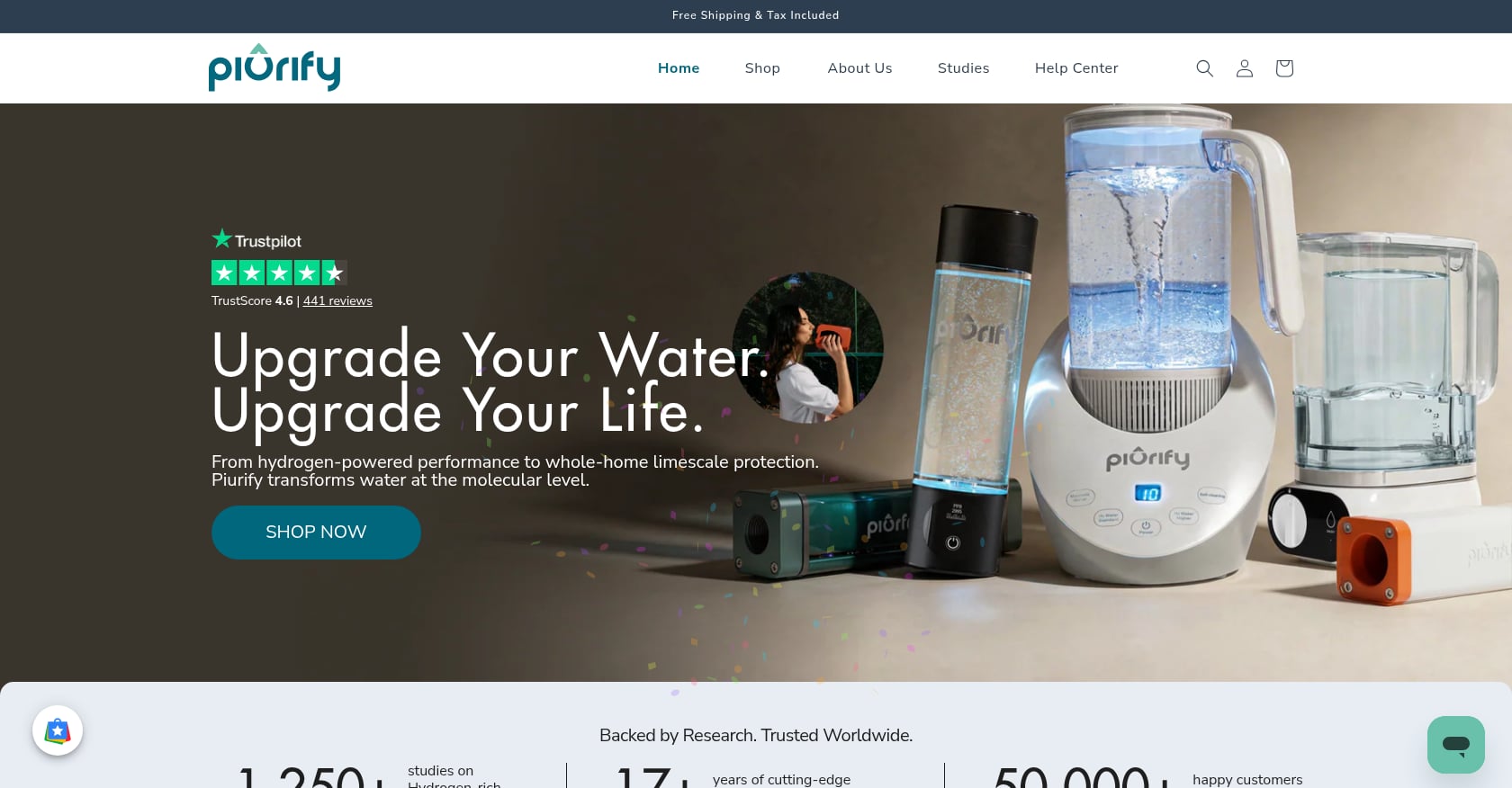
Best for: Buyers who prioritize long-term warranty support above all else.
- Price: Varies by retailer (third-party sources range from ~$100 to $239+)
- Capacity: ~10 oz
- Technology: SPE/PEM reported in reviews
Piurify positions itself around warranty. Third-party review summaries describe lifetime warranty support, simple operation, and clean taste as strengths. WaterBottleExperts noted that Piurify makes sense for buyers who value long-term support and steady performance over aesthetics or premium materials source.
What to watch out for:
- Small capacity (similar to most compact bottles).
- Plastic build.
- Multiple review summaries mention slow charging (about 3 hours when fully depleted).
- Built-in PPB/PPM displays should not be treated as lab-grade measurement. H2HUBB has expressed reservations about display features that can mislead consumers about actual hydrogen concentration.
Verdict: A reasonable choice if warranty length is your top buying criterion. Compare the actual terms carefully before assuming “lifetime” means unconditional.
7. EVOLV H2Go
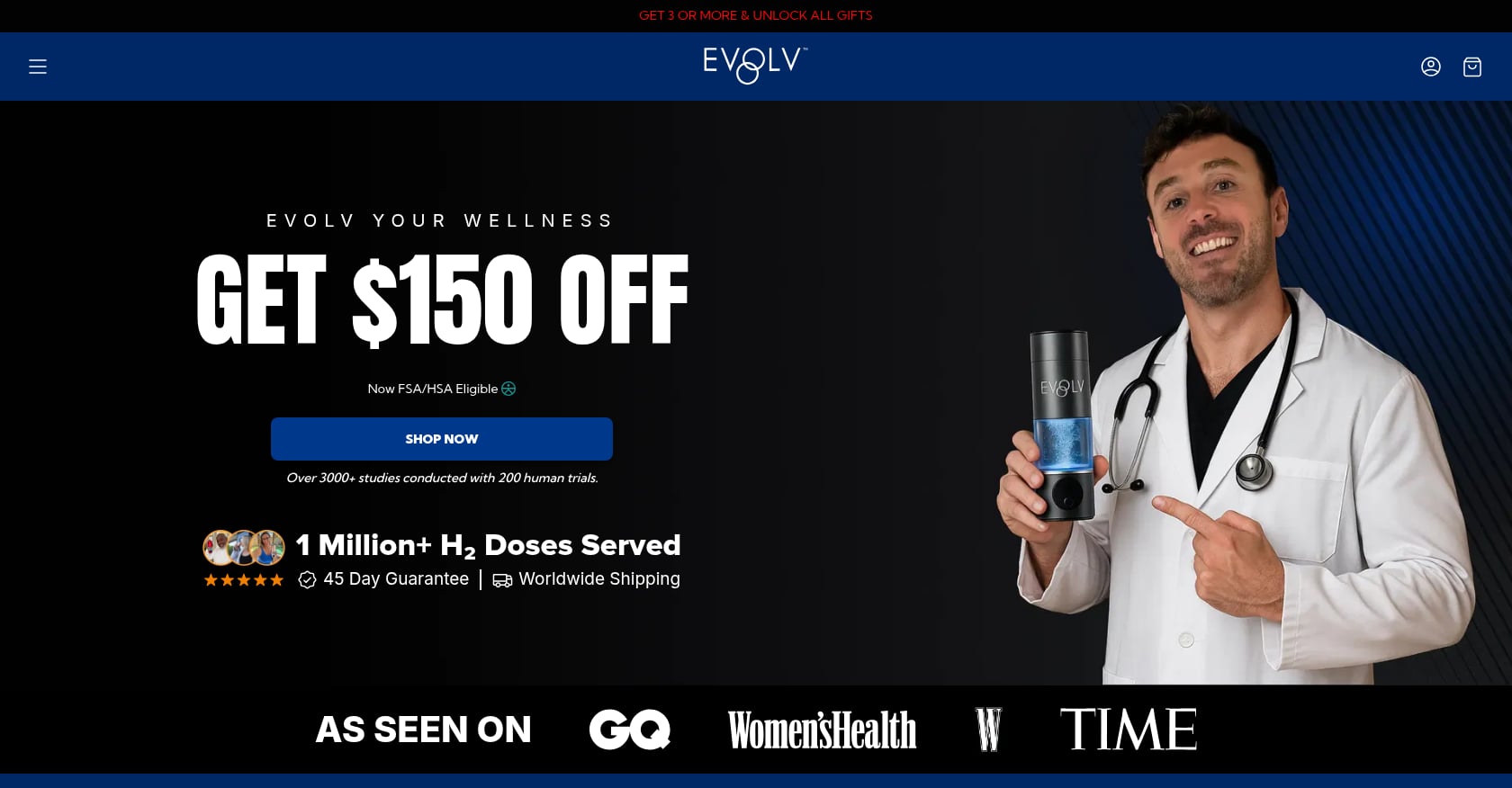
Best for: Users who want a compact, premium-feeling bottle for travel.
- Price: ~$149–$170 in third-party sources
- Capacity: ~8 oz
- Max H₂: Third-party sources cite ~5,400 PPB
The EVOLV H2Go gets consistent praise for build quality. WaterBottleExperts describes an aircraft-grade aluminum body, magnetic fast-charging, and leak-resistant design source. It feels premium. It looks premium.
What to watch out for:
- At ~8 oz, this is one of the smallest bottles in the category. Multiple servings require patience and repeated cycles.
- Mixed battery feedback. Some users report needing to recharge more frequently than expected.
- Harder to clean than bottles with wider openings.
Verdict: A well-built compact bottle. The small capacity is a real limitation for anyone who wants more than a single serving at a time.
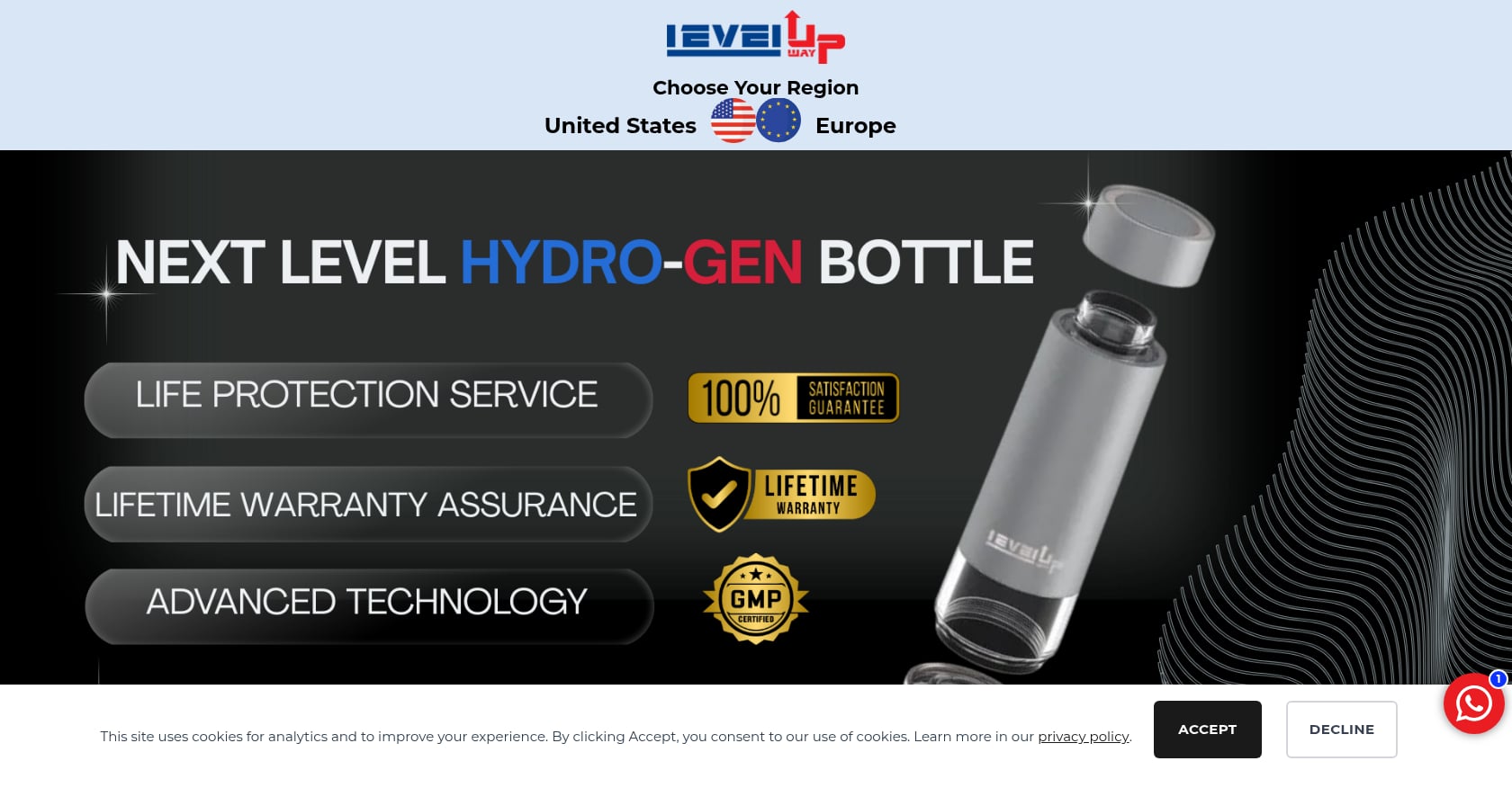
8. LevelUpWay
Best for: Style-conscious buyers who want an attractive bottle and aren’t chasing maximum verified concentration.
- Price: Sources vary (~$59–$110)
- Capacity: ~8–12 oz (varies by model)
- Warranty: 1 year reported
LevelUpWay gets attention for design. Cybernews lists it as a premium/aesthetic option with up to 20 cycles on a charge and sturdy construction source. It looks good on a desk.
What to watch out for:
- Leak and pressure-release issues appear across multiple review summaries. WaterBottleExperts specifically identifies the need for pressure release after each run as a practical drawback.
- Moderate concentration positioning; not the choice for biohackers prioritizing verified output.
- Over-tightening the cap reportedly causes leakage.
Verdict: Fine as an entry-level or gift option. Not the best hydrogen water bottle for biohackers who want to verify and optimize their hydrogen dose.
9. GOSOIT / Budget Amazon-Style Bottles
Best for: Curious experimenters willing to spend very little with low expectations.
- Price: ~$39
- Capacity: ~16 oz
- Cycle time: 1–3 minutes
- Material: Glass
Budget Amazon bottles like GOSOIT offer the cheapest entry point into hydrogen water. WaterBottleExperts describes a quick cycle, glass body, and large capacity for the price, but lists low measured output (around 300 PPB in testing) and cleaning difficulty as real drawbacks source.
What to watch out for:
- Measured output in third-party testing was roughly 300 PPB, far below what verified SPE/PEM bottles produce.
- Visible hydrogen production can decline after a few months.
- No clear lab report, limited warranty, and generic marketplace branding.
- One user on ProductReview.com.au reported their hydrogen bottle showed zero hydrogen production when tested with H2Blue reagent drops source.
Verdict: You get what you pay for. If you just want to see bubbles and decide whether you’re interested in the category, a $39 bottle is a cheap experiment. For any serious biohacking protocol, spend more.
Hydrogen Water Science in Plain English
Hydrogen-rich water is ordinary water with dissolved molecular hydrogen gas (H₂) added. That is different from the hydrogen atoms already bonded in H₂O. Every water molecule contains hydrogen, but those atoms are locked in a chemical bond with oxygen and are not available as free molecular hydrogen.
The research is promising but not settled. A 2024 systematic review covering 25 human studies found encouraging early findings across areas including exercise capacity, cardiovascular function, mental health markers, and oxidative stress, but concluded that larger sample sizes and more rigorous methods are needed source. Mainstream health sources like Healthline and WebMD say hydrogen water likely won’t harm healthy people, but large-scale studies have not validated its proposed benefits source.
A 2022 review of electrolyzed-reduced water argued that many alkaline water claims become irrelevant once scrutinized, and that molecular hydrogen itself is the key agent being studied source. In other words, if you are buying a hydrogen bottle, buy it for the dissolved H₂, not for pH changes, “structured water,” or negative ORP marketing.
Hydrogen water bottles are wellness devices, not medical treatments. The FDA has taken enforcement action against hydrogen beverage companies that claimed their products could fight inflammation, stabilize cholesterol, or prevent disease source. Avoid brands that make those promises.
For a deeper look at the clinical research IonBottles aggregates, visit the science and research page.
PPM vs PPB vs Actual Dose: What Biohackers Need to Know
These units confuse almost everyone. Here is the short version:
- 1 PPM = 1,000 PPB = approximately 1 mg/L in dilute aqueous solutions.
- Many hydrogen water studies use concentrations between 0.5 and 1.6+ mg/L.
- 1.6 mg/L (~1.6 PPM) is considered saturation at standard atmospheric pressure when the gas phase above the water is pure hydrogen at 1 atm source.
Claims above 1.6 PPM are possible through supersaturation, nano-bubbles, or measurements taken immediately after electrolysis in a sealed chamber. They are not false, but they need context. The moment you open the bottle, hydrogen begins escaping. The longer you wait, the less you get.
This is why concentration alone is a misleading way to rank bottles. A 5 PPM bottle holding 10 oz of water and a 2 PPM jug holding 50 oz may deliver similar (or even reversed) total hydrogen per fill. The jug wins if you drink most of it within a reasonable window. The compact bottle wins if you need a fast, concentrated dose you finish in two minutes.
How to Avoid Fake Hydrogen Bottles
This category has a real fraud problem. Cheap marketplace devices with blue LED lights and vigorous bubbling may produce very little dissolved hydrogen. Practitioners on Reddit’s r/Skeptic have questioned whether many bottles are pressurized or powerful enough to reach useful levels source, and r/Chemistry threads routinely debate whether devices can produce clinically meaningful concentrations source.
Red flags to watch for:
- No mention of SPE/PEM technology. Without a proton exchange membrane, simple electrolysis can produce ozone and chlorine alongside hydrogen.
- No lab report or third-party testing. If a brand cannot show gas chromatography results or even H2Blue reagent test results, their PPM claim is just a number on a box.
- ORP meter used as “proof” of hydrogen. ORP meters measure overall redox potential, not hydrogen concentration source. A negative ORP reading does not tell you how much H₂ is in the water.
- Disease claims. Any bottle promising to cure inflammation, prevent disease, treat COVID, or stabilize cholesterol is making claims the FDA considers illegal for this product category.
- No warranty or return policy. If the seller won’t stand behind the device, that tells you something.
- Generic marketplace branding with no company identity. No website, no support email, no replacement parts.
- No cleaning or descaling instructions. Electrode plates need maintenance. If the manufacturer never mentions this, they may not expect the bottle to last.
IonBottles publishes its warranty terms and return policy openly. Whatever brand you buy, verify that the company does the same.
Testing at Home
If you already own a hydrogen bottle and want to check its output:
- Best method: Gas chromatography from an independent lab (not practical for most consumers, but it is the gold standard).
- Good consumer spot-check: H2Blue reagent drops, used correctly and immediately after a cycle.
- Not enough: ORP meters, bubbles, LED color, taste, or “negative ORP” claims on the product page.
Bottles vs Tablets vs Inhalation
A recurring question in biohacker forums is whether hydrogen tablets are better than bottles. One r/Biohackers discussion covered this directly, with users debating whether tablets produce more hydrogen, whether bottle output decays over time, and whether the upfront cost of a device is worth it compared to ongoing tablet purchases source.
Here is the practical breakdown:
Bottles are reusable, have no ongoing consumable cost, and integrate into a daily water-drinking routine. The tradeoff is upfront price, maintenance, and the fact that output can degrade over time if electrodes are not cleaned.
Tablets can produce high bursts of hydrogen in any glass of water, but they add ongoing cost, may contain inactive ingredients, and require you to carry tablets everywhere. They can be a good way to test the category before committing to a device.
Inhalation is a separate delivery route. The IonBottles ATOM and Pro include H₂ inhalation cannula attachments, which is unusual for bottles in this price range. Inhalation should not be positioned as medical therapy, but biohackers interested in experimenting with nasal H₂ delivery can do so without buying a separate device.
The best choice depends on adherence. The method you actually use consistently beats the one with the “best” spec sheet.
Frequently Asked Questions
What is the best hydrogen water bottle for biohackers?
The IonBottles ATOM is the top pick for biohackers who want high concentration (up to 5.0 PPM), SPE/PEM technology, and an included inhalation cannula at $149.95. For glass preference, the IonBottles Pro is the best option under $100. For high-volume hydration, the 32 oz Tumbler or 50 oz Jug trades peak PPM for adherence and total dose.
Is hydrogen water legit or a scam?
The research is promising but preliminary. A 2024 systematic review of 25 human studies found encouraging early results, but called for larger and more rigorous trials source. The category is legitimate, but many cheap bottles produce negligible hydrogen, and brands making disease-cure claims are breaking FDA rules.
What PPM should a hydrogen water bottle produce?
Most clinical studies use concentrations between 0.5 and 1.6+ mg/L (PPM). A bottle producing 1.0–3.0 PPM under real-world conditions is in a useful range. Claims above ~1.6 PPM involve supersaturation and should be understood as peak readings that drop once you open the bottle.
Does hydrogen stay in water after generating?
Not for long. Molecular hydrogen is a tiny, highly diffusible gas that escapes from water quickly, especially once exposed to air. Drink your hydrogen water within a few minutes of generating it for the best results. Letting it sit open on your desk for an hour means much of the dissolved H₂ is gone.
Are cheap Amazon hydrogen bottles worth it?
Generally, no, for biohacking purposes. Third-party testing of budget bottles has shown output as low as 300 PPB, and some users report zero detectable hydrogen with H2Blue drops. If you just want to explore the concept cheaply before investing, a budget bottle is a low-risk way to start, but don’t expect meaningful hydrogen output.
Do I need SPE/PEM technology in a hydrogen bottle?
Yes, if you want pure hydrogen without potential byproducts. SPE/PEM (Solid Polymer Electrolyte / Proton Exchange Membrane) systems separate hydrogen from oxygen and can help prevent ozone and chlorine formation. Bottles without this technology, especially when used with mineral-containing tap water, carry a higher risk of producing unwanted byproducts.
Is ORP a valid way to test hydrogen in water?
No. ORP meters measure overall oxidation-reduction potential, which is influenced by many factors besides hydrogen. The Molecular Hydrogen Institute is clear that ORP does not measure hydrogen concentration source. Use H2Blue reagent drops for a consumer spot-check, or look for gas chromatography results from the manufacturer.
What is the best large-capacity hydrogen water bottle?
The IonBottles 32 oz Tumbler ($129.95) and 50 oz Tritan Sport Jug ($89.95) are the best large-format options from a brand with SPE/PEM technology and real warranty support. Most hydrogen bottle brands only offer 8–12 oz sizes, which limits total hydrogen per fill and requires constant refilling.
The Bottom Line
Finding the best hydrogen bottle for biohackers to buy comes down to matching the device to your actual routine, not chasing the biggest number on a spec sheet.
If you want maximum concentration in a portable format with an inhalation option, the IonBottles ATOM at $149.95 is the strongest pick. If you prefer glass and want to stay under $100, the IonBottles Pro gets you SPE/PEM technology and an inhalation cannula at a lower price. If volume and adherence matter more than peak PPM, the 32 oz Tumbler or 50 oz Jug will serve you better than refilling a tiny bottle five times a day.
Whatever you choose, look for verified SPE/PEM technology, ask for lab testing, avoid disease claims, drink your hydrogen water quickly after generating it, and buy from a company that publishes its warranty and return policy. The science is still catching up to the hype. But the hardware gap between good hydrogen bottles and bad ones is wide, and picking the right device is the first step to finding out whether molecular hydrogen works for you.