TL;DR
PEM (Proton Exchange Membrane) electrolysis splits water into hydrogen and oxygen using a selective membrane that only allows hydrogen ions to pass through. In a hydrogen water bottle, this means pure molecular hydrogen dissolves into your drinking water while oxygen, ozone, and chlorine byproducts are blocked and vented out separately. Bottles with genuine PEM technology produce 1.6 to 5+ ppm of dissolved hydrogen, compared to just 0.3 to 1.0 ppm from cheaper single chamber designs. The membrane, the electrodes, and the dual chamber vent system are the three components that make it all work. But the actual concentration you get depends on temperature, water volume, cycle length, altitude, and how you test it.
What PEM Electrolysis Actually Means
PEM stands for Proton Exchange Membrane. You might also see it called SPE, which stands for Solid Polymer Electrolyte. These terms are interchangeable in the hydrogen water bottle world. They both describe the same core technology: a solid membrane that separates hydrogen production from everything else happening inside the electrolysis cell.
The technology is not new. General Electric first developed PEM electrolysis in the 1960s for NASA and fuel cell applications, achieving performance levels far beyond what alkaline electrolysis could manage at the time (source). What changed is the scale. Engineers have miniaturized this industrial process to fit inside a portable bottle you carry to the gym.
Think of it as a two room house. On one side (the anode), water breaks apart and releases oxygen. On the other side (the cathode), pure hydrogen gas forms. The wall between the two rooms is the PEM, and it has a very specific rule: only hydrogen ions get through the door. Everything else stays locked on the oxygen side.
This separation is the whole point. Without it, you get hydrogen mixed with oxygen, ozone, and potentially chlorine, all dissolved into the same water you’re about to drink. If you want to understand how SPE/PEM electrolysis creates hydrogen, the membrane is where it all starts.
How PEM Electrolysis Works Inside a Water Bottle, Step by Step
Understanding how PEM electrolysis works in water bottles comes down to six stages. Each one happens in seconds, but the chemistry is precise.
Step 1: Water Enters the Electrolysis Cell
The bottle’s base contains a compact electrolysis cell with two electrodes (an anode and a cathode) separated by the PEM. When you press the button and start a cycle, water from the bottle flows into contact with this cell.
Step 2: The Anode Reaction (Oxygen Side)
An electrical current from the battery hits the anode. Water molecules break apart according to this reaction: 2H₂O → O₂ + 4H⁺ + 4e⁻. In plain terms, each pair of water molecules releases one oxygen molecule, four hydrogen ions (protons), and four electrons.
This is where things get interesting beyond the textbook equation. The anode doesn’t just produce oxygen. It also drives oxidation of any dissolved chloride ions present in the water. If you’re using tap water that contains residual chlorine or chloride salts, the anode can generate hypochlorous acid or dissolved chlorine gas as byproducts. Even trace amounts of chloride (common in municipal water supplies) are enough to trigger this secondary reaction. Ozone (O₃) can also form at the anode surface when oxygen molecules recombine under the applied voltage.
In a properly designed PEM bottle, all of these anode byproducts (oxygen, ozone, chlorine species) stay trapped on the anode side of the membrane. They never reach the drinking water. But in single chamber designs lacking a membrane, these oxidants dissolve directly into the water you drink. This is why the anode chemistry matters just as much as the hydrogen production on the cathode side.
Step 3: Protons Cross the Membrane
This is where the PEM earns its name. The membrane, typically made from Nafion (a sulfonated fluoropolymer originally developed by DuPont), selectively conducts hydrogen ions while blocking larger gas molecules. Nafion achieves greater than 99.9% gas blocking efficiency under normal operating conditions (source). Oxygen, ozone, and chlorine molecules are physically too large to pass. Only H⁺ ions migrate through.
Step 4: The Cathode Reaction (Hydrogen Side)
On the cathode side, the protons meet up with electrons flowing through the external circuit: 4H⁺ + 4e⁻ → 2H₂. Pure molecular hydrogen gas forms. No contaminants, no byproducts, just H₂.
Step 5: Hydrogen Dissolves into Drinking Water
The freshly produced hydrogen gas exists as nanoscale bubbles that dissolve directly into the water you’ll drink. Platinum coated titanium electrodes catalyze this process efficiently, helping achieve high dissolved hydrogen concentrations in short cycle times.
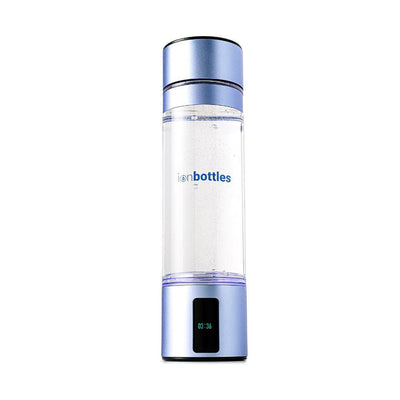
Interested in seeing this technology in action? The IonBottles ATOM uses SPE/PEM electrolysis with platinum coated titanium electrodes and reaches up to 5.0 ppm in a 10 minute cycle, verified through lab testing at an ISO/IEC 17025 accredited facility.
Step 6: Byproducts Get Vented Out
Oxygen, ozone, and any trace chlorine from the anode side exit through a dedicated vent port, usually located on the bottle’s base. This is a physical separation. The byproducts never touch your drinking water.
This vent is one of the most important things to look for in any hydrogen water bottle. Practitioners on Reddit’s r/Biohackers community frequently point to the vent hole on the bottom as the simplest way to confirm a bottle actually uses dual chamber PEM design rather than faking it.
The Three Key Components That Make PEM Work
Understanding how PEM electrolysis works in water bottles requires knowing the three components that make or break the system.
The Proton Exchange Membrane (Nafion)
The membrane itself is a sheet of perfluorosulfonic acid polymer. The most common brand is Nafion, which has its roots in DuPont chemistry. When properly hydrated, Nafion conducts protons at 0.05 to 0.1 S/cm while blocking gas crossover almost completely.
In consumer hydrogen water bottles, a quality PEM membrane operates between 5°C and 80°C and lasts 2 to 5 years with proper care. Maintenance guides recommend using low TDS, filtered water to prevent mineral buildup that can degrade the membrane over time (source). For guidance on choosing the right water source, the IonBottles FAQ covers the essentials.
Platinum Coated Titanium Electrodes
Platinum is the standard catalyst for both the hydrogen evolution reaction (cathode) and the oxygen evolution reaction (anode). Typical electrode construction involves 0.1 to 0.5 mg/cm² of platinum deposited onto a titanium substrate. This combination provides three things that cheaper materials cannot: catalytic efficiency, corrosion resistance, and biocompatibility.
The electrodes in a well built PEM bottle last 3,000 to 5,000+ electrolysis cycles (source). Inferior alternatives (bare stainless steel, nickel alloys) risk leaching heavy metals into the water. This is one reason price alone is a poor way to evaluate hydrogen water bottles.
The Dual Chamber Design and Vent System
The PEM membrane only works as intended when paired with a physically separated dual chamber housing. One chamber holds the anode (where oxygen and byproducts form). The other holds the cathode (where hydrogen forms and dissolves into drinking water). A vent port expels the unwanted gases.
Some budget bottles claim “SPE/PEM technology” on their product listings but lack an actual dual chamber vent. Without this physical separation, the membrane is just decoration. The vent system is what turns PEM from a marketing term into a functional safety feature.
PEM vs. Single Chamber Electrolysis: Why the Difference Matters
Not all hydrogen water bottles use PEM electrolysis. Many cheaper models use single chamber electrolysis, where both electrodes sit in the same open chamber with no membrane and no gas separation. The performance gap is significant.
| Factor | PEM/SPE Bottle | Single Chamber Bottle |
|---|---|---|
| Dissolved H₂ output | 1.6 to 5+ ppm | 0.3 to 1.0 ppm |
| Dissolved oxygen in water | No (vented separately) | Yes |
| Ozone risk | Blocked by membrane | Possible |
| Chlorine risk | Blocked by membrane | Possible with tap water |
| pH change | Neutral (6.5 to 7.5) | Slight alkaline shift |
Side by side testing from independent practitioners confirms these numbers. Research from iBottle showed PEM bottles consistently producing 3,000+ PPB (parts per billion), while non PEM units barely hit 500 PPB under identical conditions with filtered water (source).
The deeper problem with single chamber bottles goes beyond low hydrogen output. These devices add both hydrogen (an antioxidant) and ozone/chlorine (pro oxidants) to the same water simultaneously. The result is a contradictory mix that partially cancels out any benefit. Multiple users on Reddit’s biohacking forums report a telltale “ozone smell” from cheap Amazon hydrogen bottles, which is a clear indicator of missing or nonfunctional gas separation.
A peer reviewed study published in PMC tested a properly designed electrolytic hydrogen water bottle and found that 10 minutes of electrolysis produced 444 μg/L of molecular hydrogen while actually decreasing residual free chlorine from 0.18 mg/L to 0.12 mg/L. Dissolved ozone was below the detection limit at less than 0.05 mg/L. Both readings met WHO and U.S. safety standards for drinking water (source). That study is a useful benchmark for what a real PEM system should achieve.
For a deeper look at why this distinction matters, IonBottles’ technology page breaks down how their SPE/PEM system handles gas separation.
Understanding PPM: What Hydrogen Concentration Actually Means
PPM stands for parts per million. In hydrogen water, 1 ppm means there is 1 milligram of dissolved hydrogen gas per liter of water. This number is the most important spec when evaluating how PEM electrolysis works in water bottles, because it determines what you’re actually drinking.
The 1.6 PPM Baseline
At room temperature and normal atmospheric pressure, water can hold a maximum of approximately 1.6 mg/L (1.6 ppm) of dissolved hydrogen. This is the natural saturation limit. For comparison, regular tap or bottled water contains essentially zero dissolved hydrogen, about 0.00000087 mg/L (source).
Most clinical studies on molecular hydrogen use concentrations near this 1.6 ppm threshold. The Molecular Hydrogen Institute reports over 3,000 scientific publications on molecular hydrogen, including more than 200 clinical studies examining therapeutic potential across a wide range of conditions (source). Japan’s Ministry of Health, Labor and Welfare has even approved molecular hydrogen inhalation therapy for advanced medical care (source).
How PEM Bottles Achieve Supersaturation
Some PEM bottles advertise concentrations above 1.6 ppm. This isn’t a violation of physics. During electrolysis, hydrogen gas builds up under slight pressure inside the sealed chamber. Pressure increases the amount of gas that can dissolve into water (Henry’s Law). Once you open the bottle, that supersaturated hydrogen begins escaping back toward the 1.6 ppm equilibrium, which is why drinking soon after generation matters.
The half life of dissolved hydrogen in a 500 mL open container is roughly two hours. Starting at 1.6 ppm, you’d be down to about 0.8 ppm after two hours at room temperature (source). If your bottle produces supersaturated levels (say, 3 to 5 ppm), the drop happens even faster once opened. The practical takeaway: generate and drink promptly.
For a full breakdown of what these numbers mean in practice, the PPM explained guide covers dosing and testing in detail.
Factors That Affect Your Actual Hydrogen Concentration
A bottle might be rated at 3.0 or 5.0 ppm under ideal conditions, but what you actually get depends on several real world variables. Understanding these factors is essential for anyone who takes their hydrogen water seriously.
Water Temperature
Cold water holds more dissolved gas than warm water. This is basic gas solubility: as temperature rises, dissolved hydrogen escapes more readily. A bottle tested at 10°C (50°F) will show meaningfully higher ppm readings than the same bottle tested at 30°C (86°F). Practitioners on Reddit report noticeable drops in H2Blue test results when using room temperature water versus refrigerated water. For best results, start with cool or cold filtered water.
Water Volume
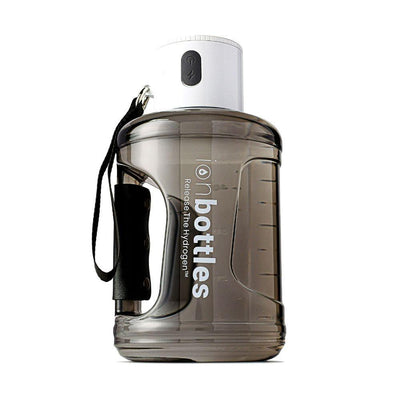
A smaller volume of water reaches higher concentration faster. A 10 oz bottle running the same electrolysis cell as a 50 oz jug will achieve a much higher ppm per cycle simply because the same amount of hydrogen gas is dissolving into less liquid. This is why compact bottles like the IonBottles ATOM (10 oz) reach up to 5.0 ppm, while the 50 oz Sport Jug tops out around 2.0 ppm. Neither number is wrong; they reflect different volume tradeoffs.
Cycle Length
Longer cycles produce more hydrogen gas. Running a 10 minute cycle generates roughly double the hydrogen of a 5 minute cycle on the same device. However, there’s a ceiling. Once the water reaches saturation (or supersaturation under pressure), additional electrolysis time yields diminishing returns as hydrogen gas begins escaping rather than dissolving.
Altitude and Atmospheric Pressure
This one catches people off guard. At higher altitudes, atmospheric pressure drops, which lowers the maximum amount of gas water can hold in solution. Someone in Denver (5,280 feet) will get measurably lower dissolved hydrogen than someone at sea level, even with the exact same bottle and water. The IonBottles site notes that ppm figures are approximate and vary with altitude. This isn’t a disclaimer buried in fine print; it’s physics.
Water Mineral Content
Extremely pure water (distilled or RO) has very low conductivity, which can reduce electrolysis efficiency slightly. On the other hand, high mineral water accelerates scale buildup on the membrane. The sweet spot is filtered water with moderate TDS (50 to 150 ppm), which provides enough conductivity for efficient electrolysis without damaging the membrane.
Dissolved Hydrogen Testing: H2Blue, Gas Chromatography, and What to Trust
Claims mean nothing without measurement. The hydrogen water community uses two main testing methods, and they have very different levels of precision.
H2Blue Reagent Drops (DIY Testing)
H2Blue is a colloidal platinum indicator solution. You add drops one at a time to a sample of freshly generated hydrogen water. Each drop that loses its blue color and turns clear corresponds to approximately 0.1 ppm (100 PPB) of dissolved hydrogen. When a drop retains its blue color, you’ve found your concentration.
This method is accessible (kits run about $15 to $20) and widely used across biohacking communities. It’s the baseline verification tool that practitioners on Reddit and YouTube recommend for anyone buying a hydrogen water bottle. One common YouTube walkthrough shows a tester comparing four different bottles side by side with H2Blue, finding that bottles without vent ports consistently scored below 0.5 ppm while dual chamber PEM bottles scored 1.5 ppm and above.
H2Blue has limitations, though. It’s reasonably accurate in the 0.1 to 2.0 ppm range but becomes less reliable at supersaturated concentrations because the reagent can be overwhelmed. It also reacts with any dissolved reducing agent, not exclusively hydrogen, though in practice this isn’t an issue with clean water. Temperature affects the reaction speed, too, so test at a consistent temperature for comparable results.
Gas Chromatography (Lab Testing)
Gas chromatography (GC) is the gold standard. A lab extracts dissolved gases from a water sample and measures hydrogen concentration with high precision. This is the method used in published research and by manufacturers who post third party test results.
The IonBottles ATOM lab test, for instance, was conducted at the Swiss Water Research Institute using headspace GC analysis at an ISO/IEC 17025 accredited facility. That testing showed 2.5 ppm after a 5 minute cycle and 5.0 ppm after a 10 minute cycle.
GC testing is not something consumers can do at home. But when evaluating competing products, look for brands that publish actual GC lab results rather than just citing H2Blue readings or making unverified ppm claims. The difference in credibility is substantial.
ORP Meters: Useful but Indirect
Some users rely on ORP (Oxidation Reduction Potential) meters, which measure the water’s tendency to gain or lose electrons. Hydrogen rich water typically shows a negative ORP reading (often minus 300 to minus 600 mV). This confirms that something reducing is present in the water, but it doesn’t quantify how much dissolved hydrogen exists. ORP is a supporting indicator, not a concentration measurement.
The Nanobubble Effect: What’s Really in Your Water
When a PEM bottle generates hydrogen, much of the gas initially exists as nanobubbles, extremely small gas pockets (typically under 200 nanometers in diameter) suspended in the water. This matters because nanobubbles behave differently from truly dissolved gas molecules, and the distinction affects both testing accuracy and how much hydrogen you actually consume.
Nanobubbles vs. True Dissolved Hydrogen
True dissolved hydrogen consists of individual H₂ molecules dispersed among water molecules at the molecular level. Nanobubbles, by contrast, are tiny gas pockets. They remain suspended in water far longer than larger visible bubbles (which float to the surface and pop), sometimes persisting for hours or even days. But they are not the same thing as molecules dissolved at the molecular scale.
Here’s why this distinction matters: H2Blue reagent reacts with both dissolved H₂ molecules and H₂ trapped inside nanobubbles. So your drop test may read higher than the “true” dissolved molecular hydrogen concentration because it’s counting gas that’s technically still in bubble form. The practical difference for a consumer is probably small, since you drink the nanobubbles along with the dissolved gas, and some research suggests nanobubbles may release their hydrogen in the body. But from a strict measurement standpoint, the ppm number on a reagent test is a combined figure.
Why Supersaturation Claims Need Context
When a bottle claims 3.0 or 5.0 ppm, part of that reading likely reflects nanobubble hydrogen rather than purely dissolved molecules. This isn’t deception; it’s the physics of generating hydrogen gas in a sealed container. The pressurized environment creates both dissolved gas and nanobubbles simultaneously. Once you open the bottle, the supersaturated dissolved portion starts escaping immediately, while nanobubbles persist somewhat longer.
The takeaway for consumers: ppm readings from any test method represent the total available hydrogen, including nanobubbles. Drink promptly after generation to capture the full benefit before either the dissolved gas escapes or the nanobubbles begin collapsing. Waiting 20 to 30 minutes can drop your actual intake meaningfully.
How to Verify Your Bottle Uses Real PEM Technology
Marketing claims and actual engineering are not the same thing. Here is a practical checklist for confirming that a hydrogen water bottle genuinely uses PEM electrolysis.
Check for a Vent Port
Flip the bottle over. A real dual chamber PEM bottle has a visible vent hole or port on the base where oxygen and byproducts escape. No vent means no gas separation, regardless of what the product listing says.
Use H2Blue Reagent Drops
As described above, H2Blue drops are the community accepted DIY method for testing dissolved hydrogen concentration. If your bottle claims 1.5 ppm but only decolorizes 3 or 4 drops, the real output is far below what’s advertised.
Ask About Membrane Material
Reputable manufacturers specify the membrane material. Nafion or an equivalent perfluorosulfonic acid polymer is the standard. If a company can’t tell you what membrane they use, that’s a red flag.
Look for Third Party Lab Results
Independent lab testing with published results is the strongest proof. Look for testing by ISO/IEC 17025 accredited facilities that measure actual dissolved hydrogen concentration through gas chromatography, not just marketing estimates. The IonBottles buyer checklist walks through what to look for when comparing brands.
Red Flags That Suggest Fake PEM Claims
Based on practitioner insights and comparison testing, watch for these warning signs:
- Price under $40 with no third party test documentation
- Single visible chamber with no separate vent port
- No mention of membrane material anywhere in the listing
- PPM claims without supporting lab data
- Strong chemical or chlorine smell after running a cycle
Hydrogen Water Tablets vs. PEM Bottle Generators
Some people wonder whether hydrogen tablets are a simpler alternative to PEM electrolysis bottles. Tablets (usually magnesium based) react with water to produce hydrogen gas. They work, but with tradeoffs.
Tablets produce hydrogen through a chemical reaction that also raises magnesium content and pH. The hydrogen concentration can be competitive (some tablets claim 1 to 3+ ppm), but each tablet is a one time use that costs $0.50 to $1.50. Over months of daily use, that adds up fast.
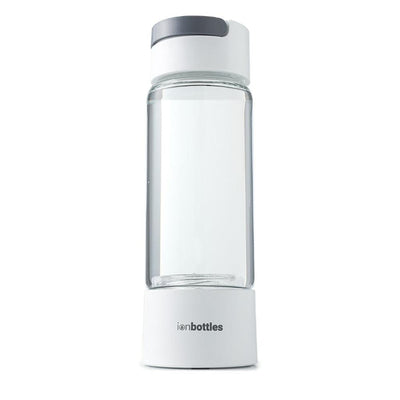
A PEM bottle is a higher upfront cost but produces hydrogen on demand with no consumables beyond electricity and water. The IonBottles Pro, for instance, generates up to 3.0 ppm from a glass bottle in 3 to 5 minutes, cycle after cycle, with no ongoing tablet expense.
The choice depends on lifestyle. Tablets work well for travel or occasional use. For daily hydrogen water at home or the office, PEM electrolysis is more practical and cost effective over time.
Maintaining Your PEM Bottle for Long Term Performance
A quality PEM membrane can last 4 to 5 years with proper care (source). Here’s what keeps it performing:
Use filtered or purified water. High mineral (high TDS) water accelerates scale buildup on electrodes and the membrane surface. Distilled or reverse osmosis water is ideal for electrolysis. You can use filtered tap water in most cases, but avoid hard water if possible.
Clean weekly. Running a cleaning cycle with distilled water (or a diluted citric acid solution, per your bottle’s instructions) prevents mineral deposits from accumulating on the platinum electrodes.
Store properly. If you’re not using the bottle for an extended period, empty it and store it dry. Standing water in a sealed electrolysis chamber can promote bacterial growth or membrane degradation.
Avoid extreme temperatures. PEM membranes operate best between 5°C and 80°C. Don’t run electrolysis with near freezing or boiling water.
For a complete walkthrough of setup and first use, the activation and first use guide covers everything step by step.
FAQ
Is SPE the same as PEM in hydrogen water bottles?
Yes. SPE (Solid Polymer Electrolyte) and PEM (Proton Exchange Membrane) refer to the same technology. Both describe a solid membrane that separates hydrogen and oxygen production during electrolysis. Different manufacturers use different terms, but the underlying process is identical.
How long does a PEM membrane last?
With proper maintenance, including filtered water, weekly cleaning, and appropriate storage, a quality PEM membrane lasts 2 to 5 years in consumer devices. Electrode lifespan is similar, with platinum coated titanium rated for 3,000 to 5,000+ electrolysis cycles.
Can I use tap water in a PEM hydrogen water bottle?
Yes, but filtered or purified water is better for the membrane’s longevity. Tap water with high mineral content can cause scale deposits on electrodes and the membrane surface, reducing performance over time. Tap water containing chloride ions also means more chlorine byproducts form at the anode, though a properly functioning PEM system vents these away from the drinking side. If your tap water is low in total dissolved solids (TDS), it’s generally fine.
Does PEM electrolysis change the pH of water?
No. Because the membrane separates the acid forming anode reaction from the cathode side, the drinking water stays at a neutral pH between 6.5 and 7.5. Single chamber bottles without a membrane tend to produce a slight alkaline shift, but PEM equipped bottles do not.
How fast does hydrogen escape from the water after generation?
In a 500 mL open container, dissolved hydrogen has a half life of roughly two hours at room temperature. If your bottle produces 1.6 ppm, you’ll have approximately 0.8 ppm left after two hours. Supersaturated concentrations drop faster. Nanobubbles persist somewhat longer than dissolved gas but still diminish over time. Drinking within minutes of generation gives you the most hydrogen.
How do I test whether my bottle actually produces hydrogen?
H2Blue reagent drops are the most accessible testing method. Add drops one at a time to a sample of freshly generated water. Each drop that loses its blue color represents about 0.1 ppm of dissolved hydrogen. For precise measurement, gas chromatography at an accredited lab is the gold standard but not practical for home use. ORP meters can provide supporting evidence (look for negative readings below minus 300 mV) but don’t quantify concentration directly.
What makes PEM electrolysis different from alkaline ionizers?
Alkaline ionizers change water pH by running it over electrode plates, producing alkaline water on one side and acidic water on the other. PEM electrolysis specifically produces dissolved molecular hydrogen gas (H₂) without altering pH. The two technologies target different things: alkaline ionizers focus on pH, while PEM focuses on dissolved hydrogen concentration.
Does altitude really affect hydrogen concentration?
Yes. At higher elevations, lower atmospheric pressure reduces the maximum amount of hydrogen that can stay dissolved in water. Someone testing the same bottle in a coastal city versus a mountain town will see different ppm readings. This is a straightforward application of Henry’s Law and affects every hydrogen water device equally.
Are hydrogen water bottles backed by real research?
The electrolysis physics are well established and not controversial. The therapeutic claims about molecular hydrogen are where debate exists. The Molecular Hydrogen Institute catalogs over 3,000 scientific publications and 200+ clinical studies. Skeptics on forums like r/chemistry and r/skeptic acknowledge the electrolysis works but question whether the dissolved hydrogen concentrations are clinically meaningful. The research is growing, but it’s worth reading with a critical eye.
Ready to explore options? Browse the full IonBottles lineup to compare bottles by capacity, ppm output, and features.