TL;DR
To authenticate genuine IonBottles products, verify your purchase source (ionbottles.com is safest), inspect physical markers like machine sealed caps and included accessories, scan any QR codes or barcodes on the packaging, check serial or batch numbers with the manufacturer, and independently test hydrogen output using H2 Blue reagent drops or an ORP meter. Counterfeits in the hydrogen water bottle market are growing fast, and knockoffs may produce zero hydrogen or leach harmful chemicals. This guide defines every term you need and walks you through a complete authentication checklist.
Why Authentication Matters Right Now
The hydrogen water market hit roughly $2.5 billion in 2024 and is projected to reach $4.35 billion by 2030, according to MarkNtel Advisors. That kind of growth attracts counterfeiters. In July 2025, Echo Water's CEO issued a formal public advisory warning that imitation hydrogen bottles "can produce harmful substances like chlorine, ozone, hypochlorous acid, or heavy metal hydroxides." This is not a hypothetical problem.
If you recently bought a hydrogen water bottle from a third party marketplace, received one as a gift, or want to verify before purchasing, knowing how to authenticate genuine IonBottles products is worth the five minutes it takes. The sections below define every technical term behind authentication and give you objective methods to test for yourself.
For background on the counterfeiting problem in this category, IonBottles has published a guide to spotting knockoffs on their FAQ page.
Looking to skip the risk entirely? Shop genuine IonBottles directly from the manufacturer with a 60 day return policy and 1 year warranty.
Glossary of Authentication Terms
Technology Terms: What Makes a Bottle Genuine
SPE/PEM Electrolysis
SPE stands for Solid Polymer Electrolyte. PEM stands for Proton Exchange Membrane. Together, they describe the method a genuine hydrogen water bottle uses to split water molecules and infuse dissolved hydrogen gas (H₂) into drinking water.
Why it matters for authentication: a bottle with SPE/PEM technology uses a proton membrane to separate hydrogen from oxygen and other byproduct gases. Without this membrane, the device produces mixed gases, including ozone and chlorine, that dissolve back into your water. Practitioners on Reddit's r/chemistry have reached a consensus that "legitimate bottles use SPE PEM technology and have a proton membrane" as the key differentiator between real and fake devices.
Authentication check: If your bottle produces a noticeable ozone or chlorine smell after a cycle, it likely lacks a genuine PEM membrane. That is one of the fastest red flags you can detect without any testing equipment. For a deeper look at how this technology works, read this explanation of SPE/PEM electrolysis in bottles.
Platinum Coated Titanium Electrodes
The electrodes inside a hydrogen water bottle conduct the electrical current that splits water molecules. Genuine devices use platinum coated titanium plates because platinum is chemically inert (it won't leach into your water) and titanium provides structural durability.
Why it matters for authentication: this is the most expensive component in any hydrogen water bottle, which makes it the first thing counterfeiters cut. Knockoffs substitute cheaper alloys that corrode over time and can leach heavy metals into the water. You cannot easily inspect the electrodes without disassembly, but you can infer their quality through the hydrogen output test described below. Cheap electrodes produce dramatically less dissolved hydrogen.
Dual Chamber / Vent Design
A dual chamber design separates the area where hydrogen is generated from the area where byproduct gases (oxygen, ozone, chlorine) collect. A vent, typically at the base of the bottle, expels those unwanted gases instead of dissolving them into your drinking water.
Authentication check: Look at the bottom of your bottle. Genuine IonBottles products feature visible vent holes for gas separation. IonBottles states their devices actively expel oxygen, chlorine, and ozone through a down vent at the base. If your bottle has no visible venting mechanism, that is a significant warning sign. You can see how IonBottles implements this on their technology page.
Measurement Terms: How to Test for Yourself
PPM (Parts Per Million)
PPM measures how much dissolved hydrogen gas is present in your water. One PPM means one milligram of hydrogen per liter of water. Higher PPM generally means more molecular hydrogen per sip.
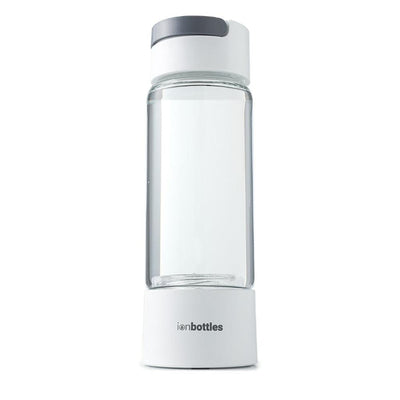
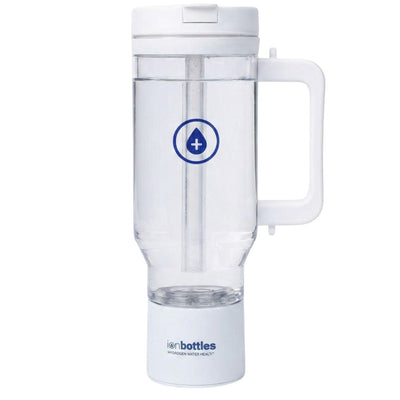
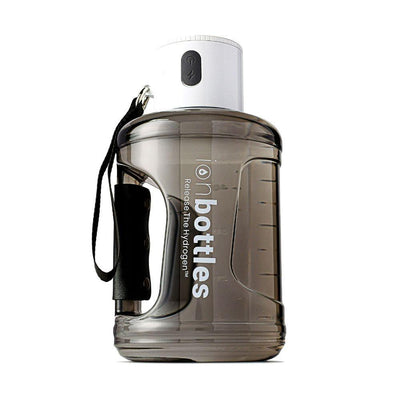
IonBottles lists the following approximate ranges for their lineup: the ATOM Hydrogen Water Bottle reaches up to 5.0 PPM (10 minute cycle), the Pro Hydrogen Water Bottle reaches up to 3.0 PPM, the Tumbler reaches approximately 1.5 to 3.0 PPM, and the Tritan Sport Jug reaches approximately 1.0 to 2.0 PPM.
Important caveat: Real world PPM varies with water source, temperature, altitude, and testing method. A user on r/Biohackers reported measuring roughly 3 PPM from an IonBottles Pro, which aligns with the stated range. If your bottle produces readings below 0.5 PPM, testing guides from multiple sources suggest you may not be getting meaningful hydrogen concentration. For a full breakdown of what these numbers mean, see this guide on hydrogen water PPM explained.
H2 Blue Reagent Test
H2 Blue is a chemical reagent solution considered the gold standard for measuring dissolved hydrogen at home. The liquid is blue, and it turns clear when it reacts with dissolved hydrogen gas.
Step by step testing instructions:
- Fill the included testing vial to the 6 ml mark with freshly generated hydrogen water. Speed matters because dissolved hydrogen escapes quickly once exposed to air.
- Add one drop of H2 Blue reagent. Swirl gently.
- If the blue color disappears, add another drop. Swirl again.
- Repeat until the blue color persists for at least 30 seconds.
- Count the total drops used. Each drop neutralizes approximately 0.1 PPM (100 PPB) of dissolved hydrogen in a 6 ml sample.
- Multiply: total drops x 0.1 = your PPM reading.
For example, if it takes 25 drops before the blue holds, your water contains approximately 2.5 PPM.
Critical warning: The "ECO" formula of H2 Blue has been documented by multiple testing guides to give false zero readings. Use the standard H2 Blue formula only.
Authentication verdict: If your bottle produces zero PPM on an H2 Blue test, it is either counterfeit or broken. A genuine IonBottles product should register measurable hydrogen output. For buyers who want to verify lab testing claims before purchasing, this consumer checklist for lab tested bottles is a useful companion resource.
ORP (Oxidation Reduction Potential)
ORP measures the electrical potential of water in millivolts (mV). Regular tap water typically reads between +200 and +400 mV. Hydrogen rich water reads in the negative range, usually between -200 and -600 mV.
Authentication check: An ORP meter provides a quick secondary confirmation. If your hydrogen water reads positive after a full cycle, the bottle is not producing hydrogen.
Limitation to know: Negative ORP does not exclusively confirm hydrogen presence. Other dissolved substances can shift ORP readings. This is why H2 Blue testing is the stronger standalone method. Use ORP as a supporting data point, not your only test. For a deeper look at the science behind hydrogen water and ORP, see the science page on IonBottles.
Certification Terms: Trust Signals on Genuine Products
CE Certification
CE marking indicates a product meets European health, safety, and environmental protection standards. Genuine IonBottles products carry CE certification.
Authentication check: Counterfeit products sometimes carry a fake "China Export" mark that looks nearly identical to the real CE logo. The difference is spacing: on a genuine CE mark, the letters C and E have a specific gap between them. On the China Export version, the letters are spaced noticeably closer together. Hold a magnifying glass to the marking on your bottle or charger and compare it against the official CE logo.
RoHS Compliance
RoHS (Restriction of Hazardous Substances) is a European Union directive that limits the use of specific hazardous materials in electrical and electronic equipment, including lead, mercury, cadmium, and hexavalent chromium.
Why it matters for authentication: the electrodes and circuit board inside a hydrogen water bottle are electronic components. RoHS compliance means those components were manufactured without the most toxic heavy metals. Counterfeits rarely bother with RoHS compliance because meeting the standard adds manufacturing cost.
ISO/IEC 17025
This is an international standard for testing and calibration laboratories. When a lab holds ISO/IEC 17025 accreditation, its results carry recognized scientific weight.
IonBottles states their ATOM model was independently tested at the Swiss Water Research Institute, a laboratory accredited to ISO/IEC 17025 standards. The reported results: 2.5 PPM after a 5 minute cycle and 5.0 PPM after a 10 minute cycle.
Authentication check: ISO/IEC 17025 accreditation is verifiable. You can search for a lab's accreditation status through national accreditation bodies. A genuine company will name the specific lab and reference the standard. Vague claims like "lab tested" without naming the lab or standard should raise suspicion.
H2 Verified Badge
This is a brand specific quality marker used by IonBottles to indicate a product's hydrogen output has been verified through third party lab testing.
Authentication check: Look for this badge on the product page and packaging. It is tied to the lab report mentioned above. Counterfeits will not have this badge, or they will reproduce it with slight visual differences (blurry edges, wrong colors).
BPA Free Materials: Tritan and Borosilicate Glass
BPA (bisphenol A) is an industrial chemical used in some plastics that has raised health concerns. IonBottles uses two primary materials:
- Tritan: A BPA free copolyester used in the ATOM, Tumbler, and Jug models. Genuine Tritan is crystal clear, odorless, and extremely durable. If your bottle has a cloudy appearance, a chemical smell, or feels flimsy, those are material red flags.
- Borosilicate glass: Used in the Pro model. This is the same type of glass used in laboratory equipment. It is heat resistant and non reactive. A genuine Pro bottle will feel substantial and produce a clear ring when tapped.
Authentication check: Cheap plastic that yellows quickly, smells like chemicals, or cracks easily is not Tritan. If you purchased a model advertised as glass and the body feels like plastic, that is an obvious counterfeit indicator. For more detail on glass versus Tritan options, this glass SPE/PEM guide covers the differences.
Digital and Physical Verification Methods
QR Code or Barcode Scan Validation
Many genuine consumer electronics and wellness devices now include QR codes or barcodes on their packaging as an anti counterfeit measure. Scanning these codes with your phone's camera (or a free barcode scanner app) can confirm whether the product links back to the manufacturer's official systems.
What to look for: A genuine QR code should direct you to an official IonBottles web page, a product registration portal, or verification landing page hosted on ionbottles.com. If scanning the code leads to a dead link, an unrelated website, a generic product listing with no brand association, or no result at all, treat that as a red flag.
How counterfeiters exploit QR codes: Some knockoffs include QR codes that point to convincing but unofficial pages designed to look legitimate. Always check the URL in your browser after scanning. The domain should be ionbottles.com, not a misspelling or a completely different domain. Practitioners on consumer protection forums have noted that fake QR codes sometimes redirect to generic "product verified" pages with no connection to any real manufacturer database.
Practical tip: If your IonBottles product came without any QR code or barcode on the packaging when you expected one, that absence itself may signal a counterfeit. Legitimate brands increasingly use these codes as standard practice for both authentication and warranty registration.
Serial Number or Batch Number Verification
Serial numbers and batch numbers serve as unique identifiers that tie a specific unit back to the manufacturer's production records. A serial number identifies an individual device, while a batch number identifies the production run it came from.
Where to find them: Check the bottom of the bottle, the base plate near the charging port, and the product box or packaging insert. Genuine products typically print or laser engrave these numbers on the device itself, not just on a sticker that could be swapped.
How to verify: Contact IonBottles support and provide the serial or batch number from your unit. They can cross reference it against their production database to confirm whether the number is valid, whether it matches the model you purchased, and whether the unit was sold through an authorized channel. If the number does not exist in their system, you almost certainly have a counterfeit.
Red flags to watch for:
- No serial or batch number anywhere on the device or packaging
- A number that appears handwritten rather than printed or engraved
- A sticker that peels off easily or looks like it was applied after manufacturing
- Multiple units from different sellers sharing the exact same serial number (a common counterfeiting shortcut where one legitimate number gets duplicated across many fakes)
This step pairs well with warranty registration. Genuine products that carry valid serial numbers will qualify for coverage under the 1 year warranty, while counterfeits will fail this check entirely.
Verification Actions
Authorized Seller Verification
Consumer protection organization PIRG advises checking the manufacturer's website for a list of authorized sellers before purchasing. The safest source for IonBottles products is ionbottles.com directly. IonBottles ships from fulfillment centers in Los Angeles and New Jersey, offers free U.S. shipping on orders over $50, and backs purchases with a 60 day return policy.
Third party marketplace purchases carry higher risk. If you bought from a seller you are not sure about, use the testing methods in this guide to verify your product.
Warranty Registration
Only genuine IonBottles products qualify for the company's 1 year warranty. There is also an optional Lifetime Protection plan available for purchase.
Authentication check: Contact IonBottles support with your order details. If they cannot verify your purchase or your product does not qualify for warranty coverage, that is a strong indicator of a counterfeit.
The 7 Step Authentication Checklist
Use this checklist to verify any IonBottles product systematically.
Step 1: Verify your purchase source. Did you buy from ionbottles.com or a seller you can confirm is authorized? If yes, your risk is low. If not, proceed through every remaining step.
Step 2: Scan QR codes and barcodes. Use your phone's camera to scan any QR code or barcode on the packaging. Confirm the link points to an official ionbottles.com page. Check the URL carefully for misspellings or unfamiliar domains. If there is no code at all, note that as a concern and continue.
Step 3: Check the serial or batch number. Locate the number on your device (base, charging port area, or packaging insert). Contact IonBottles support to verify it against their production records. An unrecognized or missing number is a serious red flag.
Step 4: Inspect packaging and contents. Genuine products come with clean, professional printing on the box. Caps should be machine sealed and even. Look for included items: a USB C charging cable should be present, and the ATOM and Pro models include an inhalation cannula. One user on r/HydroHomies specifically noted receiving the inhalation cannula with their Pro, which is worth checking since knockoffs commonly omit accessories.
Step 5: Assess material quality. Tritan should be perfectly clear and odorless. The Pro's borosilicate glass should feel solid and substantial. Check the base for vent holes. Check certification marks (CE, RoHS) for proper spacing and clarity.
Step 6: Test hydrogen output. Use H2 Blue reagent drops (standard formula, not ECO). Follow the step by step instructions above. Your results should fall within the PPM range listed for your specific model. Zero hydrogen means counterfeit or defective.
Step 7: Confirm warranty eligibility. Reach out to IonBottles support with your order number, serial number, or product details. Genuine products qualify for warranty coverage.
Common Red Flags: How to Spot a Fake
These warning signs indicate a probable counterfeit. Any single flag warrants further investigation. Multiple flags together are near certain confirmation of a fake.
- Price dramatically below retail. IonBottles products range from $89.95 to $149.95. A "brand new" unit selling for $30 on a random marketplace storefront is almost certainly counterfeit. Scam tracking sites like MalwareTips have documented patterns of fake hydrogen bottle listings using unbelievable prices as bait.
- QR code leads to a dead link or unofficial site. Genuine QR codes point to ionbottles.com. Anything else, especially a misspelled domain or generic verification page, is suspect.
- Missing, handwritten, or unverifiable serial number. A serial number that IonBottles cannot find in their production database means the unit did not come from their factory.
- Ozone or chlorine smell after a cycle. This means the bottle lacks a proper PEM membrane and is not separating gases.
- No visible vent or gas separation mechanism. Genuine bottles need to expel byproduct gases somewhere.
- Missing accessories. No USB C cable, no cannula (on ATOM/Pro), no user manual.
- Spelling errors, blurry logos, or uneven seals. PIRG notes that counterfeit packaging often has "spelling mistakes" and "logos and colors that look similar, but are not identical." Members of hydrogen water Facebook groups have observed that genuine bottles have "even, machine sealed caps" while counterfeits "often have uneven or re glued seals."
- Zero hydrogen on H2 Blue test. The most definitive single check.
- No warranty, no return policy, no seller contact information. Legitimate sellers stand behind their products.
- Fake celebrity endorsements. Scam listings have been documented using fabricated endorsements from figures like Dr. Oz and Joe Rogan to sell knockoff hydrogen bottles. IonBottles does not use celebrity endorsements of this kind.
What to Do If You Suspect a Counterfeit
If the evidence points to a fake, take these steps in order:
- Contact IonBottles directly through their contact page. Describe where you purchased the product and what you have found. Include the serial or batch number if you have one. They can help confirm whether your product is genuine.
- File a dispute with the marketplace. If you bought through a third party platform, open a buyer protection claim immediately. Include photos of packaging defects, test results, QR code scan screenshots, and any missing accessories.
- Report the seller. Most marketplaces have a "report counterfeit" option. Use it. This protects future buyers.
- Leave a detailed review. Your experience helps others avoid the same seller. Be specific about what failed authentication.
Addressing the Skepticism Directly
Some searchers arrive at this topic from a place of broader skepticism. Threads on r/skeptic have asked "Can someone explain how hydrogen water bottles aren't a scam?" and other subreddits have hosted heated debates about the entire product category. This skepticism is reasonable, and it makes learning how to authenticate genuine IonBottles products even more important.
The difference between a genuine SPE/PEM hydrogen water bottle and a cheap knockoff is not just branding. It is the difference between a device that measurably dissolves hydrogen into water (verifiable with H2 Blue drops) and one that runs an LED light show while producing nothing, or worse, leaching harmful chemicals. Independent testing, not marketing claims, is what separates the two.
IonBottles publishes a lab report from the Swiss Water Research Institute for their ATOM model. Some third party reviewers have tested hydrogen bottles and found many produce far below their claimed PPM. The right response to this reality is not blind trust in any brand. It is testing your specific unit with the objective methods described in this guide. If you are comparing options before buying, this product comparison guide breaks down differences across models.
FAQ
Where is the safest place to buy genuine IonBottles products?
The safest source is ionbottles.com. Orders ship from U.S. warehouses in Los Angeles and New Jersey, with typical domestic delivery in 3 to 7 business days. Purchases from the official site are backed by a 60 day return policy and 1 year warranty.
Can I test hydrogen output at home without expensive lab equipment?
Yes. H2 Blue reagent drops are affordable and widely available. Fill a 6 ml vial with freshly generated hydrogen water, add drops one at a time until the blue color persists, and multiply total drops by 0.1 to get your PPM reading. An ORP meter provides supporting confirmation but is not required.
What certifications should I look for on a genuine IonBottles product?
Look for four markers: CE certification, RoHS compliance, BPA free material designation, and the H2 Verified badge. Check that the CE mark has proper letter spacing (not the closely spaced "China Export" imitation).
Does IonBottles have independent lab testing?
Yes. IonBottles states the ATOM model was tested by the Swiss Water Research Institute, which holds ISO/IEC 17025 accreditation. The published results show 2.5 PPM after a 5 minute cycle and 5.0 PPM after a 10 minute cycle.
What should I do if my H2 Blue test shows zero PPM?
First, confirm you used the standard H2 Blue formula (not the ECO version, which can give false zero readings). Second, make sure you tested immediately after the cycle ended, since dissolved hydrogen escapes rapidly. If you still get zero, your bottle is either counterfeit or defective. Contact IonBottles support if you purchased from their site, or file a marketplace dispute if you bought elsewhere.
Are hydrogen water bottles that cost under $50 automatically fake?
Not necessarily "fake" in the sense of impersonating a brand, but extremely low cost bottles almost certainly cut corners on the most important component: the SPE/PEM membrane and platinum coated titanium electrodes. The result is typically negligible hydrogen production or, worse, byproduct contamination. For IonBottles specifically, any listing dramatically below their stated retail prices ($89.95 to $149.95 depending on model) should be treated with suspicion.
Does the included cannula prove my IonBottles product is genuine?
The inhalation cannula is included with the ATOM and Pro models. Knockoffs frequently omit accessories to reduce costs. Its presence is a positive authentication signal, but not proof on its own. Combine it with the other checklist steps for a complete verification.
Can I authenticate my IonBottles product through warranty registration?
Yes. Only genuine products qualify for warranty coverage. Reaching out to IonBottles with your purchase details and asking about warranty eligibility is one of the simplest ways to confirm authenticity. If they cannot verify the product, you likely have a counterfeit.
How do I verify a serial number or batch number on my bottle?
Locate the number on the device itself (usually on the base or near the charging port) or on the packaging insert. Then contact IonBottles support and provide the number. They will cross reference it against their production database. If the number is not in their system, the product is almost certainly counterfeit.
What should a QR code on genuine IonBottles packaging link to?
A legitimate QR code should direct your phone's browser to an official page on ionbottles.com. Always check the URL after scanning. If it leads to a dead page, an unrelated website, or a domain that looks like ionbottles.com but is slightly misspelled, do not trust the product.