TL;DR
The IonBottles ATOM ($149.95) is the best hydrogen water bottle under $150 for most buyers, offering up to 5.0 PPM concentration with SPE/PEM electrolysis, an included inhalation cannula, and a 60-day satisfaction guarantee. If you want glass construction under $100, the IonBottles Pro ($99.95) is the strongest pick. For larger daily volume, the IonBottles Tumbler (32 oz, $129.95) and Tritan Sport Jug (50 oz, $89.95) fill the gap that tiny bottles leave behind. Every bottle on this list costs $150 or less, uses SPE/PEM technology, and was evaluated against real user complaints, not just marketing specs.
Why Under $150 Is the Smart Budget for a Hydrogen Water Bottle
Most “best hydrogen water bottle” lists are frustrating. They rank $200 to $300 bottles at the top, then bury the affordable options at the bottom. If your budget is $150 or less, those lists waste your time.
The good news: under $150 is genuinely a sweet spot. You can get SPE/PEM electrolysis (the technology that matters most), BPA-free or glass construction, meaningful hydrogen concentration, and real warranty protection. You just need to know what to look for, and more importantly, what to avoid.
Practitioners on Reddit describe the category well. One user in r/Biohackers who tested bottles with H2 Blue reagent drops said cheap Amazon bottles barely produced measurable hydrogen, while a proper SPE/PEM unit showed a clear result. Their summary: “not a scam but also not magic.” That captures the reality. The research is promising. The technology works. But the product you choose determines whether you get real dissolved hydrogen or expensive bubbles.
Multiple buyer guides frame the market as a meaningful $50 vs. $150 decision, with differences in materials, hydrogen concentration, byproduct control, battery life, and warranty support. The under-$150 range gets you past the junk tier without paying the premium-brand markup.
At-a-Glance Comparison Table
| Product | Price | Advertised H₂ | Capacity | Best For | Main Tradeoff |
|---|---|---|---|---|---|
| IonBottles ATOM | $149.95 | Up to 5.0 PPM | 10 oz | Highest concentration under $150 | Small capacity, frequent refills |
| IonBottles Pro | $99.95 | Up to 3.0 PPM | 14 oz | Glass bottle under $100 | Lower PPM than ATOM |
| IonBottles Tumbler | $129.95 | ~1.5–3.0 PPM | 32 oz | Large-capacity daily use | Longer cycle time |
| IonBottles Tritan Sport Jug | $89.95 | ~1.0–2.0 PPM | 50 oz | Maximum volume and value | Lower concentration range |
| Dr.Water HydroStanley | $119.99 | Up to 3,000 PPB | 32 oz | Alternative tumbler format | Vendor-sourced claims only |
| Nixcer Pro | ~$89.99 | Up to 8,000 PPB (claimed) | 12 oz | Budget high-PPB experiment | Very high claim needs verification |
| Hydroh Nano | ~$149 | 3,800 PPB (listed) | Compact | Fast 3-minute cycle | Mixed support and leak reports |
| Aqua Vital | Under $100 | Not widely verified | Portable | Simple beginner trial | Limited review depth |
How We Chose These Bottles
Not every hydrogen water bottle that costs under $150 deserves a recommendation. We filtered using eight criteria:
1. Price at or below $150. Every primary pick fits the budget. No bait-and-switch with $199 bottles.
2. SPE/PEM electrolysis. This is the technology that separates hydrogen from oxygen and vents unwanted byproducts like ozone and chlorine. Cheaper single-chamber designs can mix those byproducts into your water, which is why some users report a chlorine or chemical smell from budget bottles.
3. Advertised hydrogen concentration. We looked for specific PPM or PPB claims, not vague “antioxidant water” language. A practical baseline is at least 1.0 PPM (1,000 PPB), though higher is not automatically better if the bottle is tiny.
4. Capacity and real-world dose. A 5.0 PPM bottle that holds 10 oz and a 2.0 PPM jug that holds 50 oz solve different problems. We considered total dissolved hydrogen per fill, not just concentration.
5. Materials. Glass, BPA-free Tritan, or stainless steel. No mystery plastics.
6. Warranty and return policy. After-sale support is one of the biggest differentiators in this category. Devices fail. Seals wear out. You need recourse.
7. User complaints. We checked Reddit, Trustpilot, and BBB for patterns: leaks, charging failures, weak output, ozone smell, and support runarounds.
8. Testing confidence. The Molecular Hydrogen Institute explains that ORP meters measure overall redox potential and do not measure hydrogen concentration. H2 Blue reagent drops are more relevant but approximate. Gas chromatography is the most accurate method. We gave more weight to bottles backed by lab testing over vague ORP claims.
The 8 Best Hydrogen Water Bottles Under $150
1. IonBottles ATOM
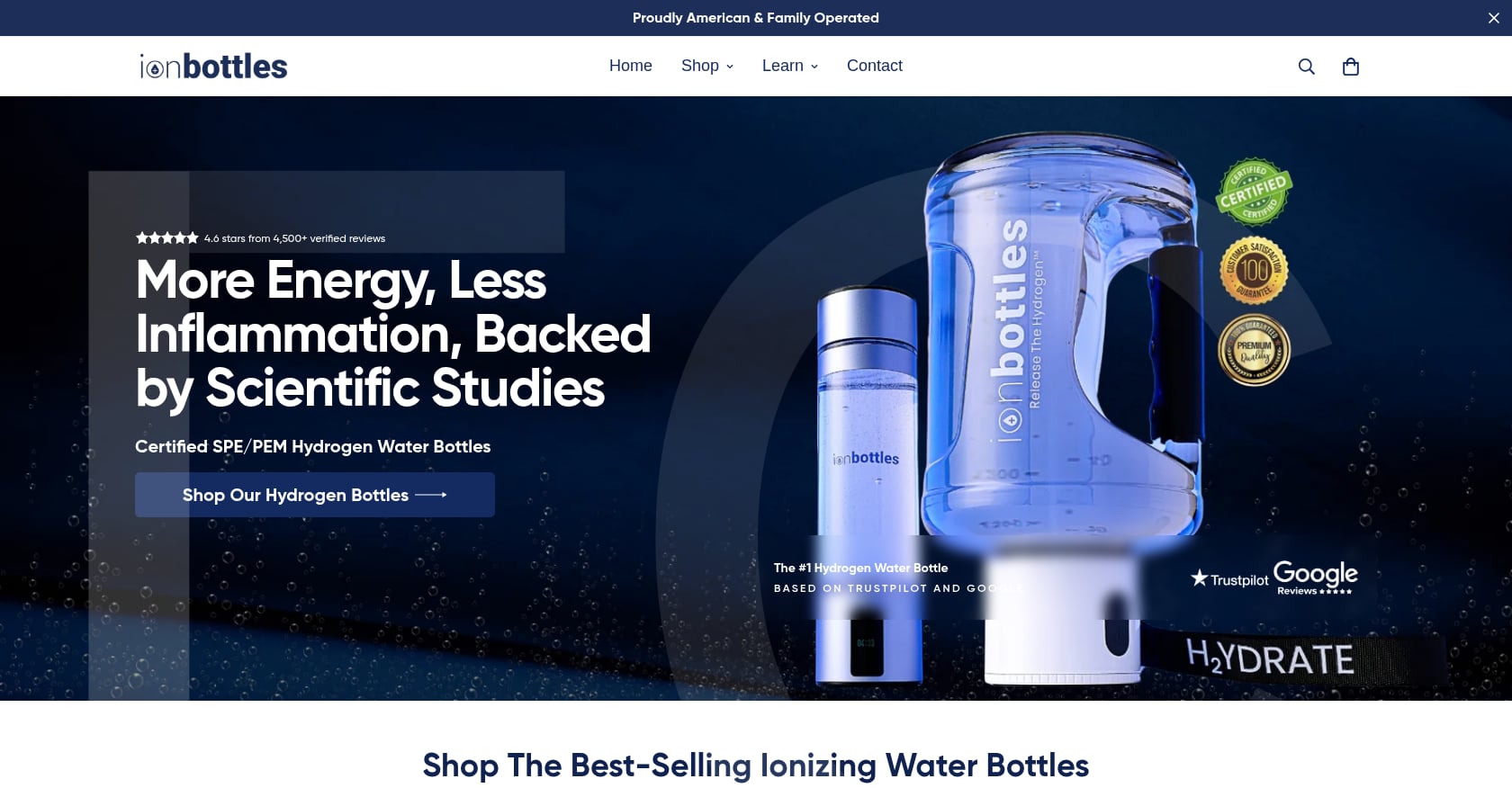
Best for: Highest advertised hydrogen concentration under $150
- Price: $149.95
- Capacity: 10 oz
- Advertised concentration: Up to 5.0 PPM
- Technology: SPE/PEM electrolysis with platinum-coated titanium plates
- Materials: BPA-free Tritan
- Cycle options: 5-minute or 10-minute modes
- Included extras: H₂ inhalation cannula, USB-C charging cable
- Warranty: 1-year warranty, 60-day satisfaction guarantee
The ATOM sits right at the $150 ceiling, and it earns the top spot because it combines the highest advertised concentration in the IonBottles lineup with the technology and support structure that budget bottles lack. The posted lab test PDF shows 2.5 PPM in 5-minute mode and 5.0 PPM in 10-minute mode, tested at an ISO/IEC 17025 laboratory. That level of transparency is uncommon under $150.
The included inhalation cannula is a genuine bonus. Many competitors sell this as a separate accessory or don’t offer it at all. For buyers exploring both hydrogen water and hydrogen inhalation, it eliminates the need for a second device.
IonBottles ships from U.S. fulfillment centers in LA and NJ, with typical domestic delivery in 3 to 7 business days and free shipping on orders over $50.
What to watch out for:
- The 10 oz capacity is small. You will refill frequently, especially if you drink multiple servings per day.
- Real-world PPM varies with water type, temperature, altitude, and how quickly you drink after a cycle. The 5.0 PPM figure represents best-case lab conditions.
- Dissolved hydrogen dissipates fast once the bottle is opened, so drink promptly after each cycle.
Bottom line: If your priority is maximum hydrogen concentration in a portable, lab-backed bottle without breaking $150, the ATOM is the clearest choice. See the IonBottles ATOM.
2. IonBottles Pro
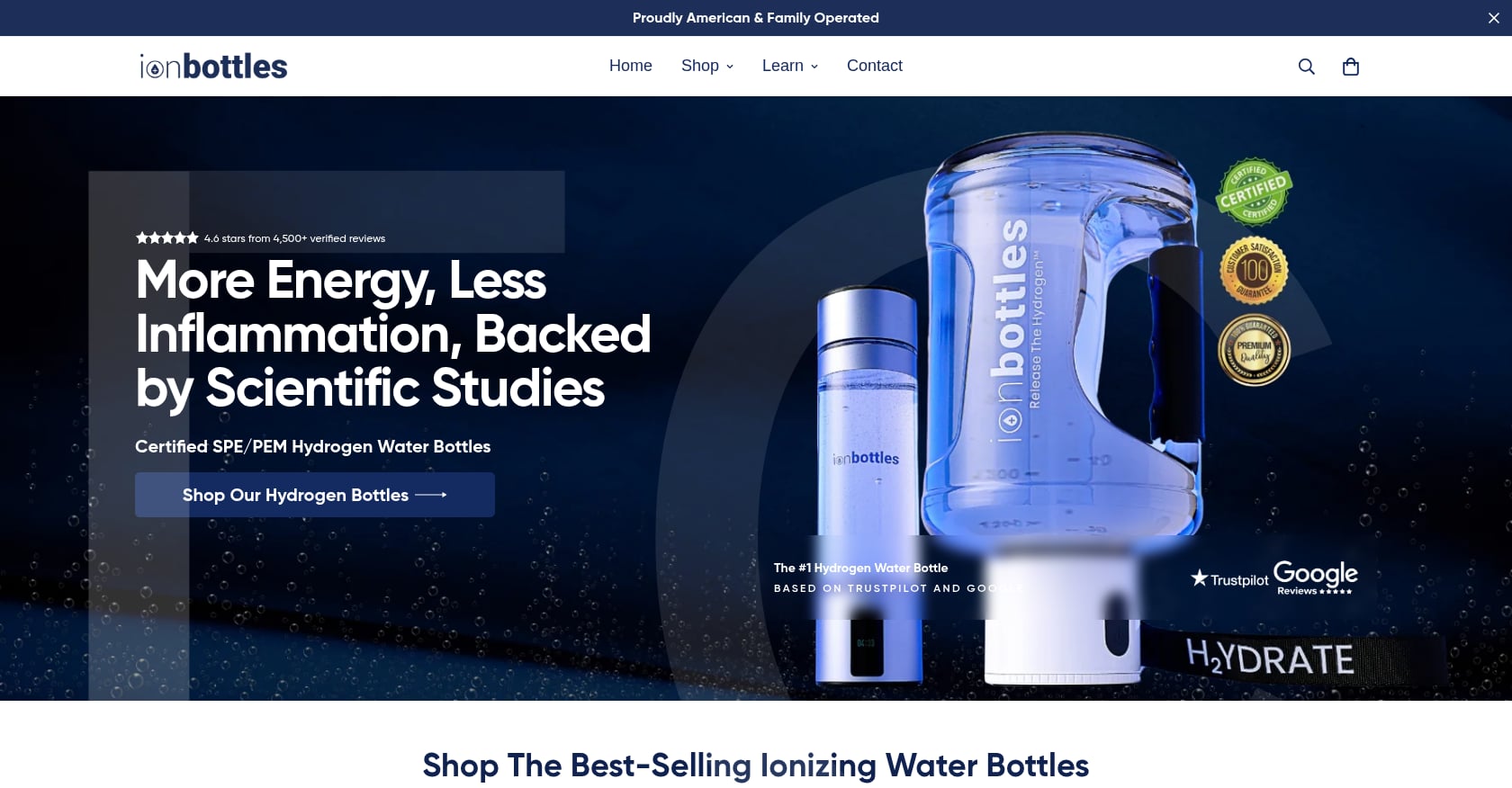
Best for: Glass hydrogen water bottle under $100
- Price: $99.95
- Capacity: 14 oz
- Advertised concentration: Up to 3.0 PPM
- Technology: SPE/PEM electrolysis with platinum-coated titanium plates
- Materials: Glass body
- Cycle time: 3 to 5 minutes
- Included extras: H₂ inhalation cannula
- Warranty: 1-year warranty, 60-day satisfaction guarantee
The Pro answers one of the most common buyer concerns in this category: “I don’t want to drink from plastic.” Its glass construction eliminates worries about Tritan taste or BPA-adjacent materials. At $99.95, it is the most affordable glass hydrogen bottle with SPE/PEM technology that we found from a brand offering a real warranty.
One Reddit user in r/Biohackers mentioned using the IonBottles Pro and reported approximately 3 PPM output, noting it as part of their hydrogen water routine. The 14 oz capacity is more practical than the ATOM’s 10 oz for daily drinking, though it is still a personal-sized bottle rather than an all-day format.
If the glass body worries you, IonBottles sells replacement glass and replacement lids separately, which extends the product’s lifespan if you drop it.
What to watch out for:
- Glass is heavier and breakable. Not ideal for gym bags or rough travel.
- Lower PPM ceiling than the ATOM.
- Still a smaller bottle. Buyers wanting 32+ oz should look at the Tumbler or Sport Jug.
Bottom line: Pick the Pro if you want a glass hydrogen bottle under $100 with real SPE/PEM technology and don’t need the ATOM’s 5.0 PPM ceiling. Compare the IonBottles Pro.
3. IonBottles Tumbler
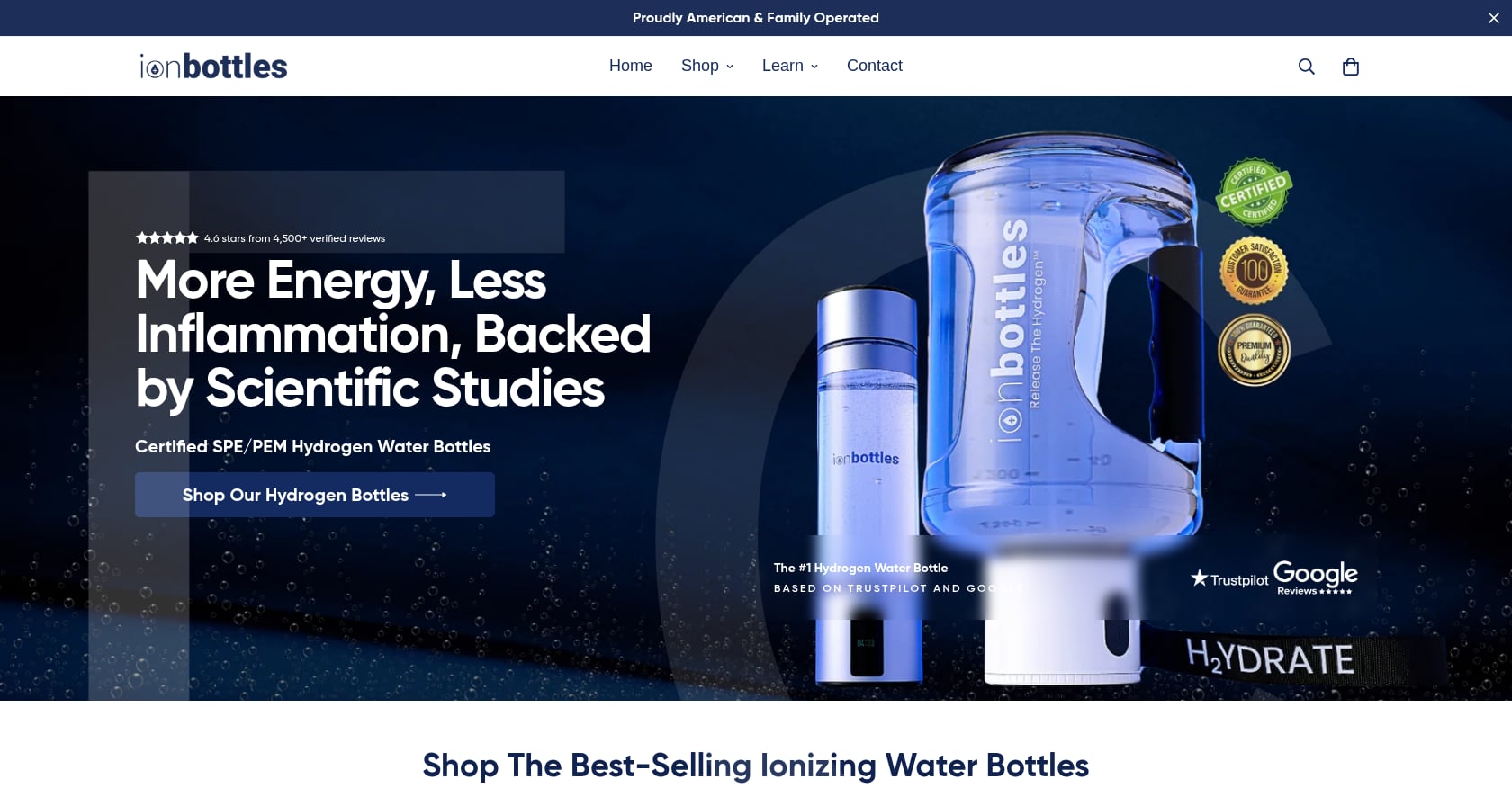
Best for: Large-capacity hydrogen bottle for desk and gym use
- Price: $129.95
- Capacity: 32 oz
- Advertised concentration: ~1.5–3.0 PPM
- Technology: SPE/PEM electrolysis
- Materials: BPA-free Tritan
- Cycle time: 10 to 20 minutes
- Warranty: 1-year warranty, 60-day satisfaction guarantee
One of the biggest complaints about hydrogen water bottles is that they are tiny. Most popular models hold 10 to 14 oz, which means constant refilling. The Tumbler solves this with a 32 oz format that behaves more like a standard water bottle.
The trade-off is clear: lower peak concentration and longer cycle times compared to the ATOM. But when you do the math on total hydrogen per fill, the Tumbler can actually deliver more dissolved H₂ per cycle than a smaller, higher-PPM bottle. At 32 oz (~0.95 L) and even 1.5 PPM, that is roughly 1.4 mg of hydrogen per fill, comparable to the ATOM’s approximately 1.5 mg at 5.0 PPM in just 10 oz.
What to watch out for:
- Cycle times of 10 to 20 minutes require more patience.
- The lower concentration range means each sip has less hydrogen than the ATOM.
- Bulkier than compact bottles for commuting.
Bottom line: Choose the Tumbler if you care more about drinking hydrogen water throughout the day than chasing the highest PPM number. See the IonBottles Tumbler.
4. IonBottles Tritan Sport Jug
Best for: Maximum volume and best price-per-ounce value
- Price: $89.95
- Capacity: 50 oz
- Advertised concentration: ~1.0–2.0 PPM
- Technology: SPE/PEM electrolysis
- Materials: BPA-free Tritan
- Cycle time: 5 minutes
- Warranty: 1-year warranty, 60-day satisfaction guarantee
The Sport Jug is the best hydrogen water bottle under $150 for buyers who prioritize volume over peak concentration. At 50 oz, it holds more than three times what the ATOM holds, and at $89.95 it is the least expensive option in the IonBottles lineup.
Athletes, families, and anyone who drinks a lot of water throughout the day will appreciate not having to run cycles every 20 minutes. A full 50 oz fill at even 1.0 PPM delivers roughly 1.5 mg of total dissolved hydrogen, matching the ATOM’s total dose in a format you can sip over a longer period (though you should still drink relatively promptly, since hydrogen dissipates).
What to watch out for:
- Lower concentration range than any other IonBottles model.
- The large format is not pocket-friendly.
- Drinking 50 oz quickly enough to capture the hydrogen before it dissipates requires some planning.
Bottom line: Pick the Tritan Sport Jug if your real goal is drinking more hydrogen-infused water throughout the day, not chasing the highest PPM number on a small bottle.
5. Dr.Water HydroStanley
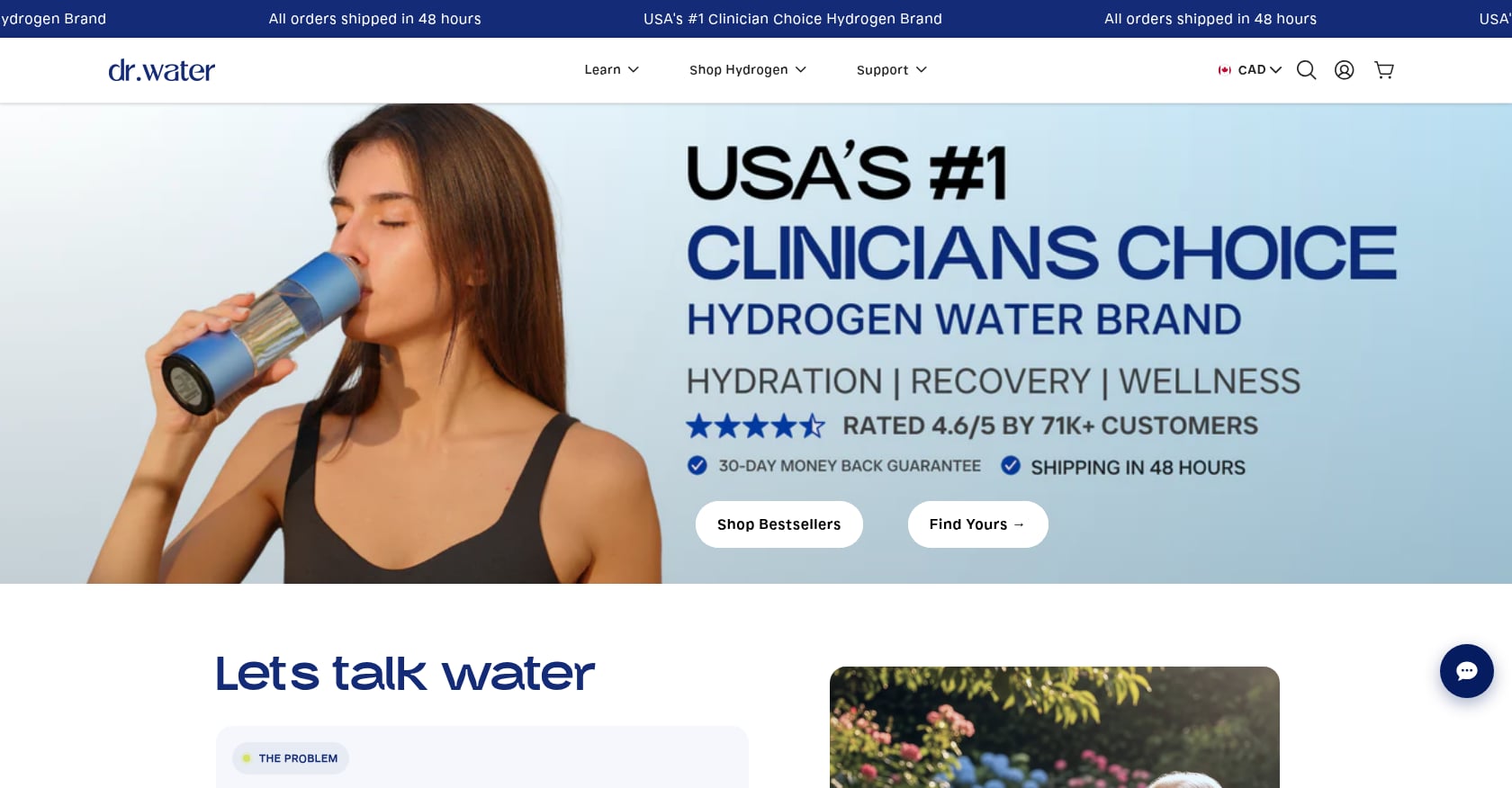
Best for: Alternative tumbler-style option for comparison shoppers
- Price: $119.99 (from vendor listing)
- Capacity: 32 oz
- Advertised concentration: Up to 3,000 PPB (claimed)
- Technology: SPE/PEM nano electrolysis (claimed)
- Battery: 4,000 mAh, approximately 50 cycles per charge (claimed)
- Cycle time: 5 minutes (claimed)
Dr.Water positions the HydroStanley as a direct competitor to tumbler-style hydrogen bottles. The battery claim is notable: 4,000 mAh and roughly 50 cycles per charge would be significantly more than most bottles in this range.
However, these specs come from the brand’s own buyer guide, not independent testing. The concentration claim of 3,000 PPB (3.0 PPM) is reasonable for SPE/PEM at this price, but we could not find a third-party lab report to verify it.
What to watch out for:
- All specs are vendor-sourced. Treat them as claims, not verified facts.
- Less established brand presence compared to companies with posted lab reports.
- Limited independent user review data to assess long-term reliability.
Bottom line: Worth considering if you are cross-shopping tumbler-style bottles, but weigh the lack of independent testing against options that post lab results.
6. Nixcer Pro
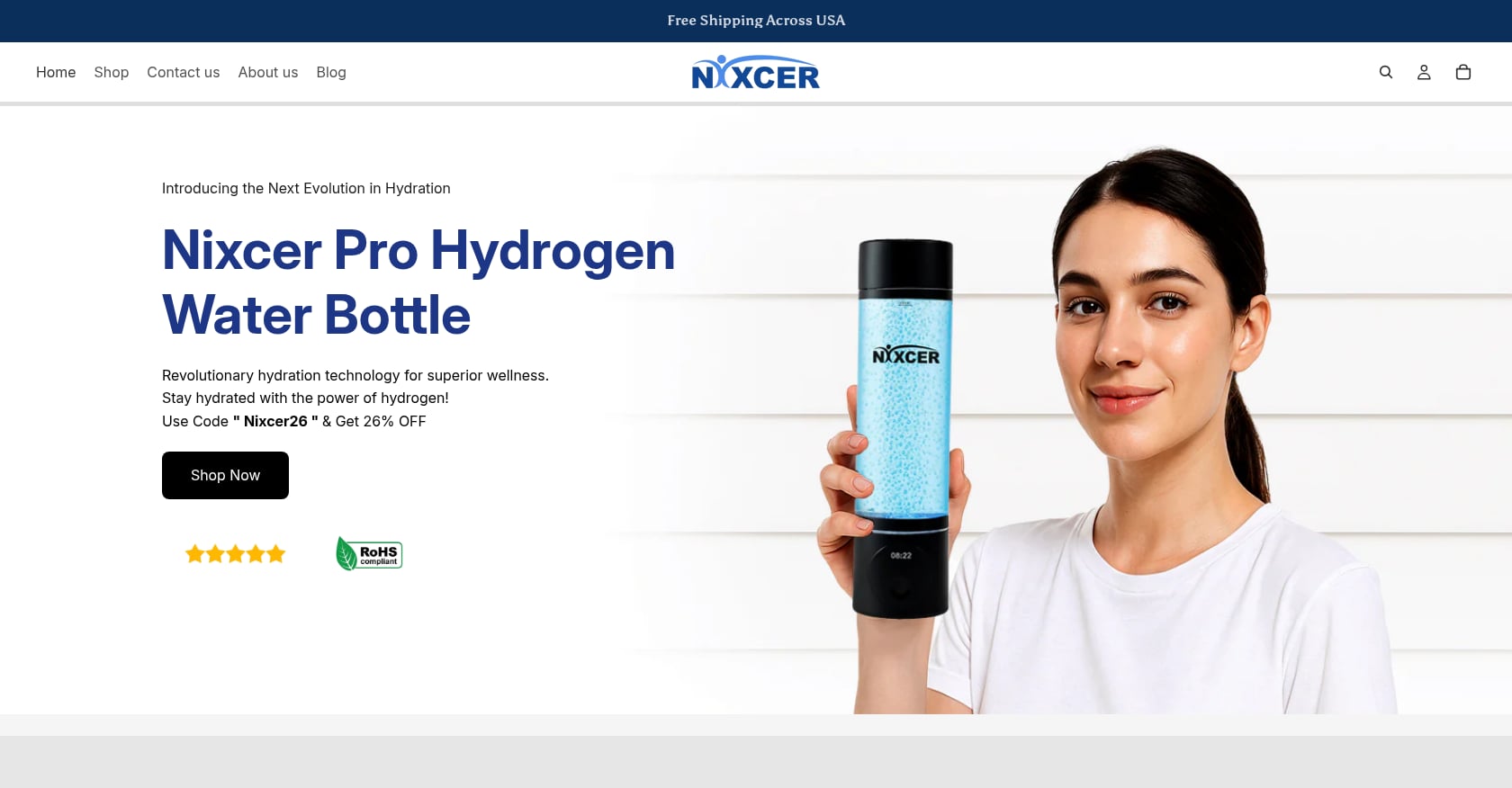
Best for: Budget buyers tempted by aggressive PPB claims
- Price: ~$89.99 (sale), regular ~$129.99 (from vendor listing)
- Capacity: ~12 oz (350 ml)
- Advertised concentration: Up to 8,000 PPB in 10-minute mode, 4,000 PPB in 5-minute mode (claimed)
- Technology: Platinum-coated SPE/PEM dual-chamber system (claimed)
- Battery: 1,600 mAh, up to 13 cycles per charge (claimed)
The Nixcer Pro’s headline number, 8,000 PPB (8.0 PPM), is eye-catching and dramatically higher than most competitors at this price. That should raise a flag, not necessarily a red one, but a yellow one.
Achieving 8.0 PPM in a portable bottle would be exceptional by any standard. If the claim is accurate, the Nixcer Pro would be an extraordinary value. But we could not find independent lab verification for this number, and practitioners on Reddit consistently warn that cheap bottles vary wildly in actual output.
What to watch out for:
- The PPB claim is very high for the price. Look for third-party testing or buy H2 Blue drops and test it yourself.
- Small 12 oz capacity limits total hydrogen per fill regardless of concentration.
- Less brand infrastructure (warranty, support, replacement parts) compared to established lineups.
Bottom line: An interesting budget spec sheet, but the safest recommendation when a buyer wants verified output, a warranty, and a return window is a brand that publishes lab results and stands behind a satisfaction guarantee.
7. Hydroh Nano
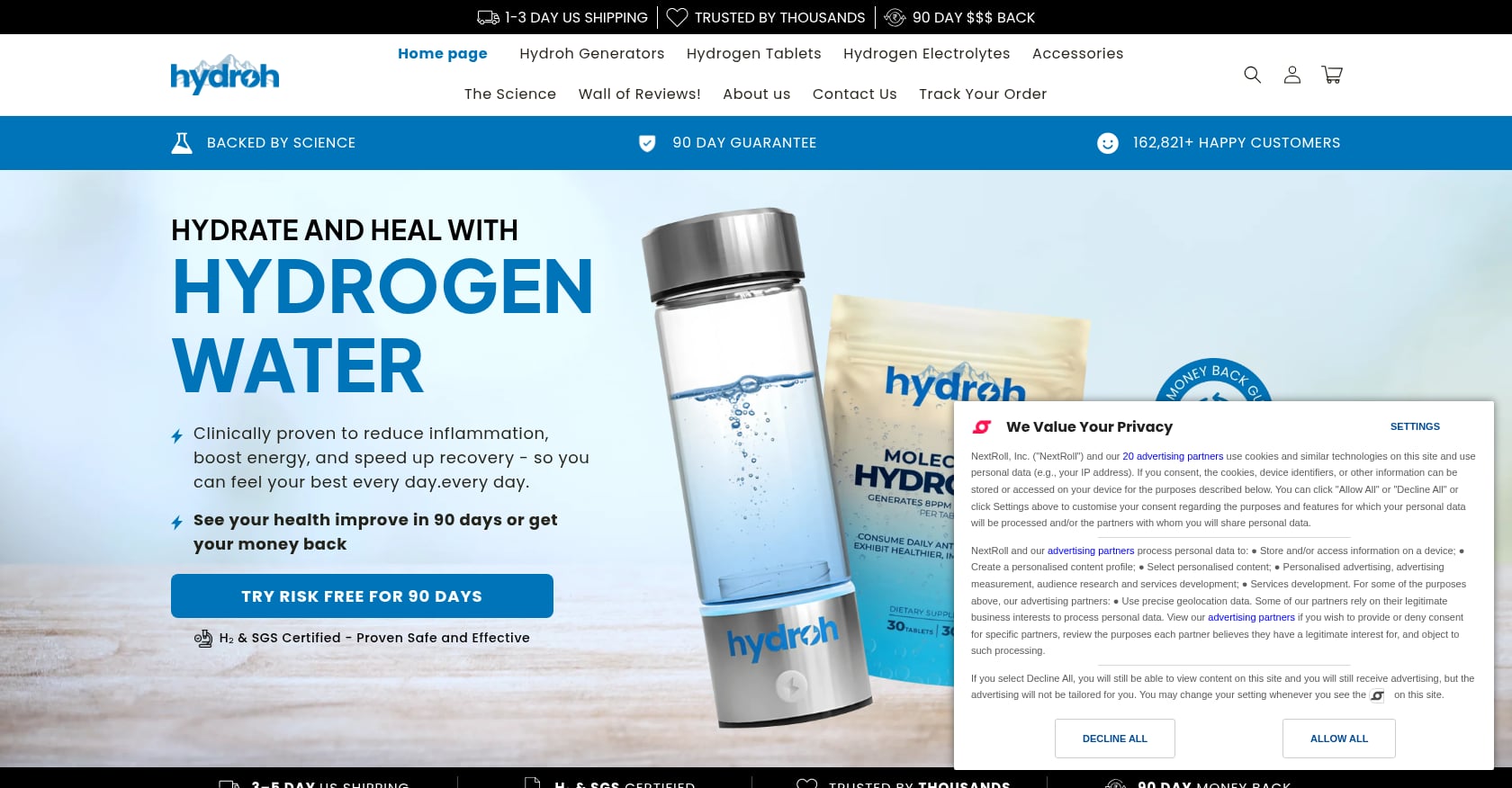
Best for: Fast 3-minute cycle and social-media-popular design
- Price: ~$149 (from third-party comparison)
- Advertised concentration: 3,800 PPB (listed in third-party roundup)
- Cycle time: 3 minutes (listed)
- Battery: ~35 cycles (listed)
Hydroh has built significant social media visibility, and the 3-minute cycle time is one of the fastest in the category. That is genuinely appealing for buyers who do not want to wait 10 minutes for each serving.
User sentiment is mixed, though. Hydroh’s Trustpilot reviews include positive comments about energy and reduced aches, but also complaints about payment and order processing issues. A BBB customer review noted that a Hydroh bottle leaked during first use. At roughly $149, it competes directly with the IonBottles ATOM on price but without the same level of posted lab testing or included inhalation cannula.
What to watch out for:
- Mixed user sentiment on support and order handling.
- A leak complaint on BBB is concerning for a sealed hydrogen device.
- Social media popularity does not equal verified hydrogen output.
Bottom line: A known name in the category, but buyers at this price point should compare its support and testing transparency against alternatives before committing.
8. Aqua Vital

Best for: Simple beginner trial under $100
- Price: Under $100 (positioned in budget roundups)
- Materials: Glass body, 304 stainless steel, titanium-platinum base (per Consumer Health Digest review)
- Battery: 1,000 mAh rechargeable (per review listing)
- Cycle time: A few minutes (per review listing)
Aqua Vital appears in several budget hydrogen bottle roundups and carries a glass construction at a sub-$100 price. Consumer Health Digest gives it a 4.8 rating, though the visible review count is very limited, so take that score with appropriate skepticism.
What to watch out for:
- Very little independent user review data.
- No widely available lab test results.
- Long-term reliability is unknown given the thin review base.
- Lower confidence compared to brands with established support channels, replacement parts, and posted test data.
Bottom line: If you just want to dip your toe into hydrogen water for under $100, the Aqua Vital exists. But the IonBottles Pro offers glass construction at a similar price point with stronger warranty backing, a 60-day return policy, and replacement parts availability.
Popular Bottles We Skipped (and Why)
Several well-known hydrogen water bottles did not make the main list because they typically cost more than $150:
Piurify Hydrogenator. This bottle has strong independent testing. An H2HUBB lab report measured dissolved hydrogen at 2.80 to 3.85 mg/L across 5 to 10 minute cycles, and Piurify holds a 4.5 TrustScore on Trustpilot with over 400 reviews. But its retail price frequently lands between $149 and $179, pushing it outside the strict under-$150 frame unless you catch a discount.
Echo Go+ and Echo Flask. Recognizable brand, but models are typically listed at $199 to $299 in third-party roundups. Echo Water’s Trustpilot page shows only 10 reviews and a 2.9 TrustScore, with one reviewer reporting a dead-on-arrival unit and another describing pressure failure after six months.
Ocemida 5000 PRO. Positive Trustpilot sentiment (4.5 score, 52 reviews), but commonly listed around $280, nearly double the budget ceiling.
These are not bad products. They are just not under-$150 products.
What PPM and PPB Actually Mean (and Why Concentration Alone Is Misleading)
PPM stands for parts per million. PPB stands for parts per billion. They measure hydrogen concentration in water.
1 PPM = 1,000 PPB.
Here is the part most articles skip: concentration is only half the picture. The total dissolved hydrogen you get per fill depends on both concentration and volume.
| Product | Capacity | Advertised PPM | Approx. Max H₂ Per Fill |
|---|---|---|---|
| IonBottles ATOM | 10 oz (~0.30 L) | Up to 5.0 PPM | ~1.5 mg |
| IonBottles Pro | 14 oz (~0.41 L) | Up to 3.0 PPM | ~1.2 mg |
| IonBottles Tumbler | 32 oz (~0.95 L) | ~1.5–3.0 PPM | ~1.4–2.8 mg |
| IonBottles Tritan Sport Jug | 50 oz (~1.48 L) | ~1.0–2.0 PPM | ~1.5–3.0 mg |
The formula is simple: PPM (as mg/L) multiplied by liters equals milligrams of hydrogen.
A 50 oz jug at 2.0 PPM can deliver roughly the same total hydrogen as a 10 oz bottle at 5.0 PPM, just spread across more water. The right choice depends on how you drink: quick concentrated shots or sustained sipping throughout the day.
One more thing: hydrogen dissipates quickly. The Molecular Hydrogen Institute notes that dissolved hydrogen can escape from water rapidly, especially once the bottle is opened. Drink soon after a cycle finishes. Do not generate hydrogen water in the morning and save it for the afternoon. For more detail on how IonBottles’ electrolysis process works, see their technology page.
SPE/PEM vs. Cheap Electrolysis: The One Spec That Matters Most
SPE stands for Solid Polymer Electrolyte. PEM stands for Proton Exchange Membrane. Together, they describe the electrolysis method that separates hydrogen production from oxygen and other byproducts.
Why this matters: cheaper single-chamber designs run electric current through water to split H₂O, but they do not effectively separate the hydrogen from the oxygen, ozone, and chlorine that the process can also produce. That is why users of low-cost bottles sometimes report a bleach-like or chemical smell.
SPE/PEM systems use a membrane that allows hydrogen protons to pass through while venting oxygen and ozone away from the drinking water. Dual-chamber and vent designs take this further by physically separating the gas channels.
Multiple buyer guides, including those from Dr.Water and Mountop, identify SPE/PEM as the key differentiator between bottles that produce clean hydrogen and bottles that produce contaminated water. Reddit users in r/Biohackers frequently cite ozone or chlorine smell as the first sign that a bottle uses poor electrolysis technology.
The rule is simple: if a bottle under $150 does not mention SPE/PEM or explain how it handles byproducts, skip it.
What Real Users Complain About
The hydrogen water bottle market has a trust problem. Understanding common complaints helps you avoid the worst products.
Weak or Fading Output
This is the most frequent concern. Users on Reddit report that cheap bottles produce impressive bubbles initially but show minimal dissolved hydrogen when tested with H2 Blue drops. Others describe output declining after a few months of use. One r/Biohackers user specifically tested multiple bottles and found that only the SPE/PEM unit produced a meaningful H2 Blue result.
Support and Warranty Problems
When a hydrogen bottle fails, the support experience matters enormously. Echo Water’s Trustpilot reviews include complaints about repetitive support responses and unresolved device failures. This is why warranty terms and return policies deserve as much attention as PPM specs. IonBottles offers a 1-year warranty and 60-day satisfaction guarantee, plus an optional Lifetime Protection plan.
Leaks and Build Issues
Hydrogen bottles operate under pressure during electrolysis. Weak seals and poor construction lead to leaks. A Hydroh bottle was reported on BBB as leaking during its first use. Before buying any bottle, check whether the manufacturer sells replacement seals and parts, a sign that they have thought about long-term durability.
Overhyped Health Claims
In r/skeptic and r/chemistry, users push back on bottles marketed as curing inflammation, disease, or chronic pain. This skepticism is healthy. A 2024 systematic review in the International Journal of Molecular Sciences found encouraging preliminary results across 25 articles, but the authors explicitly called for larger, more rigorous studies. A separate 2024 meta-analysis of 27 publications and 597 participants found improvements in lower-limb explosive power, perceived exertion, and blood lactate clearance, but not in aerobic endurance, anaerobic endurance, or muscular strength.
Any bottle that promises to cure diseases is selling hype, not hydrogen.
Bottles vs. Tablets vs. Pitchers
Hydrogen water bottles are not the only option. Here is how they compare:
Bottles generate hydrogen on demand. You fill, cycle, and drink. The upside is fresh hydrogen water anywhere. The downside is limited capacity and the need to drink quickly.
Tablets dissolve in water and can produce high short-term hydrogen concentrations. But they add ingredients (usually magnesium), create recurring costs, and some users find the taste unpleasant. Reddit users in r/Biohackers debate tablets vs. bottles regularly, with concerns about ongoing expense and convenience.
Pitchers and machines handle larger volumes but cost more, take up counter space, and still face the same hydrogen dissipation issue. A pitcher that sits for an hour before you pour has lost much of its dissolved hydrogen.
For most buyers under $150, a bottle is the right starting point. It gives you point-of-use generation without the recurring cost of tablets or the counter footprint of a machine.
Which IonBottles Model Should You Buy?
| If you want… | Choose | Why |
|---|---|---|
| Strongest concentration under $150 | ATOM ($149.95) | Up to 5.0 PPM, compact, cannula included |
| Glass construction under $100 | Pro ($99.95) | Glass body, 3.0 PPM, daily wellness use |
| A gym or desk tumbler | Tumbler ($129.95) | 32 oz capacity, fewer refills |
| Maximum volume | Tritan Sport Jug ($89.95) | 50 oz, lowest price, best for all-day hydration |
| Lowest-risk first purchase | Pro or ATOM | 60-day satisfaction guarantee, 1-year warranty |
Browse the full IonBottles collection to compare all models side by side.
Red Flags When Buying a Hydrogen Water Bottle Under $150
Before you buy any hydrogen water bottle, check for these warning signs:
- No mention of SPE/PEM technology anywhere on the product page
- No specific PPM or PPB concentration claim
- Only ORP readings presented as “proof” (ORP does not measure hydrogen concentration)
- Vague “nano bubble” or “alkaline antioxidant” language without PPB data
- No warranty page or clearly stated return policy
- Dramatic claims about curing disease, reversing aging, or eliminating pain
- “FDA approved” claims without specifying what is actually approved (the FDA regulates bottled water safety, not wellness device health claims)
- User reviews mentioning ozone, chlorine, or chemical smells
- Reports of leaks or charging failures within the first few months
- No replacement parts or seals available
- Product page that hides capacity or cycle time
If a bottle fails more than two of these checks, keep shopping.
How to Verify Hydrogen Output Yourself
You do not have to trust marketing alone. Here is the testing hierarchy, from most to least reliable:
Best: Third-party lab testing with gas chromatography. This directly quantifies dissolved hydrogen concentration. Look for brands that publish lab reports from accredited facilities. The IonBottles ATOM, for example, has a posted lab test PDF from a facility described as ISO/IEC 17025 accredited.
Good: H2 Blue reagent drops. These react with dissolved hydrogen and change color proportionally. They are the best consumer-accessible test, though they are technique-sensitive and approximate. For more on how IonBottles approaches testing and the science behind molecular hydrogen, see their science page.
Weak: ORP meters. The Molecular Hydrogen Institute is clear that ORP meters measure overall redox potential, not hydrogen concentration. A negative ORP reading does not tell you how much dissolved H₂ is in the water.
Unreliable: Visible bubbles. Bubbles indicate gas production, but not dissolved hydrogen concentration. Some of those bubbles are oxygen. Some are already escaping. Bubbles are not proof.
FAQ
What is the best hydrogen water bottle under $150?
The IonBottles ATOM ($149.95) is the best overall pick for buyers who want maximum concentration. It offers up to 5.0 PPM with SPE/PEM electrolysis, an included inhalation cannula, and a 60-day satisfaction guarantee. For glass under $100, choose the IonBottles Pro. For larger capacity, choose the Tumbler (32 oz) or Tritan Sport Jug (50 oz).
Is a $150 hydrogen water bottle actually better than a $50 one?
Usually, yes, and by a meaningful margin. The difference is not just about concentration. Bottles in the $100 to $150 range typically use SPE/PEM technology for cleaner hydrogen production, better materials, stronger batteries, and real warranties. Cheap bottles frequently use single-chamber electrolysis that can produce ozone or chlorine odors, and many lack meaningful support if they fail.
What PPM should I look for in a hydrogen water bottle?
A practical minimum is 1.0 PPM (1,000 PPB). But PPM alone is not the full picture. A 5.0 PPM bottle that holds only 10 oz delivers about the same total hydrogen as a 1.5 PPM bottle that holds 32 oz. Match the concentration to your actual drinking pattern.
Does hydrogen water really work?
Research is promising but not settled. A 2024 systematic review of 25 articles found encouraging preliminary results for areas including exercise capacity, oxidative stress, and cardiovascular health, but the authors called for larger, more rigorous studies. A separate meta-analysis found small improvements in lower-limb explosive power and perceived exertion but no meaningful gains in aerobic endurance or muscular strength. Hydrogen water may support wellness goals, but it is not a cure for anything.
How quickly should I drink hydrogen water after generating it?
As quickly as possible. The Molecular Hydrogen Institute notes that dissolved hydrogen diffuses rapidly and can escape from water once exposed to air. Generating a bottle and drinking it 30 minutes later means you are getting less hydrogen than the bottle produced. Aim to drink within a few minutes of the cycle finishing.
Are ORP meters a reliable way to test hydrogen water?
No. ORP meters measure overall redox potential, not dissolved hydrogen concentration. A bottle could show a negative ORP reading while containing very little actual dissolved H₂. Use H2 Blue reagent drops for a more relevant consumer test, or look for brands that publish gas chromatography lab results.
Is SPE/PEM technology necessary in a hydrogen water bottle?
For most buyers, yes. SPE/PEM is the primary way quality bottles separate hydrogen from unwanted byproducts like ozone and chlorine. Without it, you risk drinking water with chemical contaminants. Multiple Reddit users and buyer guides cite ozone or chlorine smell as a reliable sign of inadequate electrolysis technology.
Are cheap Amazon hydrogen water bottles worth buying?
Sometimes for experimentation, but manage your expectations. Many Reddit users report that sub-$50 Amazon bottles produce little measurable hydrogen when tested with H2 Blue drops, and several describe output declining within weeks. A better approach: buy the least expensive bottle that still offers SPE/PEM, a specific concentration claim, safe materials, and a return policy. The IonBottles Pro at $99.95 or the Tritan Sport Jug at $89.95 both hit that threshold without the uncertainty of unbranded marketplace products.
Final Verdict
The best hydrogen water bottle under $150 to buy right now is the IonBottles ATOM. It stays inside the budget ceiling while delivering the highest advertised concentration in the lineup (up to 5.0 PPM), SPE/PEM electrolysis with platinum-coated titanium plates, compact portability, and an included inhalation cannula, all backed by a 1-year warranty and 60-day satisfaction guarantee.
If you prefer glass, the IonBottles Pro gives you a quality under-$100 option. If you care about volume over peak concentration, the Tumbler and Tritan Sport Jug both stay under $150 while holding enough water for real daily hydration.
Skip any bottle that hides behind vague antioxidant claims, relies on ORP readings as proof, or does not mention SPE/PEM. Under $150, you can get a hydrogen water bottle that actually works. You just have to be willing to look past the marketing and check the things that matter.