TL;DR
The best glass hydrogen water bottle for most U.S. buyers is the IonBottles Pro ($99.95), which pairs a borosilicate glass body with SPE/PEM electrolysis, an included inhalation cannula, and domestic shipping from LA and NJ warehouses. Glass bottles offer taste neutrality and easy cleaning, but they demand respect for pressure limits and realistic expectations around dissolved hydrogen. At standard atmospheric pressure, hydrogen saturates water at roughly 1.6 ppm, so any claim beyond that number implies pressurized cycling or immediate closed-container measurement. Buy glass for the right reasons, verify the output yourself, and drink the water right after the cycle ends.
Why Glass Matters for Hydrogen Water (and Where It Gets Tricky)
Most hydrogen water bottles on the market use Tritan plastic or stainless steel. Both work fine. But a growing number of buyers specifically search for a glass hydrogen water bottle because they want zero chemical leaching, a neutral taste, and the ability to see their water during electrolysis. These are legitimate reasons.
Borosilicate glass, the same material used in lab beakers, handles thermal stress and chemical exposure better than soda-lime glass. It won’t absorb odors, it cleans easily, and hydrogen permeation through silicate glass walls is low enough that it’s not the primary loss pathway for dissolved H2. The real loss happens when you open the lid. More on that below.
The tradeoff is fragility. Glass is less forgiving under internal pressure than polymer or steel. A hydrogen generator creates gas inside a sealed container, and that means pressure. If a glass bottle lacks a proper pressure-relief valve, or if a user overfills it or runs hot water through the cycle, the results can be unpleasant. Practitioners on Reddit report pressure-related incidents across the category, typically from ignoring manual instructions. The takeaway: glass hydrogen bottles work well when engineered correctly and used as directed.
One more nuance worth noting: even “glass” bottles still use polymer seals, silicone gaskets, and a plastic or metal base housing the electrolysis module. “Glass” describes the water chamber, not the entire device. Check what touches your water besides the glass.
At-a-Glance Comparison: Best Glass Hydrogen Water Bottles in 2026
| Model | Price | Capacity | Material | Advertised H2 Output | Verification | Best For | Key Tradeoff |
|---|---|---|---|---|---|---|---|
| IonBottles Pro | $99.95 | 14 oz | Borosilicate glass | Up to ~3.0 ppm | H2 Verified ethos, lab-testing focus | U.S. daily use, glass + policy safety | Smaller capacity, drink promptly |
| LevelUpWay Glass | $89–$150 | ~10–12 oz | Borosilicate glass | 3,000–4,000 ppb claimed | Limited public third-party certs | Budget glass with SPE/PEM | Inconsistent listings, finish durability |
| Lazena HB-H06 | €168 | 400 ml | Borosilicate glass | Up to 2,500 ppb | CE/RoHS | EU buyers needing local shipping | Outside-EU support unclear |
| GOSOIT Glass | Sub-$100 | ~350 ml | Double-layer borosilicate | 800–1,200 ppb claimed | Basic documentation | Low-cost entry point | Variable QC and performance |
| Lumeva Glass | ~£147 | 400 ml | Borosilicate glass | PEM/SPE (not specified) | Sparse independent data | UK design-forward buyers | Price vs. available verification |
| Evolved H2O Glass | Regional (AU) | Glass body | Borosilicate glass | PEM/SPE, 35+ cycles/charge | Limited outside AU | Australian buyers | Import friction to U.S. |
The PPM Reality Check Every Glass Bottle Buyer Needs
Before spending a dollar on any hydrogen water bottle, glass or otherwise, understand the physics that governs every device in this category.
Henry’s law dictates that dissolved hydrogen in water saturates at approximately 1.6 mg/L (1.6 ppm) at room temperature and 1 atmosphere of pressure. That’s a hard ceiling under normal conditions. Any brand claiming 3, 5, or 8 ppm is either measuring inside a sealed, pressurized container immediately at cycle end, or they’re overstating their numbers.
This doesn’t mean those higher numbers are fake across the board. A well-designed bottle that generates hydrogen in a sealed chamber will temporarily exceed 1.6 ppm because the gas hasn’t fully equilibrated with atmospheric pressure yet. The moment you open the lid, dissolved H2 starts escaping. Multiple sources confirm that hydrogen levels drop significantly within minutes of opening, which is why the golden rule is simple: generate, then drink. Don’t let it sit.
For glass bottles specifically, the ppm conversation gets more conservative. Glass is rigid. It doesn’t flex to accommodate internal pressure the way a thick Tritan bottle might. Most well-engineered glass hydrogen bottles cluster in the 1.0 to 3.0 ppm range under sealed conditions, and real-world sipping concentration is often lower. That’s still within the range studied in molecular hydrogen research since 2007, but it’s a long way from some of the inflated marketing claims floating around.
If you want a deeper understanding of the science behind hydrogen water, the IonBottles molecular hydrogen research page compiles study summaries in plain language.
How to Evaluate a Glass Hydrogen Water Bottle: 5-Point Checklist
1. SPE/PEM Electrolysis With Proper Venting
This is non-negotiable. SPE (Solid Polymer Electrolyte) and PEM (Proton Exchange Membrane) technology separates hydrogen from oxygen during electrolysis and vents byproducts like ozone and chlorine away from the drinking water. Older single-chamber designs bubble everything together. That’s the difference between drinking clean hydrogen-infused water and drinking water contaminated with oxidative byproducts.
Practitioners on Reddit’s supplement and biohacking communities consistently flag this as the most important spec. As one user in r/Supplements put it, “most cheap bottles make little measurable H2; PEM/SPE units finally made H2Blue drops go clear.” You can learn more about how dual-chamber PEM electrolysis works to understand why it matters.
2. Pressure-Relief Valve
Glass under pressure is a safety concern. Any glass hydrogen bottle that generates meaningful ppm needs a mechanism to release excess pressure safely. Look for explicit mention of a pressure-relief valve or automatic venting system in the product specs or manual. If the brand doesn’t address pressure management, move on.
3. Borosilicate Glass With Protective Sleeve
Not all glass is equal. Borosilicate is the standard for lab and food-grade applications because it resists thermal shock and chemical degradation. A silicone sleeve or protective frame adds a layer of drop protection. Glass will always be more fragile than plastic, so the question is whether the manufacturer has accounted for that reality.
4. Published Third-Party Test Data
Claims are cheap. Lab reports from independent testing facilities (gas chromatography, H2 Analytics, IHSA certification) are not. Prefer brands that publish verifiable test data rather than just marketing graphics. If you plan to verify at home, H2Blue reagent drops offer a directional reading, though they’re not as precise as lab instruments.
5. Clear Warranty, Returns, and U.S. Availability
A glass bottle with a 30-day return window and vague warranty language is a gamble. Look for at least 60 days to test the product and a minimum 1-year warranty covering defects. For U.S. buyers, domestic shipping matters because international returns on glass products are expensive and slow.
Now, with those criteria in hand, browse the full IonBottles lineup to see how each model stacks up, or keep reading for the individual picks.
The 6 Best Glass Hydrogen Water Bottles in 2026
1. IonBottles Pro
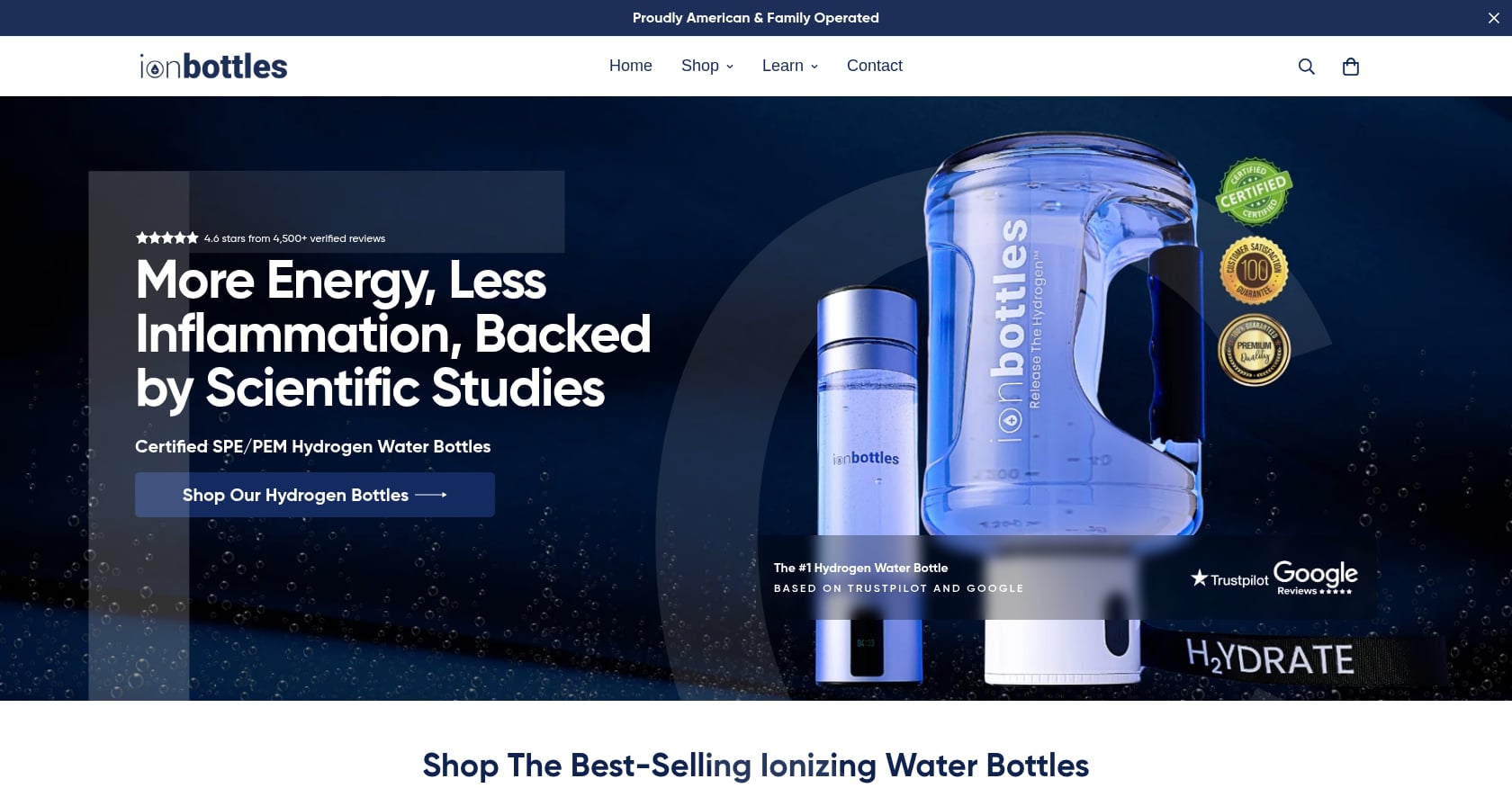
Best for: U.S. buyers who want a verified glass hydrogen bottle with strong policies and included inhalation.
Pricing: $99.95. Free U.S. shipping on orders over $50. Ships from LA and NJ warehouses with typical 3 to 7 day domestic delivery.
Key features:
- Borosilicate glass body, 14 oz capacity
- SPE/PEM electrolysis with platinum-coated titanium plates
- Dual-chamber design that vents oxygen, ozone, and chlorine away from the drinking path
- Up to approximately 3.0 ppm dissolved hydrogen
- One-touch timed cycles (3 to 5 minutes)
- H2 inhalation cannula included
- CE/RoHS/BPA-free certifications
- 60-day return policy and 1-year warranty, with optional Lifetime Protection for $30
Why it leads this list:
The Pro checks every box on the glass-specific checklist above. It uses SPE/PEM with proper byproduct venting, ships domestically with a generous return window, and includes an inhalation cannula that many competitors charge extra for or skip entirely. At under $100, it’s the most accessible verified glass hydrogen water bottle from a U.S. brand.
Real user perspective:
In an r/Biohackers thread, one user reported approximately 3 ppm from the Pro bottle and emphasized choosing PEM/SPE to avoid ozone and chlorine. Others in the same thread remained skeptical of the entire category. That mixed sentiment is typical, and it’s exactly why return policies and verification matter.
Tradeoffs:
- 14 oz means more refills throughout the day compared to larger Tritan options
- Real-world ppm varies with water source, temperature, and altitude
- Hydrogen dissipates quickly after opening; this isn’t a sip-all-afternoon bottle
- Returns deduct shipping label cost, and a 15% restocking fee may apply on unwanted items
For full operating instructions and safety notes, read the Pro user manual.
Check the IonBottles Pro glass hydrogen water bottle →
Need higher concentration than glass can safely deliver? The IonBottles ATOM uses BPA-free Tritan and reaches up to 5.0 ppm in a 10 oz form factor. It’s not glass, but it’s the option if maximum dissolved hydrogen is your priority over material preference.
2. LevelUpWay Glass Hydrogen Generator
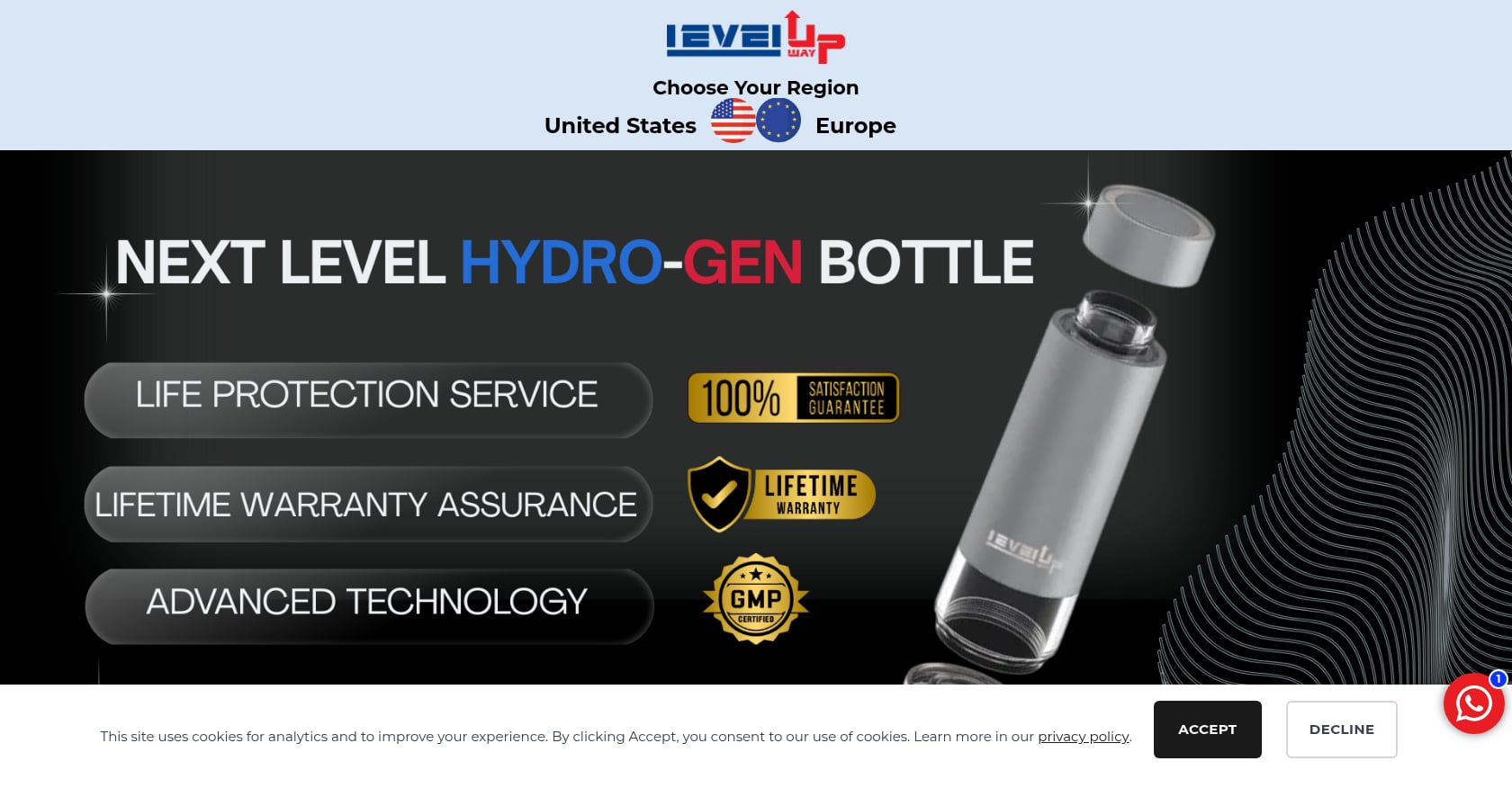
Best for: Budget-conscious buyers who still want glass and PEM/SPE.
Pricing: $89 to $150 depending on model and configuration. Pricing varies across their product page and third-party retailers.
Key features:
- Borosilicate glass body
- SPE/PEM with DuPont membrane (per brand claims)
- Some models advertise 3,000 to 4,000 ppb
- Pressure relief discussed in select reviewer accounts
- Multiple cycle time options
Real user perspective:
A hands-on reviewer at Water Bottle Advisor noted the device “works” and liked the aesthetic but flagged finish durability over time and called for third-party verification of ppm claims. The reviewer mentioned lifetime warranty claims, though this is one person’s experience, not lab confirmation.
Tradeoffs:
- Brand messaging is inconsistent across models (some listings show Tritan, not glass; verify before buying)
- Limited publicly available third-party lab certificates
- Finish durability may decline with regular use
- Keep ppm expectations grounded in Henry’s law physics
3. Lazena HB-H06
Best for: EU buyers who need local shipping, CE certification, and a glass build.
Pricing: €168 for the 2025/2026 model.
Key features:
- 400 ml borosilicate glass body
- DuPont PEM/SPE membrane
- Up to 2,500 ppb (2.5 ppm) advertised
- 5-minute and 10-minute cycle modes
- Inhalation kit included
- CE/RoHS certification
- 2-year warranty
Tradeoffs:
- Availability and customer support outside the EU is unclear
- At 2,500 ppb, the claimed output sits within Henry’s law limits for moderate pressure, which is realistic
- English-language forum chatter is sparse, making independent verification harder
- Higher price point than U.S. glass options when factoring currency and shipping
4. GOSOIT Glass Hydrogen Water Bottle
Best for: First-time experimenters who want the cheapest glass entry point.
Pricing: Often sub-$100 on major retailers like Walmart and Amazon.
Key features:
- Double-layer borosilicate glass construction
- 800 to 1,200 ppb advertised (lower than premium devices)
- Basic PEM documentation in some listings
- Easy marketplace return windows
Tradeoffs:
- Inconsistent quality control across SKUs and retailers
- Lower hydrogen output claims compared to every other pick on this list
- Verify whether your specific listing actually uses PEM/SPE (not all do)
- Documentation quality varies; some listings include manuals, others don’t
- If you test with H2Blue, follow proper sampling protocol and measure immediately after the cycle
5. Lumeva Glass Hydrogen Bottle
Best for: UK buyers who prioritize clean design and simple operation.
Pricing: Approximately £147 via their direct-to-consumer site.
Key features:
- Borosilicate glass body
- USB-C rechargeable base
- PEM/SPE electrolysis with titanium plates (per listing)
- Simple 3-minute cycle, one-button operation
Tradeoffs:
- Very limited independent testing or reviews visible online
- Small brand with minimal community presence
- Pricey relative to the amount of published verification
- Shipping to the U.S. adds cost and return complexity
6. Evolved H2O Glass
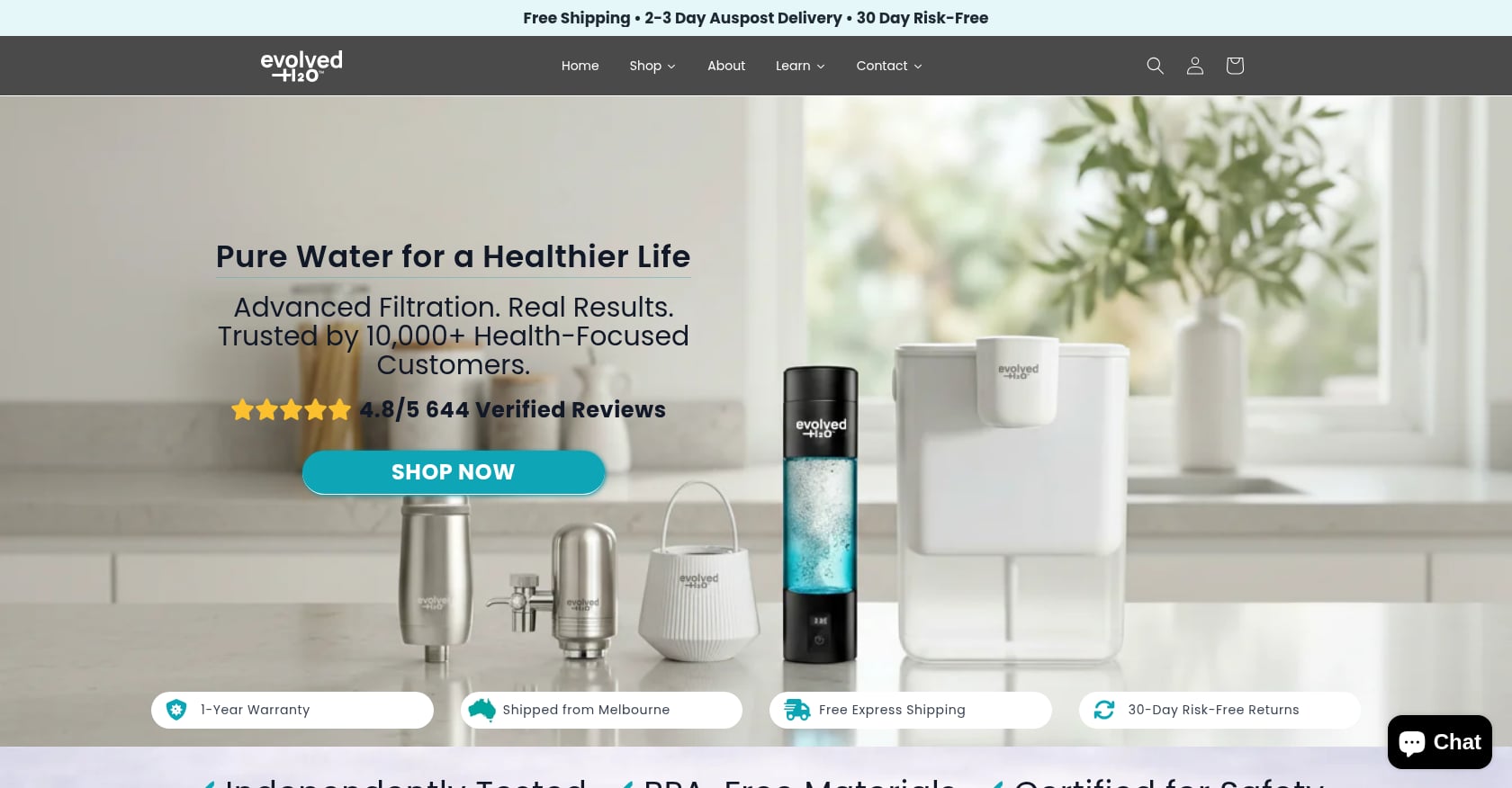
Best for: Australian buyers who want a local glass option with strong battery life.
Pricing: Listed through their AU storefront; regional pricing applies.
Key features:
- Borosilicate glass bottle
- PEM/SPE electrolysis
- 2,200 mAh battery
- Claims 35+ cycles per charge
Tradeoffs:
- Sparse independent forum feedback in English-speaking communities outside Australia
- Importing to the U.S. adds shipping cost, delays, and warranty complications
- Battery cycle claims are hard to independently verify
- Treat as a regional option unless you’re based in AU
How to Test and Use Your Glass Hydrogen Water Bottle
Buying a glass hydrogen bottle is step one. Using it correctly is what determines whether you actually drink meaningful amounts of dissolved hydrogen.
Testing with H2Blue drops:
H2Blue reagent is the most accessible at-home testing method. Each drop that turns clear before the solution stays blue indicates roughly 0.1 ppm of dissolved H2. The critical detail: sample immediately after the cycle ends, inside the bottle, with minimal agitation. Pouring into a separate cup, swirling, or waiting even 60 seconds introduces loss. H2Blue gives a directional reading, not a lab-grade measurement, but it’s enough to confirm your bottle produces something versus nothing.
The generate-then-drink rule:
Dissolved hydrogen starts escaping the moment the water contacts open air. Sources across the category recommend drinking within 15 to 30 minutes of opening for meaningful concentration. In practice, drinking within minutes is better. Plan your routine around the cycle. Run the bottle while you’re getting dressed, finishing an email, or warming up at the gym. Then drink.
Maintenance basics:
- Run a vinegar or citric acid descaling cycle per your bottle’s manual (typically every 1 to 2 weeks depending on water hardness)
- Never use hot or near-boiling water in a glass hydrogen bottle; thermal shock plus internal pressure is a recipe for cracking
- Don’t overfill past the max line; the headspace exists for gas accumulation
- Store the bottle with the lid loose when not in use to avoid sustained pressure
What to expect long-term:
Hands-on reviewers consistently find that cheap bottles underperform after several weeks of use as mineral deposits build up on the electrolysis plates. Regular cleaning extends the life and output of any hydrogen water device. If output drops noticeably, descale before assuming the device is defective.
FAQ
Are glass hydrogen water bottle claims of 3+ ppm realistic?
They can be, but only under specific conditions. At standard atmospheric pressure, dissolved hydrogen maxes out at approximately 1.6 ppm. Claims of 3 ppm or higher typically reflect measurements taken inside a sealed, pressurized container immediately at cycle end. The moment you open the lid, that number starts dropping. It’s not dishonest if the brand discloses measurement conditions, but it does mean your sipping concentration will be lower than the headline number.
Does SPE/PEM electrolysis actually remove chlorine and ozone?
Yes, that’s its primary advantage over basic electrolysis. A PEM membrane separates hydrogen and oxygen during the process, keeping oxidative byproducts like ozone and chlorine on the anode side where they’re vented away from the drinking water. Single-chamber designs without this separation mix everything together. For any hydrogen bottle, glass or not, SPE/PEM with a vent port is the minimum technology standard worth buying.
Does glass hold hydrogen better than plastic?
Not in any meaningful everyday sense. Hydrogen permeation through silicate glass walls is low and composition-dependent, but wall permeation isn’t your main loss pathway. Degassing upon opening the lid and exposure to air are what actually drain dissolved H2 from your water. The real advantages of glass over plastic are taste neutrality, easier cleaning, no chemical leaching concerns, and the ability to visually confirm bubble production during the cycle. For hydrogen retention specifically, material matters less than how quickly you drink.
Can a glass hydrogen bottle explode?
It’s extremely unlikely with a properly engineered device used according to instructions, but pressure incidents do occur in the broader category. Users on Reddit have shared accounts of over-pressurization when bottles were overfilled, used with hot water, or operated beyond recommended cycles. Always check for a pressure-relief valve in the specs, follow fill-line markings, use room-temperature or cool water only, and read the manual before first use.
Is there scientific evidence that hydrogen water does anything?
The research is real but still developing. Molecular hydrogen has been studied for antioxidant and signaling effects since Ohsawa et al. published a landmark paper in Nature Medicine in 2007. Systematic reviews in sports science suggest possible benefits for recovery and performance, though the evidence isn’t definitive. Contributors in r/Chemistry and r/Skeptic frequently push back on medical claims while acknowledging that dissolved H2 is measurably present in properly generated water. The honest framing: emerging science with conditional promise, not a cure for anything.
How do I know if my bottle is actually producing hydrogen?
The simplest home test is H2Blue reagent drops. Add them to freshly generated water (still inside the bottle, immediately after the cycle) and count how many drops turn clear before the solution stays blue. Each clear drop equals roughly 0.1 ppm. If you get zero clear drops, your bottle isn’t producing meaningful hydrogen. For more precise results, gas chromatography testing through a lab is the gold standard, though it’s impractical for everyday use. You can also find answers to common testing questions on the IonBottles FAQ page.
What’s the best glass hydrogen water bottle available in the U.S.?
Based on the combination of verified SPE/PEM technology, borosilicate glass construction, included inhalation cannula, domestic shipping from both coasts, 60-day returns, and a sub-$100 price point, the IonBottles Pro is the strongest overall glass option for U.S. buyers. It’s not perfect (14 oz requires frequent refills, and the hydrogen dissipates quickly once opened), but no glass bottle on the market today offers a better balance of engineering, verification, and buyer protection.
Should I join a community before buying?
It’s a smart move. Reading real user experiences, seeing H2Blue test results from actual owners, and asking questions before committing money saves headaches. The IonBottles hydrogen water community on Facebook has over 12,000 members sharing their experiences, and subreddits like r/Biohackers and r/Supplements host ongoing conversations (both positive and skeptical) about the entire category.